Shulph Ink
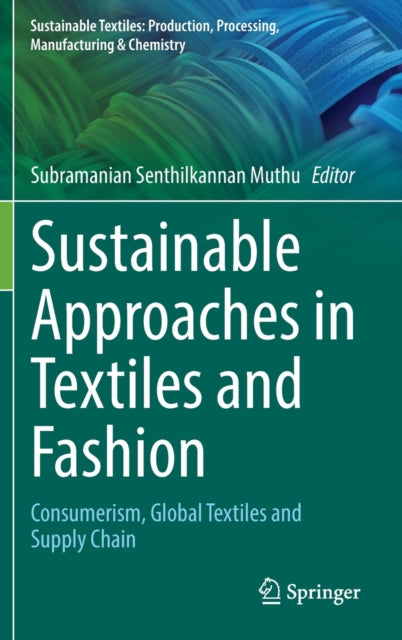
Sustainable Approaches in Textiles and Fashion: Consumerism, Global Textiles and Supply Chain
Sustainable Approaches in Textiles and Fashion: Consumerism, Global Textiles and Supply Chain
💎 Earn 454 Points (£4.54) on this item.
We can order this item for you. Delivery usually takes about 4 to 6 weeks.
This item is not held in our immediate stock. We will order it for you after checkout.
Estimated delivery: About 4 to 6 weeks
YOU SAVE £19.14
- Condition: Brand new
- UK Delivery times: Usually arrives within 2 - 3 working days
- UK Shipping: Fee starts at £2.39. Subject to product weight & dimension
Bulk ordering. Want 15 or more copies? Get a personalised quote and bigger discounts. Learn more about bulk orders.
Couldn't load pickup availability
- More about Sustainable Approaches in Textiles and Fashion: Consumerism, Global Textiles and Supply Chain
This second volume in this set of books discusses various sustainable approaches in textiles and the fashion sector with a focus on consumerism and the supply chain. Sustainability is essential in textiles and fashion, and measures include innovating and implementing new fibers and raw materials, introducing innovative manufacturing methods, chemicals, and processes to make the sector circular and develop new products from sustainable raw materials or processes.
Format: Hardback
Length: 235 pages
Publication date: 30 May 2022
Publisher: Springer Verlag, Singapore
This second volume in this set of books explores diverse sustainable approaches within the textiles and fashion sector, with a particular emphasis on consumerism and the supply chain. Sustainability holds immense significance in the contemporary industrial landscape, and textiles and fashion are no exception. Upholding sustainability and strictly adhering to its principles has emerged as a crucial necessity for any industrial sector, including textiles and fashion. There exist an array of measures aimed at transforming the textiles and fashion sector into a sustainable realm. These measures encompass a wide range of strategies, extending from the innovation and implementation of new fibers and raw materials to the introduction of cutting-edge manufacturing methods, chemicals, and processes that prioritize the entire life cycle of textile products, from their inception to their ultimate disposal. These approaches encompass the circularization of the textiles and fashion sector, as well as the development of innovative products derived from sustainable raw materials or processes, or a combination of both.
The significance of sustainability in the textiles and fashion sector cannot be overstated. By adopting sustainable practices, the industry can mitigate its environmental impact, promote fair labor practices, and ensure the long-term viability of its operations. Moreover, sustainable practices can also enhance the competitiveness of the industry, as consumers increasingly demand products that are environmentally friendly and socially responsible.
One of the key strategies for achieving sustainability in the textiles and fashion sector is the use of innovative materials and technologies. For instance, researchers are exploring the use of biodegradable and renewable fibers such as bamboo, hemp, and organic cotton, which have a lower environmental impact compared to traditional synthetic fibers. Additionally, the development of new manufacturing methods, such as 3D printing, can reduce waste and energy consumption during production.
Another important aspect of sustainability is the reduction of waste and pollution. This can be achieved through the implementation of recycling programs, the use of eco-friendly chemicals and dyes, and the promotion of circular economy practices, such as product reuse and recycling. By reducing waste and pollution, the industry can minimize its impact on the environment and promote the conservation of natural resources.
In addition to these strategies, sustainable practices in the textiles and fashion sector also involve promoting fair labor practices and social responsibility. This includes ensuring that workers are paid fair wages, working in safe and healthy conditions, and having access to basic rights and benefits. It also involves engaging with local communities and stakeholders to address social and environmental issues that may impact the industry.
Finally, sustainable practices in the textiles and fashion sector require a collaborative effort from all stakeholders, including manufacturers, retailers, consumers, and governments. By working together
collaboratively, the industry can develop and implement effective strategies that address the complex challenges facing it and achieve its sustainability goals.
In conclusion, sustainability is a critical aspect of the textiles and fashion sector, and it is essential to adopt sustainable practices to ensure the long-term viability of the industry and promote the well-being of workers, consumers, and the environment. By implementing innovative materials and technologies, reducing waste and pollution, promoting fair labor practices and social responsibility, and engaging with local communities and stakeholders, the industry can achieve its sustainability goals and create a more sustainable and equitable future.
Weight: 535g
Dimension: 235 x 155 (mm)
ISBN-13: 9789811908736
Edition number: 1st ed. 2022
This item can be found in:
UK and International shipping information
UK and International shipping information
UK Delivery and returns information:
- Delivery within 2 - 3 days when ordering in the UK.
- Shipping fee for UK customers from £2.39. Fully tracked shipping service available.
- Returns policy: Return within 30 days of receipt for full refund.
International deliveries:
Shulph Ink now ships to Australia, Belgium, Canada, France, Germany, Ireland, Italy, India, Luxembourg Saudi Arabia, Singapore, Spain, Netherlands, New Zealand, United Arab Emirates, United States of America.
- Delivery times: within 5 - 10 days for international orders.
- Shipping fee: charges vary for overseas orders. Only tracked services are available for most international orders. Some countries have untracked shipping options.
- Customs charges: If ordering to addresses outside the United Kingdom, you may or may not incur additional customs and duties fees during local delivery.