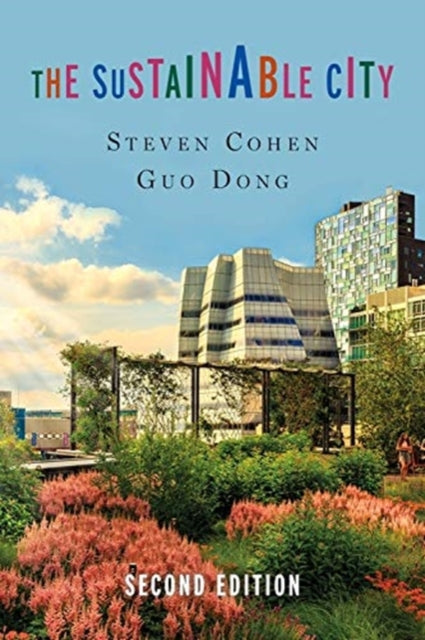
Steven Cohen,Dong Guo
Sustainable City
Sustainable City
YOU SAVE £4.94
- Condition: Brand new
- UK Delivery times: Usually arrives within 2 - 3 working days
- UK Shipping: Fee starts at £3.89. Subject to product weight & dimension
Bulk ordering. Want 15 or more copies? Get a personalised quote and bigger discounts. Learn more about bulk orders.
Couldn't load pickup availability
- More about Sustainable City
The Sustainable City provides a broad and engaging overview of the urban systems of the twenty-first century. This second edition dives deeper into the financing of sustainable infrastructure, reviews current trends in urban inequality, and features many more examples and new international case studies spanning the globe.
Living sustainably is not just about preserving the wilderness or keeping nature pristine. The transition to a green economy depends on cities. Economic, technological, and cultural forces are moving people out of rural areas and into urban areas. If we are to avert climate catastrophe, we will need our cities to coexist with nature without destroying it. Urbanization holds the key to long-term sustainability, reducing per capita environmental impacts while improving economic prosperity and social inclusion for current and future generations.
The Sustainable City provides a broad and engaging overview of the urban systems of the twenty-first century. It approaches urban sustainability from the perspectives of behavioral change, organizational management, and public policy, looking at case studies of existing legislation, programs, and public-private partnerships that strive to align modern urban life and sustainability. The book synthesizes the disparate strands of sustainable city planning in an approachable and applicable guide that highlights how these issues touch our lives on a daily basis, including the transportation we take, the public health systems that protect us, where our energy comes from, and what becomes of our food waste.
This second edition of The Sustainable City dives deeper into the financing of sustainable infrastructure and initiatives and puts additional emphasis on the roles that individual citizens and varied stakeholders can play. It also reviews current trends in urban inequality and discusses whether a model of sustainability that embraces a multidimensional approach to development and a multistakeholder approach to decision-making can foster social inclusion. It features many more examples and new international case studies spanning the globe.
Urbanization is a complex and multifaceted phenomenon that is shaping the world in profound ways. It is driven by a range of economic, social, and environmental factors, including population growth, economic development, and climate change. As cities continue to grow, they face a range of challenges, including urban sprawl, pollution, inequality, and climate change.
One of the key challenges facing cities is urban sprawl. Urban sprawl is the expansion of urban areas into surrounding rural areas, resulting in the loss of green space, increased transportation costs, and increased environmental degradation. This can have negative impacts on both human health and the environment, including increased air pollution, reduced biodiversity, and increased greenhouse gas emissions.
Another challenge facing cities is pollution. Cities are major sources of air pollution, water pollution, and noise pollution, which can have negative impacts on human health and the environment. Pollution can lead to respiratory problems, cardiovascular problems, and other health issues, as well as damage to ecosystems and habitats.
In addition to these challenges, cities also face issues of inequality and social exclusion. Many people living in cities are marginalized and excluded from economic opportunities, social services, and political participation. This can lead to social unrest, crime, and other social problems.
To address these challenges, cities need to adopt a sustainable approach to urban development. This approach should focus on reducing environmental impacts, promoting social inclusion, and improving economic prosperity. One key aspect of a sustainable approach to urban development is the promotion of urbanization. Urbanization can help to reduce per capita environmental impacts, as people living in cities consume less energy and produce less waste than people living in rural areas.
Another key aspect of a sustainable approach to urban development is the promotion of sustainable transportation. Sustainable transportation can help to reduce air pollution, improve public health, and promote economic growth. This can include the promotion of public transportation, cycling, and walking, as well as the development of electric vehicles and other low-carbon transportation options.
In addition to promoting sustainable transportation, cities can also promote sustainable energy. Sustainable energy can help to reduce greenhouse gas emissions and promote economic growth. This can include the promotion of renewable energy sources, such as solar and wind power, as well as the development of energy-efficient buildings and infrastructure.
Finally, cities can promote sustainable food systems. Sustainable food systems can help to reduce food waste, promote healthy eating, and support local agriculture. This can include the promotion of urban agriculture, the development of food markets and food banks, and the promotion of sustainable food production and consumption practices.
In conclusion, urbanization is a complex and multifaceted phenomenon that is shaping the world in profound ways. Cities face a range of challenges, including urban sprawl, pollution, inequality, and climate change. To address these challenges, cities need to adopt a sustainable approach to urban development. This approach should focus on reducing environmental impacts, promoting social inclusion, and improving economic prosperity. By promoting urbanization, sustainable transportation, sustainable energy, and sustainable food systems, cities can create a more sustainable and prosperous future for themselves and for future generations.
Weight: 494g
Dimension: 153 x 233 x 21 (mm)
ISBN-13: 9780231196550
Edition number: second edition
UK and International shipping information
UK and International shipping information
We deliver throughout the United Kingdom and to 128 countries and territories worldwide, including the United States, Australia, Canada, Germany, Spain and France.