Shulph Ink
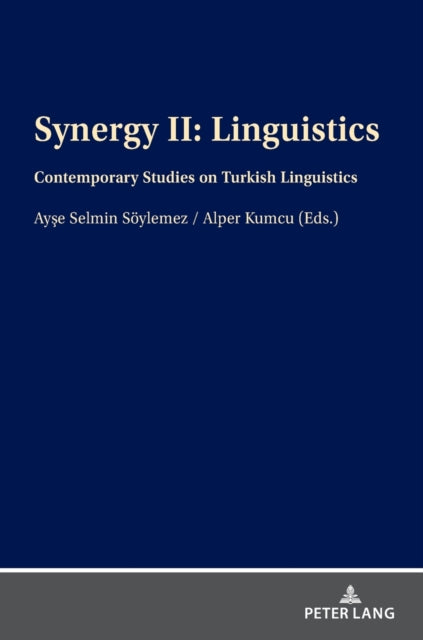
Synergy II: Linguistics: Contemporary Studies on Turkish Linguistics
Synergy II: Linguistics: Contemporary Studies on Turkish Linguistics
💎 Earn 236 Points (£2.36) on this item.
We can order this item for you. Delivery usually takes about 4 to 6 weeks.
This item is not held in our immediate stock. We will order it for you after checkout.
Estimated delivery: About 4 to 6 weeks
YOU SAVE £6.14
- Condition: Brand new
- UK Delivery times: Usually arrives within 2 - 3 working days
- UK Shipping: Fee starts at £2.39. Subject to product weight & dimension
Bulk ordering. Want 15 or more copies? Get a personalised quote and bigger discounts. Learn more about bulk orders.
Couldn't load pickup availability
- More about Synergy II: Linguistics: Contemporary Studies on Turkish Linguistics
Synergy II: Linguistics is a book that presents recent studies on Turkish linguistics, focusing on theoretical and applied approaches, including phonology, morphology, morphosyntax, morphophonology, bilingualism, cognitive stylistics, register analysis, identity, and language teaching.
Format: Hardback
Length: 268 pages
Publication date: 09 August 2021
Publisher: Peter Lang AG
Synergy II: Linguistics is a comprehensive exploration of Turkish linguistics, encompassing a wide range of theoretical and applied approaches. The book's structure is meticulously designed to cater to both micro and macro linguistic perspectives, offering a rich tapestry of themes. These themes include phonology, morphology, morphosyntax, morphophonology, bilingualism, cognitive stylistics, register analysis of various Turkish text genres, identity, and language teaching.
Within these chapters, readers will be captivated by a plethora of studies that delve into the intricacies of the Turkish language. The authors have conducted extensive research and presented their findings in a clear and concise manner, making it accessible to a broad audience.
Phonology, as one of the core chapters, delves into the study of sound patterns in Turkish. It explores the phonetic inventory, phonological processes, and the relationship between phonology and other linguistic aspects such as morphology and syntax. The authors provide detailed explanations of phonological phenomena, including vowel harmony, consonant clusters, and stress patterns, and offer practical insights into teaching Turkish pronunciation to learners.
Morphology, another pivotal chapter, examines the structure of words and their formation. It explores the different parts of words, such as roots, stems, and suffixes, and discusses the principles of word formation in Turkish. The authors also explore the morphology of verbs, nouns, adjectives, and adverbs, providing valuable information for both language learners and scholars.
Morphosyntax, a complex subfield within linguistics, is explored in depth in Synergy II: Linguistics. It examines the relationship between words and their grammatical functions, such as subject, object, and verb, and explores the syntax of Turkish sentences. The authors discuss the use of auxiliary verbs, negation, question formation, and other grammatical structures, and offer practical examples to illustrate their points.
Morphophonology, a branch of phonology that focuses on the phonetic realization of words, is also explored in the book. It examines the phonetic properties of individual sounds and how they are combined to form words. The authors discuss the phonetic realization of vowels, consonants, and diphthongs, and offer practical exercises to help learners improve their phonetic accuracy.
Bilingualism, a topic of increasing importance in our globalized world, is examined in Synergy II: Linguistics. It explores the challenges and benefits of being bilingual and discusses the cognitive processes involved in bilingual language acquisition. The authors provide insights into bilingualism in various contexts, such as childhood bilingualism, second language acquisition, and multilingualism, and offer practical strategies for language teachers to support bilingual learners.
Cognitive stylistics, a branch of linguistics that examines the cognitive processes underlying language production and comprehension, is also explored in the book. It examines the role of language in shaping our thoughts, beliefs, and attitudes, and discusses the cognitive mechanisms that underlie language processing. The authors provide practical applications of cognitive stylistics in language teaching and offer insights into how language can be used to communicate effectively and persuasively.
Register analysis, a crucial aspect of linguistic study, is examined in Synergy II: Linguistics. It explores the different styles and registers of Turkish language, such as formal, informal, and colloquial, and discusses the social and cultural factors that influence language usage. The authors provide examples of Turkish text genres and analyze their linguistic features, offering valuable insights into the ways in which language can be used to convey different meanings and attitudes.
Identity, a complex and multifaceted concept, is explored in Synergy II: Linguistics. It examines the role of language in shaping individual and collective identities, and discusses the ways in which language can be used to express cultural values, beliefs, and traditions. The authors provide examples of Turkish identity and language usage, and offer insights into the ways in which language can be used to promote cultural diversity and understanding.
Language teaching, a fundamental aspect of language learning, is also examined in Synergy II: Linguistics. It explores the different teaching methodologies and strategies used to teach Turkish language, and discusses the challenges and opportunities that arise in language teaching. The authors provide practical examples of language teaching exercises and activities, and offer insights into how language teachers can create effective and engaging learning environments for their students.
In conclusion, Synergy II: Linguistics is a comprehensive and authoritative exploration of Turkish linguistics, offering a wealth of knowledge and insights into the language and its various aspects. Whether you are a language learner, scholar, or professional, this book will provide you with valuable information and inspiration for your linguistic endeavors. By delving into phonology, morphology, morphosyntax, morphophonology, bilingualism, cognitive stylistics, register analysis, identity, and language teaching, Synergy II: Linguistics offers a holistic perspective on Turkish linguistics, providing a deeper understanding of the language and its cultural significance.
Weight: 419g
Dimension: 210 x 148 (mm)
ISBN-13: 9783631847275
Edition number: New ed
UK and International shipping information
UK and International shipping information
UK Delivery and returns information:
- Delivery within 2 - 3 days when ordering in the UK.
- Shipping fee for UK customers from £2.39. Fully tracked shipping service available.
- Returns policy: Return within 30 days of receipt for full refund.
International deliveries:
Shulph Ink now ships to Australia, Belgium, Canada, France, Germany, Ireland, Italy, India, Luxembourg Saudi Arabia, Singapore, Spain, Netherlands, New Zealand, United Arab Emirates, United States of America.
- Delivery times: within 5 - 10 days for international orders.
- Shipping fee: charges vary for overseas orders. Only tracked services are available for most international orders. Some countries have untracked shipping options.
- Customs charges: If ordering to addresses outside the United Kingdom, you may or may not incur additional customs and duties fees during local delivery.