Patrick G. Eriksson
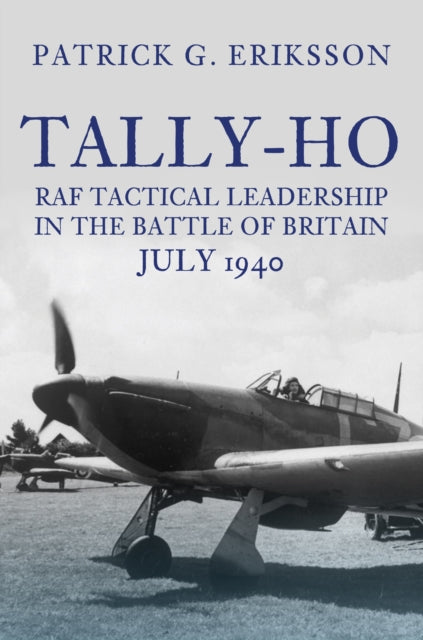
Tally-Ho: RAF Tactical Leadership in the Battle of Britain, July 1940
Tally-Ho: RAF Tactical Leadership in the Battle of Britain, July 1940
💎 Earn 88 Points (£0.88) on this item.
YOU SAVE £7.30
- Condition: Brand new
- UK Delivery times: Usually arrives within 2 - 3 working days
- UK Shipping: Fee starts at £2.39. Subject to product weight & dimension
Bulk ordering. Want 15 or more copies? Get a personalised quote and bigger discounts. Learn more about bulk orders.
Couldn't load pickup availability
- More about Tally-Ho: RAF Tactical Leadership in the Battle of Britain, July 1940
Small unit leaders' tactical skills were crucial in winning the Battle of Britain, and their innovations and experiments during the active fighting merit examination were instrumental in this victory. Air Chief Marshal Hugh Dowding built the defensive system and prevented too many fighters from going to France, while subordinate Group commanders fought the actual tactical battle. The squadron leaders needed to know German bomber formation and type to choose fighter attack methods, and the disposition of German escort fighters to maintain the aggressiveness needed to break up bomber formations and allow follow-up destruction of straggling and struggling machines.
Format: Hardback
Length: 352 pages
Publication date: 15 February 2023
Publisher: Amberley Publishing
The Battle of Britain was a pivotal moment in World War II, and the tactical skills of small unit leaders played a crucial role in determining the outcome. These leaders were not afraid to innovate and experiment during the intense fighting, and their efforts were rewarded with a thorough examination.
Prior to the war, the Fighter Area Attacks were widely believed to be effective in deterring German bombers. These attacks were based on the assumption that German bombers would be unescorted due to the distance from their home bases. However, these assumptions were soon proven false.
Nobody expected France to fall, which allowed enemy fighters to be based just across the Channel. This posed a significant threat to the British air force, as it meant that any raid would be met with a concentrated force of enemy fighters.
Air Chief Marshal Hugh Dowding was instrumental in building the defensive system that would protect Britain from the German air force. He also prevented too many fighters from being sent to France, which could have been disastrous for the British cause.
During the battle, Dowding played a strategic role, ensuring that Fighter Command remained operational while minimizing losses. This was achieved through the use of small British fighter formations, consisting of a squadron or two of fighters. This approach reduced losses and ensured a sequence of attacks.
The success of this strategy was largely due to the skill of Dowdings subordinate Group commanders, notably Keith Park of 11 Group. Park fought the actual tactical battle, deciding every day how many squadrons would be allocated to each raid. The squadron leaders needed to have a deep understanding of German bomber formation and type in order to choose the most effective fighter attack methods. They also needed to be aware of the disposition of German escort fighters, which could pose a threat to their own squadrons.
Maintaining the aggressiveness needed to break up bomber formations and allow follow-up destruction of straggling and struggling machines was a delicate balancing act. However, it was essential to limit casualties among their own pilots. In July 1940, the author provides an analysis of how this was achieved or not achieved.
Patrick Eriksson, in his analysis, is not afraid to state his opinion, stating that the British fighters could never have won the Battle if they had adopted the same tactics as the Germans. He highlights the importance of intelligence, coordination, and teamwork in the air war, and how these factors were lacking in the British air force.
The Battle of Britain was a turning point in the war, and the tactical skills of small unit leaders played a significant role in securing victory for the Allies. Their innovations and experiments during the active fighting merit examination were instrumental in developing the strategies and tactics that would be used throughout the war. The lessons learned from this battle continue to be relevant today, as air forces around the world continue to face similar challenges.
Weight: 642g
Dimension: 243 x 166 x 32 (mm)
ISBN-13: 9781398111622
This item can be found in:
UK and International shipping information
UK and International shipping information
UK Delivery and returns information:
- Delivery within 2 - 3 days when ordering in the UK.
- Shipping fee for UK customers from £2.39. Fully tracked shipping service available.
- Returns policy: Return within 30 days of receipt for full refund.
International deliveries:
Shulph Ink now ships to Australia, Belgium, Canada, France, Germany, Ireland, Italy, India, Luxembourg Saudi Arabia, Singapore, Spain, Netherlands, New Zealand, United Arab Emirates, United States of America.
- Delivery times: within 5 - 10 days for international orders.
- Shipping fee: charges vary for overseas orders. Only tracked services are available for most international orders. Some countries have untracked shipping options.
- Customs charges: If ordering to addresses outside the United Kingdom, you may or may not incur additional customs and duties fees during local delivery.