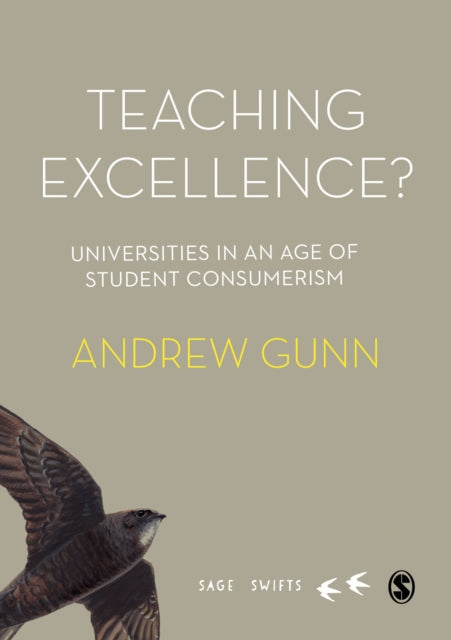
Andrew Gunn
Teaching Excellence?: Universities in an age of student consumerism
Teaching Excellence?: Universities in an age of student consumerism
💎 Earn 259 Points (£2.59) on this item.
We can order this item for you. Delivery usually takes about 4 to 6 weeks.
This item is not held in our immediate stock. We will order it for you after checkout.
Estimated delivery: About 4 to 6 weeks
YOU SAVE £3.08
- Condition: Brand new
- UK Delivery times: Usually arrives within 2 - 3 working days
- UK Shipping: Fee starts at £2.39. Subject to product weight & dimension
Bulk ordering. Want 15 or more copies? Get a personalised quote and bigger discounts. Learn more about bulk orders.
Couldn't load pickup availability
- More about Teaching Excellence?: Universities in an age of student consumerism
The book examines the role of teaching within the modern university and the impact of the Teaching Excellence and Student Outcomes Framework (TEF). It provides a critical analysis of recent policy reforms and surveys the wider landscape of the student as consumer in HE.
Format: Hardback
Length: 128 pages
Publication date: 19 December 2022
Publisher: SAGE Publications Ltd
The following is the rephrased text:
Teaching within the modern university holds a pivotal role in shaping the educational experiences and outcomes of students. In this context, the Teaching Excellence and Student Outcomes Framework (TEF) has emerged as a significant policy initiative aimed at enhancing the quality of teaching and promoting student success. This new title delves into the intricacies of teaching within the contemporary university and explores the profound impact of the TEF on the sector.
The TEF, introduced in 2011, represents a comprehensive framework designed to evaluate and enhance the teaching and learning experience in higher education institutions. It evaluates teaching quality through a range of metrics, including student engagement, learning outcomes, and the academic environment. By providing a transparent and objective assessment of teaching excellence, the TEF aims to encourage institutions to prioritize teaching and invest in the development of their faculty.
One of the key objectives of the TEF is to increase competition and choice in higher education. The government believes that greater competition can drive innovation, improve quality, and ultimately benefit students by providing them with a wider range of educational options. The TEF has been implemented through a series of policy reforms, including the introduction of performance-related pay for academics, the expansion of degree apprenticeships, and the simplification of the higher education funding system.
While these reforms have brought about some positive changes, they have also sparked significant debate and controversy. Critics argue that the TEF places undue emphasis on quantitative metrics and fails to recognize the diverse nature of teaching and learning. They argue that the focus on competition can lead to a reduction in the quality of teaching and the erosion of the academic profession. Additionally, concerns have been raised about the impact of the TEF on the student experience, particularly in terms of workload and stress.
In response to these concerns, the TEF has undergone several revisions and adjustments over the years. The latest iteration, known as the TEF 2021, aims to address some of the criticisms and provide a more balanced and nuanced assessment of teaching quality. The framework includes a greater emphasis on the quality of teaching, the student experience, and the impact of teaching on society.
Despite these revisions, there are still concerns about the TEF's effectiveness in promoting teaching excellence and student outcomes. Some argue that the framework is too complex and bureaucratic, making it difficult for institutions to understand and implement. Others argue that the focus on quantitative metrics can lead to a narrow understanding of teaching and learning and that the framework fails to recognize the diverse needs and backgrounds of students.
In conclusion, teaching within the modern university plays a critical role in shaping the educational experiences and outcomes of students. The TEF has emerged as a significant policy initiative aimed at enhancing the quality of teaching and promoting student success. While the TEF has brought about some positive changes, it has also sparked significant debate and controversy. It is important to continue to monitor and evaluate the TEF's effectiveness in promoting teaching excellence and student outcomes and to ensure that the framework is aligned with the needs and values of the higher education sector.
Teaching within the modern university holds a pivotal role in shaping the educational experiences and outcomes of students. In this context, the Teaching Excellence and Student Outcomes Framework (TEF) has emerged as a significant policy initiative aimed at enhancing the quality of teaching and promoting student success. This new title delves into the intricacies of teaching within the contemporary university and explores the profound impact of the TEF on the sector.
The TEF, introduced in 2011, represents a comprehensive framework designed to evaluate and enhance the teaching and learning experience in higher education institutions. It evaluates teaching quality through a range of metrics, including student engagement, learning outcomes, and the academic environment. By providing a transparent and objective assessment of teaching excellence, the TEF aims to encourage institutions to prioritize teaching and invest in the development of their faculty.
One of the key objectives of the TEF is to increase competition and choice in higher education. The government believes that greater competition can drive innovation, improve quality, and ultimately benefit students by providing them with a wider range of educational options. The TEF has been implemented through a series of policy reforms, including the introduction of performance-related pay for academics, the expansion of degree apprenticeships, and the simplification of the higher education funding system.
While these reforms have brought about some positive changes, they have also sparked significant debate and controversy. Critics argue that the TEF places undue emphasis on quantitative metrics and fails to recognize the diverse nature of teaching and learning. They argue that the focus on competition can lead to a reduction in the quality of teaching and the erosion of the academic profession. Additionally, concerns have been raised about the impact of the TEF on the student experience, particularly in terms of workload and stress.
In response to these concerns, the TEF has undergone several revisions and adjustments over the years. The latest iteration, known as the TEF 2021, aims to address some of the criticisms and provide a more balanced and nuanced assessment of teaching quality. The framework includes a greater emphasis on the quality of teaching, the student experience, and the impact of teaching on society.
Despite these revisions, there are still concerns about the TEF's effectiveness in promoting teaching excellence and student outcomes. Some argue that the framework is too complex and bureaucratic, making it difficult for institutions to understand and implement. Others argue that the focus on quantitative metrics can lead to a narrow understanding of teaching and learning and that the framework fails to recognize the diverse needs and backgrounds of students.
In conclusion, teaching within the modern university plays a critical role in shaping the educational experiences and outcomes of students. The TEF has emerged as a significant policy initiative aimed at enhancing the quality of teaching and promoting student success. While the TEF has brought about some positive changes, it has also sparked significant debate and controversy. It is important to continue to monitor and evaluate the TEF's effectiveness in promoting teaching excellence and student outcomes and to ensure that the framework is aligned with the needs and values of the higher education sector.
Weight: 284g
Dimension: 153 x 216 x 15 (mm)
ISBN-13: 9781526478870
UK and International shipping information
UK and International shipping information
UK Delivery and returns information:
- Delivery within 2 - 3 days when ordering in the UK.
- Shipping fee for UK customers from £2.39. Fully tracked shipping service available.
- Returns policy: Return within 30 days of receipt for full refund.
International deliveries:
Shulph Ink now ships to Australia, Belgium, Canada, France, Germany, Ireland, Italy, India, Luxembourg Saudi Arabia, Singapore, Spain, Netherlands, New Zealand, United Arab Emirates, United States of America.
- Delivery times: within 5 - 10 days for international orders.
- Shipping fee: charges vary for overseas orders. Only tracked services are available for most international orders. Some countries have untracked shipping options.
- Customs charges: If ordering to addresses outside the United Kingdom, you may or may not incur additional customs and duties fees during local delivery.