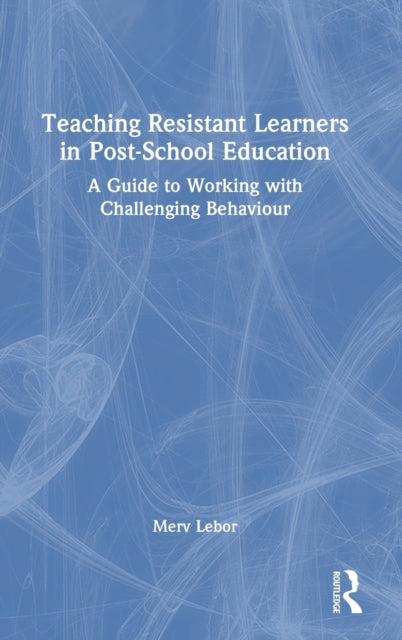
Merv Lebor
Teaching Resistant Learners in Post-School Education: A Guide to Working with Challenging Behaviour
Teaching Resistant Learners in Post-School Education: A Guide to Working with Challenging Behaviour
💎 Earn 811 Points (£8.11) on this item.
We can order this item for you. Delivery usually takes about 4 to 6 weeks.
This item is not held in our immediate stock. We will order it for you after checkout.
Estimated delivery: About 4 to 6 weeks
YOU SAVE £9.63
- Condition: Brand new
- UK Delivery times: Usually arrives within 2 - 3 working days
- UK Shipping: Fee starts at £2.39. Subject to product weight & dimension
Bulk ordering. Want 15 or more copies? Get a personalised quote and bigger discounts. Learn more about bulk orders.
Couldn't load pickup availability
- More about Teaching Resistant Learners in Post-School Education: A Guide to Working with Challenging Behaviour
This book explores the challenges of post-school education, such as students' resistance to learning, and provides practical tips and guidance for educators to work through difficult situations. It offers a range of solutions to issues such as distance learning, predatory journals, screen time, ghostwriters, plagiarism, speaking out of turn, lateness, absenteeism, and violent behavior. It is ideal for anyone working or involved in tertiary education, including teacher trainees, tutors, teacher educators, managers, administrators, and lecturers.
Format: Hardback
Length: 196 pages
Publication date: 08 August 2022
Publisher: Taylor & Francis Ltd
This comprehensive book delves into the intricate frameworks that shape post-school education, shedding light on the practices that unfold in classrooms and lecture theatres, particularly when challenges arise. It explores the phenomenon of students resisting learning during their tertiary education journey, offering valuable insights and practical strategies for educators to navigate difficult situations where student engagement and motivation may be lacking. By examining both theoretical perspectives and real-world scenarios, the book provides a rich tapestry of solutions to address various challenges faced by educators, such as the increasing prevalence of distance learning, the rise of predatory or fake journals, the impact of excessive screen time, ghostwriters and plagiarism, disruptive speaking out of turn, chronic lateness, absenteeism, and even violent behavior.
Drawing from a diverse range of perspectives, this book serves as an invaluable resource for anyone involved in tertiary education, including teacher trainees, tutors, teacher educators, managers, administrators, and lecturers working at universities and colleges. It also caters to students who can benefit from engaging in discussions about the complexities and problematic nature of learning.
The book is organized into several chapters, each addressing a specific aspect of the challenges faced by educators and students in the realm of post-school education. The first chapter provides an overview of the frameworks within which post-school education is situated, including educational policies, institutional structures, and the evolving nature of the educational landscape. This chapter sets the stage for the subsequent chapters, which delve deeper into the practical challenges and solutions related to student resistance and disengagement.
In the second chapter, the book explores the reasons why some students choose to resist learning during their tertiary education. It examines the various factors that contribute to student disengagement, such as a lack of interest, poor academic preparation, personal issues, and external pressures. By understanding these underlying factors, educators can develop targeted strategies to address student needs and encourage active participation in the learning process.
The third chapter focuses on practical tips and guidance for educators to work through difficult situations where learning is not a student's priority. It offers a range of strategies and techniques that can be employed to engage and motivate students, including personalized learning approaches, interactive teaching methods, and effective feedback mechanisms. The book also emphasizes the importance of building positive relationships with students and creating a supportive learning environment that fosters a sense of belonging and motivation.
The fourth chapter explores the challenges posed by the growth of distance learning and the increasing reliance on digital technologies in education. It discusses the potential risks and disadvantages associated with online learning, such as reduced student engagement, technical difficulties, and the need for effective online communication and collaboration. The book provides practical solutions to address these challenges, including the development of engaging online learning materials, the use of multimedia tools, and the promotion of student-centered learning experiences.
The fifth chapter examines the rise of predatory or fake journals, which can pose significant risks to the academic integrity of students and the reputation of institutions. It provides insights into the tactics used by these journals to deceive researchers and students, including the use of misleading titles, plagiarism, and falsified data. The book offers practical strategies for educators to identify and avoid these journals, including the use of reputable publication databases, peer review processes, and the promotion of academic integrity and ethical practices.
The sixth chapter focuses on the impact of excessive screen time on student learning and well-being. It discusses the potential negative effects of screen addiction, such as poor sleep quality, attention deficit disorder, and social isolation. The book offers practical solutions to address these issues, including the implementation of screen time limits, the promotion of physical activity and social interaction, and the integration of mindfulness and self-care practices into the learning environment.
The seventh chapter examines the challenges of ghostwriters and plagiarism in the academic context. It provides insights into the practices used by ghostwriters to produce academic work for students, including the use of pre-written materials, falsified credentials, and the lack of transparency in the writing process. The book offers practical strategies for educators to identify and prevent plagiarism, including the use of plagiarism detection tools, the promotion of academic integrity and ethical practices, and the development of effective writing and research skills in students.
The eighth chapter explores the challenges of disruptive speaking out of turn, chronic lateness, absenteeism, and even violent behavior in the learning environment. It provides insights into the factors that contribute to these behaviors, such as personal issues, cultural differences, and a lack of understanding of academic expectations. The book offers practical solutions to address these issues, including the implementation of clear communication policies, the development of effective classroom management strategies, and the promotion of student support services and resources.
In conclusion, this comprehensive book provides a wealth of insights and practical strategies for educators and students alike. By examining the frameworks within which post-school education is situated, the reasons behind student resistance and disengagement, and the challenges posed by various contexts and behaviors, the book offers a holistic approach to addressing the problematic nature of learning. It serves as a valuable resource for anyone involved in tertiary education, including teacher trainees, tutors, teacher educators, managers, administrators, and lecturers, as well as students who can benefit from discussions of the complexities and challenges of learning. Through its practical solutions and insightful perspectives, this book empowers educators to navigate difficult situations and create a learning environment that fosters student growth, engagement, and success.
Weight: 548g
Dimension: 234 x 156 (mm)
ISBN-13: 9780367701666
UK and International shipping information
UK and International shipping information
UK Delivery and returns information:
- Delivery within 2 - 3 days when ordering in the UK.
- Shipping fee for UK customers from £2.39. Fully tracked shipping service available.
- Returns policy: Return within 30 days of receipt for full refund.
International deliveries:
Shulph Ink now ships to Australia, Belgium, Canada, France, Germany, Ireland, Italy, India, Luxembourg Saudi Arabia, Singapore, Spain, Netherlands, New Zealand, United Arab Emirates, United States of America.
- Delivery times: within 5 - 10 days for international orders.
- Shipping fee: charges vary for overseas orders. Only tracked services are available for most international orders. Some countries have untracked shipping options.
- Customs charges: If ordering to addresses outside the United Kingdom, you may or may not incur additional customs and duties fees during local delivery.