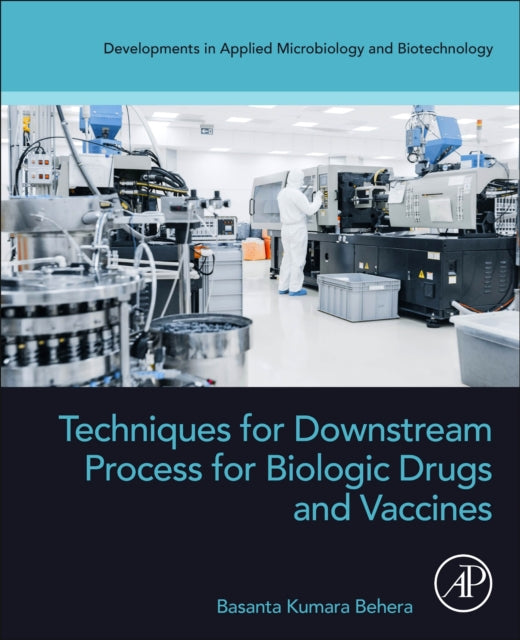
Basanta KumaraBehera
Techniques for Downstream process for Biologic Drugs and Vaccines
Techniques for Downstream process for Biologic Drugs and Vaccines
💎 Earn 618 Points (£6.18) on this item.
YOU SAVE £10.38
- Condition: Brand new
- UK Delivery times: Usually arrives within 2 - 3 working days
- UK Shipping: Fee starts at £2.39. Subject to product weight & dimension
Bulk ordering. Want 15 or more copies? Get a personalised quote and bigger discounts. Learn more about bulk orders.
Couldn't load pickup availability
- More about Techniques for Downstream process for Biologic Drugs and Vaccines
Downstream process for Biologic Drugs and Vaccines is a comprehensive resource that explains the technologies involved in processing postharvest broth to separate the target biological therapeutic products from extracellular or intercellular aspects. It covers the most important aspects of biomass processing technologies and their applications in new projects related to the development and manufacturing of therapeutic bio-products.
Format: Paperback / softback
Length: 278 pages
Publication date: 03 August 2023
Publisher: Elsevier Science Publishing Co Inc
Biologic Drugs and Vaccines: Downstream Process Techniques
Biologic drugs and vaccines, derived from living organisms, hold immense potential for treating various diseases. However, the production of these therapeutic products involves complex downstream processes that require specialized technologies. In this comprehensive resource, we delve into the techniques involved in processing postharvest broth to separate the target biological therapeutic products from extracellular or intercellular aspects in nature. Our goal is to achieve the highest purification form of these products, making them acceptable to end users.
The post-harvesting of fermented broth is a crucial step in the production of biologic drugs and vaccines. This process involves a series of steps, including biomass processing, extraction, and purification. Biomass processing technologies play a vital role in converting raw materials into usable forms, such as liquid or solid biomass. These technologies include methods such as hydrolysis, fermentation, and solid-state fermentation, which help to break down complex organic matter into simpler compounds that can be further processed.
Extraction is another critical step in the downstream process. It involves the isolation of specific compounds or proteins from the fermented broth. Various extraction techniques, such as solid-phase extraction, liquid-phase extraction, and chromatography, are employed to achieve this. These techniques utilize different solvents, resins, and separation mechanisms to selectively extract the desired compounds from the mixture.
Purification is the final step in the downstream process. It involves the removal of impurities, contaminants, and unwanted components from the extracted compounds or proteins. Purification techniques include methods such as ultrafiltration, diafiltration, and chromatography, which use different filters, membranes, and separation mechanisms to achieve high purity and specificity.
In addition to these core techniques, downstream processing of biologic drugs and vaccines also involves other important aspects, such as quality control, stability testing, and formulation. Quality control measures ensure that the final products meet stringent quality standards and specifications. Stability testing is conducted to evaluate the long-term storage and shelf life of the products. Formulation involves the development of appropriate dosage forms and delivery systems for the final products.
This comprehensive resource is designed to help non-engineering students and scientists easily capture the basic principle of biomass processing technologies and their applications in new projects related to the development and manufacturing of therapeutic bio-products. As the field of biotechnology continues to evolve, with the integration of medical sciences, physical sciences, and engineering, the need for the development of microbial or cell line process technology and application for large-scale isolation and purification of metabolites or vaccines through the fermentation process has become increasingly significant. This book covers the most important aspects of these technologies, providing a valuable resource for researchers, scientists, and industry professionals alike.
In conclusion, the downstream process techniques for biologic drugs and vaccines are crucial in the production of these therapeutic products. These techniques involve a series of steps, including biomass processing, extraction, and purification, to achieve the highest purification form of the target biological therapeutic products. With the integration of medical sciences.
Weight: 596g
Dimension: 191 x 236 x 18 (mm)
ISBN-13: 9780443191572
This item can be found in:
UK and International shipping information
UK and International shipping information
UK Delivery and returns information:
- Delivery within 2 - 3 days when ordering in the UK.
- Shipping fee for UK customers from £2.39. Fully tracked shipping service available.
- Returns policy: Return within 30 days of receipt for full refund.
International deliveries:
Shulph Ink now ships to Australia, Belgium, Canada, France, Germany, Ireland, Italy, India, Luxembourg Saudi Arabia, Singapore, Spain, Netherlands, New Zealand, United Arab Emirates, United States of America.
- Delivery times: within 5 - 10 days for international orders.
- Shipping fee: charges vary for overseas orders. Only tracked services are available for most international orders. Some countries have untracked shipping options.
- Customs charges: If ordering to addresses outside the United Kingdom, you may or may not incur additional customs and duties fees during local delivery.