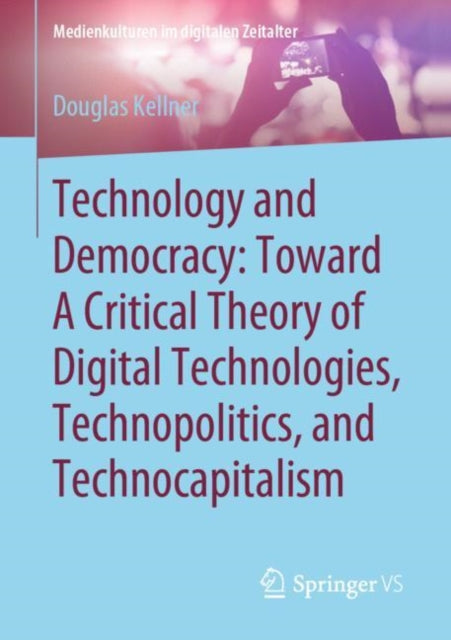
Douglas Kellner
Technology and Democracy: Toward A Critical Theory of Digital Technologies, Technopolitics, and Technocapitalism
Technology and Democracy: Toward A Critical Theory of Digital Technologies, Technopolitics, and Technocapitalism
💎 Earn 247 Points (£2.47) on this item.
We can order this item for you. Delivery usually takes about 4 to 6 weeks.
This item is not held in our immediate stock. We will order it for you after checkout.
Estimated delivery: About 4 to 6 weeks
YOU SAVE £10.44
- Condition: Brand new
- UK Delivery times: Usually arrives within 2 - 3 working days
- UK Shipping: Fee starts at £2.39. Subject to product weight & dimension
Bulk ordering. Want 15 or more copies? Get a personalised quote and bigger discounts. Learn more about bulk orders.
Couldn't load pickup availability
- More about Technology and Democracy: Toward A Critical Theory of Digital Technologies, Technopolitics, and Technocapitalism
The technological revolution is changing the way we work, communicate, participate in politics, and spend our leisure time, and poses challenges to critical social theorists, citizens, and educators to rethink their basic tenets, deploy the media in creative and productive ways, and restructure the workplace, social institutions, and schooling to respond constructively and progressively.
Format: Paperback / softback
Length: 303 pages
Publication date: 07 October 2021
Publisher: Springer Fachmedien Wiesbaden
As we embark upon a new millennium, it becomes evident that we are currently witnessing one of the most significant technological revolutions in human history, exerting a profound impact on various aspects of our lives. This transformative era is characterized by the rapid advancement of computer, information, communication, and multimedia technologies, which are widely regarded as the foundations of a knowledge-based society. Consequently, these technologies are accorded a central position in every facet of human existence. The Great Transformation that we are witnessing presents significant challenges to critical social theorists, citizens, and educators alike. It necessitates a reevaluation of our fundamental beliefs, the exploration of innovative and productive uses of media, and the restructuring of workplaces, social institutions, and educational systems to adapt to the rapidly evolving technological and social landscape.
The technological revolution revolves around the convergence of computer, information, communication, and multimedia technologies, leading to a profound transformation of the way we work, communicate, participate in politics, and engage in leisure activities. This shift has led to the creation of new industries, the emergence of digital economies, and the widespread adoption of cutting-edge technologies such as artificial intelligence, blockchain, and the Internet of Things.
One of the most significant implications of the technological revolution is the transformation of the workforce. Traditional job roles have been disrupted, and new skills and competencies are required to thrive in the digital age. This has led to a rise in unemployment, particularly among older workers who may not have the necessary skills to adapt to the changing job market. However, it has also created new opportunities for job growth and innovation, particularly in fields such as technology, healthcare, and education.
Another area of impact is the way we communicate and interact with each other. The internet and social media have revolutionized the way we share information, connect with others, and form communities. This has led to the growth of social movements, the spread of misinformation, and the emergence of new forms of social inequality. It has also facilitated the rise of global interconnectedness, allowing people from different parts of the world to collaborate and work together on common goals.
The technological revolution has also had a profound impact on education. Online learning platforms and digital resources have made education more accessible and affordable, enabling people to learn at their own pace and from anywhere in the world. This has led to the democratization of education, particularly in developing countries where access to traditional education is limited. However, it has also raised concerns about the quality of education and the ability of students to retain information in a rapidly changing digital environment.
In conclusion, the technological revolution is a transformative force that is changing the way we live, work, and interact with each other. It presents significant challenges and opportunities for social theorists, citizens, and educators alike. As we navigate this new era, it is essential to prioritize the development of new skills, the promotion of digital literacy, and the creation of policies that promote social justice and equality. By doing so, we can ensure that the benefits of the technological revolution are distributed fairly and that it serves the greater good of society.
Weight: 410g
Dimension: 210 x 148 (mm)
ISBN-13: 9783658317898
Edition number: 1st ed. 2021
This item can be found in:
UK and International shipping information
UK and International shipping information
UK Delivery and returns information:
- Delivery within 2 - 3 days when ordering in the UK.
- Shipping fee for UK customers from £2.39. Fully tracked shipping service available.
- Returns policy: Return within 30 days of receipt for full refund.
International deliveries:
Shulph Ink now ships to Australia, Belgium, Canada, France, Germany, Ireland, Italy, India, Luxembourg Saudi Arabia, Singapore, Spain, Netherlands, New Zealand, United Arab Emirates, United States of America.
- Delivery times: within 5 - 10 days for international orders.
- Shipping fee: charges vary for overseas orders. Only tracked services are available for most international orders. Some countries have untracked shipping options.
- Customs charges: If ordering to addresses outside the United Kingdom, you may or may not incur additional customs and duties fees during local delivery.