Shulph Ink
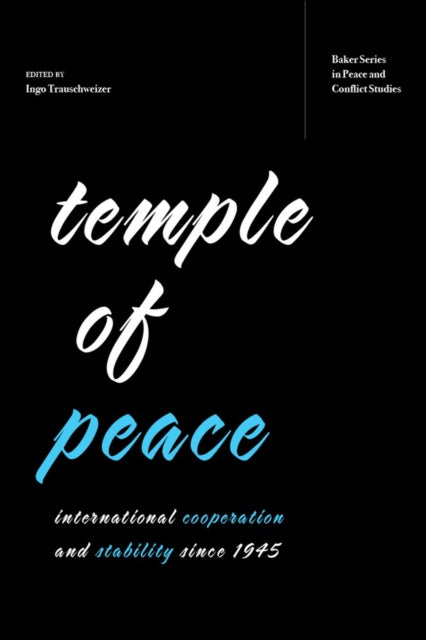
Temple of Peace: International Cooperation and Stability since 1945
Temple of Peace: International Cooperation and Stability since 1945
💎 Earn 83 Points (£0.83) on this item.
YOU SAVE £3.34
- Condition: Brand new
- UK Delivery times: Usually arrives within 2 - 3 working days
- UK Shipping: Fee starts at £2.39. Subject to product weight & dimension
Bulk ordering. Want 15 or more copies? Get a personalised quote and bigger discounts. Learn more about bulk orders.
Couldn't load pickup availability
- More about Temple of Peace: International Cooperation and Stability since 1945
The collection explores the successes and challenges of international cooperation over the past seventy years,addressing questions about how the liberal international order was built and what could be lost in a post-American world.
Format: Paperback / softback
Length: 242 pages
Publication date: 19 February 2022
Publisher: Ohio University Press
This collection delves into thought-provoking inquiries about peace and stability, challenging the past and present status of international relations. The post-World War II liberal international order, championed by organizations like the United Nations, the North Atlantic Treaty Organization, and similar alliances, aimed to foster decades of collective security, economic stability, and the rule of law. However, despite the negotiated compromises, this order did not lead to a peaceful world. In his renowned 1946 Iron Curtain speech, Winston Churchill hailed the UN framework as "the temple of peace," believing that international alliances could provide the necessary stability for free people to thrive economically and politically. While the pillars of international order remain intact today, in a world characterized by populism and protest, leaders in the United States appear less inclined to assume the pivotal role in an alliance framework built on shared values, human rights, and a blend of hard and soft power.
In this book, nine esteemed scholars and diplomatic practitioners delve into the successes and shortcomings of international cooperation over the past seventy years. Collectively, the authors aim to address the construction of the liberal international order, the challenges it has encountered, and the potential losses in a post-American world.
The book begins by examining the historical roots of the liberal international order, tracing its evolution from the aftermath of World War II to the present day. The authors explore the role of key players, such as the United States, the Soviet Union, and the European Union, in shaping the global political landscape. They also analyze the institutions and mechanisms that have been put in place to promote cooperation, such as the United Nations, the World Bank, and the International Monetary Fund.
One of the central themes of the book is the impact of globalization on international relations. The authors argue that the increasing interconnectedness of the world has created new opportunities for cooperation but also new challenges. They discuss the challenges posed by emerging powers the power of non-state actors, such as multinational corporations and social media platforms, and the need for international institutions to adapt to the changing dynamics of the global economy and society.
Another important theme is the role of human rights in international relations. The authors emphasize the importance of protecting and promoting human rights, both domestically and internationally. They discuss the challenges posed by authoritarian regimes, the rise. They also explore the potential for international cooperation to address issues such as climate change, poverty, and inequality, highlighting the need for a more equitable and sustainable global order.
The book also examines the challenges posed by regional conflicts and instability. The authors analyze the conflicts in the Middle East, Africa, and Asia, highlighting the role of international actors, such as the United States, Russia, and the European Union, in promoting peace and stability. They also discuss the need for a more comprehensive approach to conflict resolution, including the use of diplomacy, economic sanctions, and military intervention.
In conclusion, this collection offers a comprehensive and insightful examination of the past and present status of international relations. The authors provide valuable perspectives on the successes and flaws of international cooperation, offering insights into the challenges and opportunities that lie ahead. The book is a must-read for scholars, policymakers, and anyone interested in understanding the complex dynamics of the global political landscape.
Weight: 362g
Dimension: 161 x 228 x 17 (mm)
ISBN-13: 9780821424933
This item can be found in:
UK and International shipping information
UK and International shipping information
UK Delivery and returns information:
- Delivery within 2 - 3 days when ordering in the UK.
- Shipping fee for UK customers from £2.39. Fully tracked shipping service available.
- Returns policy: Return within 30 days of receipt for full refund.
International deliveries:
Shulph Ink now ships to Australia, Belgium, Canada, France, Germany, Ireland, Italy, India, Luxembourg Saudi Arabia, Singapore, Spain, Netherlands, New Zealand, United Arab Emirates, United States of America.
- Delivery times: within 5 - 10 days for international orders.
- Shipping fee: charges vary for overseas orders. Only tracked services are available for most international orders. Some countries have untracked shipping options.
- Customs charges: If ordering to addresses outside the United Kingdom, you may or may not incur additional customs and duties fees during local delivery.