ClaudiaYaghoobi
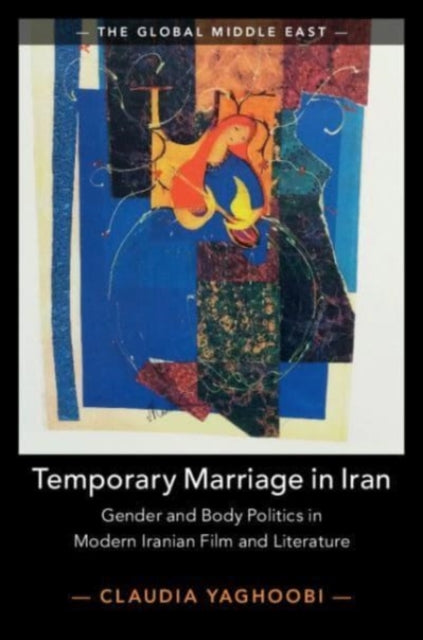
Temporary Marriage in Iran: Gender and Body Politics in Modern Iranian Film and Literature
Temporary Marriage in Iran: Gender and Body Politics in Modern Iranian Film and Literature
💎 Earn 160 Points (£1.60) on this item.
We can order this item for you. Delivery usually takes about 4 to 6 weeks.
This item is not held in our immediate stock. We will order it for you after checkout.
Estimated delivery: About 4 to 6 weeks
YOU SAVE £1.90
- Condition: Brand new
- UK Delivery times: Usually arrives within 2 - 3 working days
- UK Shipping: Fee starts at £2.39. Subject to product weight & dimension
Bulk ordering. Want 15 or more copies? Get a personalised quote and bigger discounts. Learn more about bulk orders.
Couldn't load pickup availability
- More about Temporary Marriage in Iran: Gender and Body Politics in Modern Iranian Film and Literature
This study explores the representation of temporary marriage in Iran through feminist theories of embodiment, focusing on how it impacts women's sexual bodily autonomy and political analysis. It analyzes novels and short stories from the Pahlavi era and cinematic works produced after the Islamic Revolution, revealing how sigheh women's sexual autonomy is used as ammunition against inappropriate gendered expression.
Format: Paperback / softback
Length: 310 pages
Publication date: 24 March 2022
Publisher: Cambridge University Press
This study proposes a methodology that brings feminist theories of embodiment to bear on the Iranian literary and cinematic tradition, examining temporary marriage in Iran not just as an institution but also as a set of practices, identities, and meanings that have transformed over the course of the twentieth and twenty-first centuries. Based on an analysis of novels and short stories from the Pahlavi era, as well as cinematic works produced after the Islamic Revolution, Claudia Yaghoobi explores the representation of sigheh women, or those who entered into temporary marriages. Each work reflects the manner in which the practice of sigheh impacts women by questioning how sexuality works as a form of political analysis and power, revealing how a sigheh woman's sexual bodily autonomy is used as ammunition against what governments deem inappropriate gendered expression. While focusing mainly on modern Iranian cultural productions, Yaghoobi extends beyond the literary and cinematic realms to offer an in-depth examination of this controversial social institution, which has been the subject of disdain for many Iranian feminists and captured the imagination of many Western observers.
Introduction:
Temporary marriage, also known as sigheh, has been a controversial social institution in Iran for centuries. While it has been practiced in various forms throughout history, it has gained particular prominence in modern Iranian cultural productions. This study aims to explore the representation of sigheh women in Iranian literature and cinema, examining how they are portrayed and the impact that their experiences have on their identities and lives.
Feminist Theories of Embodiment:
Feminist theories of embodiment emphasize the importance of the body as a site of political analysis and power. They argue that the body is not just a physical entity but also a social and cultural construct that is shaped by gender, race, class, and other social factors. Feminist scholars have explored the ways in which women's bodies are represented and manipulated in various cultural contexts, including Iranian literature and cinema.
Representation of Sigheh Women in Iranian Literature and Cinema:
In Iranian literature and cinema, sigheh women are often portrayed as victims of male domination and oppression. They are depicted as being forced into temporary marriages by their families or husbands, and their sexual autonomy is often violated. Sigheh women are also often stigmatized and marginalized by society, and they face discrimination and social exclusion.
Impact of Sigheh on Women's Identities:
The experience of sigheh can have a profound impact on women's identities. Women who enter into temporary marriages are often subjected to physical and emotional abuse, and they are often forced to conform to traditional gender roles and expectations. Sigheh can also lead to feelings of shame, guilt, and low self-esteem, as women are often viewed as objects and commodities rather than human beings.
Conclusion:
In conclusion, this study proposes a methodology that brings feminist theories of embodiment to bear on the Iranian literary and cinematic tradition. By examining the representation of sigheh women in Iranian literature and cinema, we can better understand the ways in which gender, sexuality, and power are intertwined in this controversial social institution. We can also gain insight into the experiences of sigheh women and the impact that their experiences have on their identities and lives.
Weight: 420g
ISBN-13: 9781108738439
Edition number: New ed
UK and International shipping information
UK and International shipping information
UK Delivery and returns information:
- Delivery within 2 - 3 days when ordering in the UK.
- Shipping fee for UK customers from £2.39. Fully tracked shipping service available.
- Returns policy: Return within 30 days of receipt for full refund.
International deliveries:
Shulph Ink now ships to Australia, Belgium, Canada, France, Germany, Ireland, Italy, India, Luxembourg Saudi Arabia, Singapore, Spain, Netherlands, New Zealand, United Arab Emirates, United States of America.
- Delivery times: within 5 - 10 days for international orders.
- Shipping fee: charges vary for overseas orders. Only tracked services are available for most international orders. Some countries have untracked shipping options.
- Customs charges: If ordering to addresses outside the United Kingdom, you may or may not incur additional customs and duties fees during local delivery.