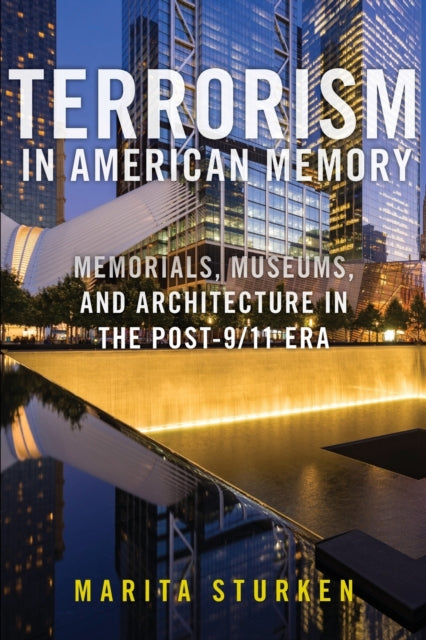
Marita Sturken
Terrorism in American Memory: Memorials, Museums, and Architecture in the Post-9/11 Era
Terrorism in American Memory: Memorials, Museums, and Architecture in the Post-9/11 Era
💎 Earn 99 Points (£0.99) on this item.
YOU SAVE £4.01
- Condition: Brand new
- UK Delivery times: Usually arrives within 2 - 3 working days
- UK Shipping: Fee starts at £2.39. Subject to product weight & dimension
Bulk ordering. Want 15 or more copies? Get a personalised quote and bigger discounts. Learn more about bulk orders.
Couldn't load pickup availability
- More about Terrorism in American Memory: Memorials, Museums, and Architecture in the Post-9/11 Era
The terrorist attacks of 9/11 and the subsequent wars have shaped American politics and culture in the post-9/11 era, leading to polarized factions and a preoccupation with memorialization and the politics of memory. Marita Sturken argues that memory is the battleground for negotiations of national identity and that the post-9/11 era has given rise era to an era of intensely nationalistic politics while releasing the containment of the ghosts of terrorism embedded within US history.
Format: Paperback / softback
Length: 336 pages
Publication date: 18 January 2022
Publisher: New York University Press
The role of cultural memory in American identity is a complex and multifaceted phenomenon that has played a significant role in shaping the nation's history and culture. One of the most notable aspects of cultural memory in America is its connection to terrorism, particularly in the aftermath of the 9/11 attacks.
Terrorism in American Memory, a book by Marita Sturken, argues that the terrorist attacks of 9/11 and all that followed in its wake were the primary force shaping United States politics and culture in the post-9/11 era. According to Sturken, during the past two decades, the country has been subjected to terrorist attacks and promulgated ongoing wars of aggression, leading to increasingly polarized factions and a preoccupation with memorialization and the politics of memory.
The post-9/11 era began with a hunger for memorialization, as people sought to commemorate the lives lost in the attacks and honor the victims. This hunger led to the creation of numerous memorial projects, including the 9/11 Memorial and Museum in New York, which serves as a powerful reminder of the tragic events of that day. However, as the years passed, the focus of memorialization shifted towards the politics of memory, as different groups sought to shape the narrative of the past in ways that reflected their own perspectives and interests.
One of the key arguments made by Sturken is that memory is both the battleground and the site for negotiations of national identity. Memory is a field through which the past is experienced in the present, and it plays a crucial role.
The paradox of the past two decades is that it gave rise.
rise to an era of intensely nationalistic politics in response to global terrorism at the same time that it released the containment of the ghosts of terrorism embedded within US history. This paradox is evident in the debates over historical monuments and memorials, as different groups sought to either destroy or preserve monuments honoring racist historical figures, such as Confederate statues and monuments to Christopher Columbus. These debates reflect the ongoing struggle over the legacy of slavery and colonialism in American history and the role that memory plays in shaping.
Within this disruption, new stories emerged, new memories were unearthed, and the story of the nation is being rewritten. This rewriting of the nation's story is reflected in the radical intervention of the National Memorial for Peace and Justice, informally known as the Lynching Memorial, in Montgomery, Alabama. Unlike the nationalistic 9/11 Memorial and Museum in New York, the Lynching Memorial dramatically rewrites the narrative of the nation's history by focusing on the brutal and systemic oppression of African Americans through lynching. The memorial, which features a series of sculptures depicting the victims of lynching, serves as a powerful reminder of the ongoing struggle for racial justice and equality in America.
In conclusion, the role of cultural memory in American identity is a complex and multifaceted phenomenon that has played a significant role in shaping the nation's history and culture. The post-9/11 era has been marked by a preoccupation with memorialization and the politics of memory, as different groups sought to shape the narrative of the past in ways that reflected their own perspectives and interests. Memory is both the battleground.
ground and the site for negotiations of national identity, and it plays a crucial role.
The paradox of the past two decades is that it gave rise.
rise to an era of intensely nationalistic politics in response to global terrorism at the same time that it released the containment of the ghosts of terrorism embedded within US history. This paradox is evident in the debates over historical monuments and memorials, as different groups sought to either destroy or preserve monuments honoring racist historical figures, such as Confederate statues and monuments to Christopher Columbus. These debates reflect the ongoing struggle over the legacy of slavery and colonialism in American history and the role that memory plays.
Within this disruption, new stories emerged, new memories were unearthed, and the story of the nation is being rewritten. This rewriting of the nation's story is reflected in the radical intervention of the National Memorial for Peace and Justice, informally known as the Lynching Memorial, in Montgomery, Alabama. Unlike the nationalistic 9/11 Memorial and Museum in New York, the Lynching Memorial dramatically rewrites the narrative of the nation's history by focusing on the brutal and systemic oppression of African Americans through lynching. The memorial, which features a series.
of sculptures depicting the victims of lynching, serves as a powerful reminder of the ongoing struggle for racial justice and equality in America. In conclusion, the role.
role of cultural memory in American identity is a complex and multifaceted phenomenon that has played a significant role in shaping the nation's history and culture. The post-9/11 era has been marked by a preoccupation with memorialization and the politics of memory, as different groups sought to shape the narrative of the past in ways that reflected their own perspectives and interests. Memory is both the battleground and the site for negotiations of national identity, and it plays a crucial.
The paradox of the past two decades is that it gave.
rise to an era of intensely nationalistic politics in response to global terrorism at the same time that it released the containment of the ghosts of terrorism embedded within US history. This paradox is evident in the debates over historical monuments and memorials, as different groups sought to either destroy or preserve monuments honoring racist historical figures, such as Confederate statues and monuments to Christopher Columbus. These debates reflect the ongoing struggle over the legacy of slavery and colonialism in American history and the role that memory plays.
Within this disruption, new stories emerged, new memories were unearthed, and the story of the nation is being rewritten. This rewriting of the nation's story is reflected in the radical intervention of the National Memorial for Peace and Justice, informally known as the Lynching Memorial, in Montgomery, Alabama. Unlike the nationalistic 9/11 Memorial and Museum in New York, the Lynching Memorial dramatically rewrites the narrative of the nation's history by focusing on the brutal and systemic oppression of African Americans through lynching. The memorial, which features a.
of sculptures depicting the victims of lynching, serves as a powerful reminder of the ongoing struggle for racial justice and equality in America. In conclusion, the.
role of cultural memory in American identity is a complex and multifaceted phenomenon that has played a significant role in shaping the nation's history and culture. The post-9/11 era has been marked by a preoccupation with memorialization and the politics of memory, as different groups sought to shape the narrative of the past in ways that reflected their own perspectives and interests. Memory is both the battleground and the site for negotiations of national identity.
The paradox of the past two decades is that it gave.
rise to an era of intensely nationalistic politics in response to global terrorism at the same time that it released the containment of the ghosts of terrorism embedded within US history. This paradox is evident in the debates over historical monuments and memorials, as different groups sought to either destroy or preserve monuments honoring racist historical figures, such as Confederate statues and monuments to Christopher Columbus. These debates reflect the ongoing struggle over the legacy of slavery and colonialism in American history and the role that memory plays.
Within this disruption, new stories emerged, new memories were unearthed, and the story of the nation is being rewritten. This rewriting of the nation's story is reflected in the radical intervention of the National Memorial for Peace and Justice, informally known as the Lynching Memorial, in Montgomery, Alabama. Unlike the nationalistic 9/11 Memorial and Museum in New York, the Lynching Memorial dramatically rewrites the narrative of the nation's history by focusing on the brutal and systemic oppression of African Americans through lynching. The memorial, which features a.
of sculptures depicting the victims of lynching, serves as a powerful reminder of the ongoing struggle for racial justice and equality in America. In conclusion, the.
role of cultural memory in American identity is a complex and multifaceted phenomenon that has played a significant role in shaping the nation's history and culture. The post-9/11 era has been marked by a preoccupation with memorialization and the politics of memory, as different groups sought to shape the narrative of the past in ways that reflected their own perspectives and interests. Memory is both the battleground and the site for negotiations of national identity, and it plays a crucial.
The paradox of the past two decades is that it gave.
rise to an era of intensely nationalistic politics in response to global terrorism at the same time that it released the containment of the ghosts of terrorism embedded within US history. This paradox is evident in the debates over historical monuments and memorials, as different groups sought to either destroy or preserve monuments honoring racist historical figures, such as Confederate statues and monuments to Christopher Columbus. These debates reflect the ongoing struggle over the legacy of slavery and colonialism in American history and the role that memory plays.
Within this disruption, new stories emerged, new memories were unearthed, and the story of the nation is being rewritten. This rewriting of the nation's story is reflected in the radical intervention of the National Memorial for Peace and Justice, informally known as the Lynching Memorial, in Montgomery, Alabama. Unlike the nationalistic 9/11 Memorial and Museum in New York, the Lynching Memorial dramatically rewrites the narrative of the nation's history by focusing on the brutal and systemic oppression of African Americans through lynching. The memorial, which features a.
of sculptures depicting the victims of lynching, serves as a powerful reminder of the ongoing struggle for racial justice and equality in America. In conclusion, the.
role of cultural memory in American identity is a complex and multifaceted phenomenon that has played a significant role in shaping the nation's history and culture. The post-9/11 era has been marked by a preoccupation with memorialization and the politics of memory, as different groups sought to shape the narrative of the past in ways that reflected their own perspectives and interests. Memory is both the battleground and the site for negotiations of national identity, and it plays a crucial.
The paradox of the past two decades is that it gave.
rise to an era of intensely nationalistic politics in response to global terrorism at the same time that it released the containment of the ghosts of terrorism embedded within US history. This paradox is evident in the debates over historical monuments and memorials, as different groups sought to either destroy or preserve monuments honoring racist historical figures, such as Confederate statues and monuments to Christopher Columbus. These debates reflect the ongoing struggle over the legacy of slavery and colonialism in American history and the role that memory plays.
Within this disruption, new stories emerged, new memories were unearthed, and the story of the nation is being rewritten. This rewriting of the nation's story is reflected in the radical intervention of the National Memorial for Peace and Justice, informally known as the Lynching Memorial, in Montgomery, Alabama. Unlike the nationalistic 9/11 Memorial and Museum in New York, the Lynching Memorial dramatically rewrites the narrative of the nation's history by focusing on the brutal and systemic oppression of African Americans through lynching. The memorial, which features a.
of sculptures depicting the victims of lynching, serves as a powerful reminder of the ongoing struggle for racial justice and equality in America. In conclusion, the.
Weight: 504g
Dimension: 152 x 227 x 28 (mm)
ISBN-13: 9781479811687
This item can be found in:
UK and International shipping information
UK and International shipping information
UK Delivery and returns information:
- Delivery within 2 - 3 days when ordering in the UK.
- Shipping fee for UK customers from £2.39. Fully tracked shipping service available.
- Returns policy: Return within 30 days of receipt for full refund.
International deliveries:
Shulph Ink now ships to Australia, Belgium, Canada, France, Germany, Ireland, Italy, India, Luxembourg Saudi Arabia, Singapore, Spain, Netherlands, New Zealand, United Arab Emirates, United States of America.
- Delivery times: within 5 - 10 days for international orders.
- Shipping fee: charges vary for overseas orders. Only tracked services are available for most international orders. Some countries have untracked shipping options.
- Customs charges: If ordering to addresses outside the United Kingdom, you may or may not incur additional customs and duties fees during local delivery.