Jeremy Rifkin
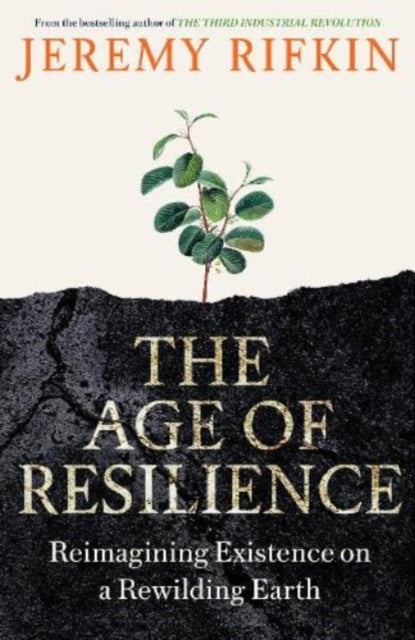
The Age of Resilience: Reimagining Existence on a Rewilding Earth
The Age of Resilience: Reimagining Existence on a Rewilding Earth
💎 Earn 45 Points (£0.45) on this item.
YOU SAVE £3.80
- Condition: Brand new
- UK Delivery times: Usually arrives within 2 - 3 working days
- UK Shipping: Fee starts at £2.39. Subject to product weight & dimension
Bulk ordering. Want 15 or more copies? Get a personalised quote and bigger discounts. Learn more about bulk orders.
Couldn't load pickup availability
- More about The Age of Resilience: Reimagining Existence on a Rewilding Earth
The Age of Resilience: Reimagining Existence on a Rewilding Earth examines the political, economic, and cultural effects of the global shift from an economy based on efficiency to one based on resilience. It argues that humans must adapt to survive and thrive in an unpredictable natural world and that a massive transformation of our economy is already underway.
Format: Paperback / softback
Length: 336 pages
Publication date: 16 November 2023
Publisher: Swift Press
The global transition from an economy focused on efficiency to one centered on resilience is explored in depth in Jeremy Rifkin's book, The Age of Resilience: Reimagining Existence on a Rewilding Earth. The book delves into the complex political, economic, and cultural ramifications of this shift, highlighting the need for humans to adapt to an unpredictable natural world.
For centuries, humans have held the belief that they can control and manipulate the natural world to suit their needs. However, recent scientific evidence suggests that the earth is undergoing a significant rewilding process, driven by climate change and other environmental factors. This rewilding is forcing humans to confront the reality that they are not the dominant force on the planet and that their survival and prosperity depend on their ability to adapt to the changing conditions.
In The Age of Resilience, Jeremy Rifkin provides a comprehensive analysis of this transformation and its profound effects on the way we think about the meaning of our existence, our economy, and how we govern ourselves. Rifkin argues that the shift towards a resilient economy is not just a matter of environmental sustainability but also a fundamental shift in our understanding of human nature and our relationship with the natural world.
According to Rifkin, the traditional economic model, which is based on the principle of maximizing efficiency and growth, is inherently flawed and unsustainable. It encourages short-term thinking, resource depletion, and environmental degradation, all of which contribute to climate change and other environmental crises. In contrast, a resilient economy is based on the principles of sustainability, self-organization, and adaptability. It emphasizes the importance of building resilience into our systems, communities, and economies to withstand the shocks and stresses of a changing environment.
One of the key aspects of a resilient economy is the shift towards renewable energy sources and the reduction of our dependence on fossil fuels. Rifkin argues that the transition to a renewable energy economy will not only reduce our carbon footprint but also create new jobs and economic opportunities. He also suggests that we need to reimagine our transportation systems, urban planning, and agricultural practices to promote sustainable and resilient communities.
In addition to the economic aspects of resilience, Rifkin also explores the cultural and social implications of the shift towards a resilient economy. He argues that the traditional hierarchical structures of power and control are no longer sustainable and that we need to develop new forms of governance and decision-making processes that are more decentralized and participatory. He also suggests that we need to cultivate a greater sense of community and social cohesion to address the challenges of climate change and other environmental crises.
Overall, The Age of Resilience is a thought-provoking and inspiring book that provides a roadmap for navigating the challenges of a changing world. It challenges us to rethink our economic, political, and cultural systems and to develop new ways of living and working that are more sustainable and resilient. While the book acknowledges that the transition to a resilient economy will not be easy, it offers hope and inspiration for a better future.
The global transition from an economy focused on efficiency to one centered on resilience is explored in depth in Jeremy Rifkin's book, The Age of Resilience: Reimagining Existence on a Rewilding Earth. The book delves into the complex political, economic, and cultural ramifications of this shift, highlighting the need for humans to adapt to an unpredictable natural world.
For centuries, humans have held the belief that they can control and manipulate the natural world to suit their needs. However, recent scientific evidence suggests that the earth is undergoing a significant rewilding process, driven by climate change and other environmental factors. This rewilding is forcing humans to confront the reality that they are not the dominant force on the planet and that their survival and prosperity depend on their ability to adapt to the changing conditions.
In The Age of Resilience, Jeremy Rifkin provides a comprehensive analysis of this transformation and its profound effects on the way
The traditional economic model, which is based on the principle
The traditional economic model, which is based on the principle of maximizing efficiency and growth, is inherently flawed and unsustainable. It encourages short-term thinking, resource depletion, and environmental degradation, all of which contribute to climate change and other environmental crises. In contrast, a resilient economy is based on the principles of sustainability, self-organization, and adaptability. It emphasizes the importance of building resilience into our systems, communities, and economies to withstand the shocks and stresses of a changing environment.
One of the key aspects of a resilient economy is the shift towards renewable energy sources and the reduction of our dependence on fossil fuels. Rifkin argues that the transition to a renewable energy economy will not only reduce our carbon footprint but also create new jobs and economic opportunities. He also suggests that we need to reimagine our transportation systems, urban planning, and agricultural practices to promote sustainable and resilient communities.
In addition to the economic aspects of resilience, Rifkin also explores the cultural and social implications of the shift towards a resilient economy. He argues that the traditional hierarchical structures of power and control are no longer sustainable and that we need to develop new forms of governance and decision-making processes that are more decentralized and participatory. He also suggests that we need to cultivate a greater sense of community and social cohesion to address the challenges of climate change and other environmental crises.
Overall, The Age of Resilience is a thought-provoking and inspiring book that provides a roadmap for navigating the challenges of a changing world. It challenges us to rethink our economic, political, and cultural systems and to develop new ways of living and working that are more sustainable and resilient. While the book acknowledges that the transition to a resilient economy will not be easy, it offers hope and inspiration for a better future.
Weight: 288g
Dimension: 198 x 129 x 24 (mm)
ISBN-13: 9781800751965
UK and International shipping information
UK and International shipping information
UK Delivery and returns information:
- Delivery within 2 - 3 days when ordering in the UK.
- Shipping fee for UK customers from £2.39. Fully tracked shipping service available.
- Returns policy: Return within 30 days of receipt for full refund.
International deliveries:
Shulph Ink now ships to Australia, Belgium, Canada, France, Germany, Ireland, Italy, India, Luxembourg Saudi Arabia, Singapore, Spain, Netherlands, New Zealand, United Arab Emirates, United States of America.
- Delivery times: within 5 - 10 days for international orders.
- Shipping fee: charges vary for overseas orders. Only tracked services are available for most international orders. Some countries have untracked shipping options.
- Customs charges: If ordering to addresses outside the United Kingdom, you may or may not incur additional customs and duties fees during local delivery.