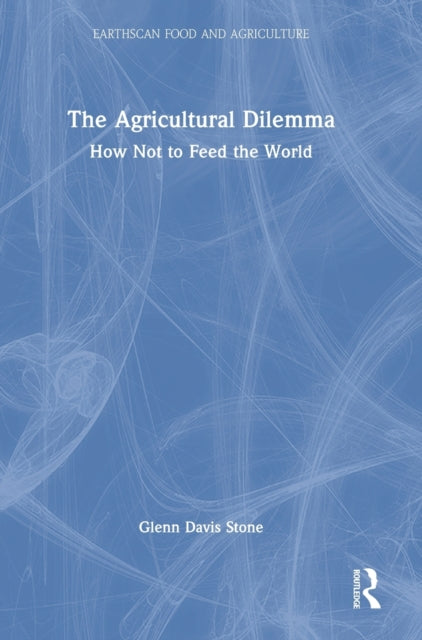
Glenn Davis Stone
The Agricultural Dilemma: How Not to Feed the World
The Agricultural Dilemma: How Not to Feed the World
💎 Earn 811 Points (£8.11) on this item.
We can order this item for you. Delivery usually takes about 4 to 6 weeks.
This item is not held in our immediate stock. We will order it for you after checkout.
Estimated delivery: About 4 to 6 weeks
YOU SAVE £9.63
- Condition: Brand new
- UK Delivery times: Usually arrives within 2 - 3 working days
- UK Shipping: Fee starts at £2.39. Subject to product weight & dimension
Bulk ordering. Want 15 or more copies? Get a personalised quote and bigger discounts. Learn more about bulk orders.
Couldn't load pickup availability
- More about The Agricultural Dilemma: How Not to Feed the World
This book provides a new analysis of population and agricultural growth, arguing that we need to recognize the drivers of three different types of agriculture: Malthusian, industrialization, and intensification. It upends misconceptions about land scarcity and the need for new technologies, and is written in an engaging style with vignettes, short histories, and global case studies. It will be of interest to students and scholars of agriculture, land management, and development, as well as those more broadly interested in agri-food systems and the challenges of feeding a growing population.
Format: Hardback
Length: 232 pages
Publication date: 30 June 2022
Publisher: Taylor & Francis Ltd
This groundbreaking book offers a fresh perspective on population and agricultural growth, challenging prevailing misconceptions and illuminating the drivers of three distinct agricultural types: Malthusian, industrialization, and intensification. By exploring these diverse approaches, the author upends entrenched beliefs and provides a comprehensive understanding of the complexities of food production. Written in an engaging and accessible style, the book features vignettes, short histories, and global case studies, making it of interest to students, scholars, and anyone seeking to learn about agri-food systems and the challenges of feeding a growing population.
The author begins by examining the Malthusian approach, which emphasizes population growth as a primary driver of agricultural expansion. This approach has been dominant in the past, leading to the widespread belief that we are running out of land for food production. However, the author argues that this belief is based on a narrow understanding of the relationship between population and land.
The book then delves into the industrialization approach, which is characterized by the reliance on external inputs such as fertilizers, pesticides, and machinery to increase productivity. While this approach has led to significant improvements in food production, it has also come with environmental and social costs. The author highlights the negative impact of industrial agriculture on soil health, biodiversity, and human health, and calls for a shift towards more sustainable and equitable practices.
Finally, the author explores the intensification approach, which emphasizes the use of labor and technology to increase agricultural productivity. This approach has been successful in many parts of the world, particularly in developing countries, but it has also led to concerns about the exploitation of workers and the depletion of natural resources. The author argues that a balanced approach that combines elements of Malthusian, industrialization, and intensification can lead to sustainable and equitable food production.
Throughout the book, the author uses engaging anecdotes, historical examples, and global case studies to illustrate the challenges and opportunities of each agricultural type. These examples help to bring the concepts to life and make the book accessible to a wide range of readers.
In conclusion, this groundbreaking book offers a valuable contribution to the field of agriculture and development. By challenging prevailing misconceptions and illuminating the drivers of three distinct agricultural types, the author provides a comprehensive understanding of the complexities of food production. Written in an engaging and accessible style, the book is of interest to students, scholars, and anyone seeking to learn about agri-food systems and the challenges of feeding a growing population.
Weight: 620g
Dimension: 246 x 174 (mm)
ISBN-13: 9781032260471
This item can be found in:
UK and International shipping information
UK and International shipping information
UK Delivery and returns information:
- Delivery within 2 - 3 days when ordering in the UK.
- Shipping fee for UK customers from £2.39. Fully tracked shipping service available.
- Returns policy: Return within 30 days of receipt for full refund.
International deliveries:
Shulph Ink now ships to Australia, Belgium, Canada, France, Germany, Ireland, Italy, India, Luxembourg Saudi Arabia, Singapore, Spain, Netherlands, New Zealand, United Arab Emirates, United States of America.
- Delivery times: within 5 - 10 days for international orders.
- Shipping fee: charges vary for overseas orders. Only tracked services are available for most international orders. Some countries have untracked shipping options.
- Customs charges: If ordering to addresses outside the United Kingdom, you may or may not incur additional customs and duties fees during local delivery.