Timothy S Good
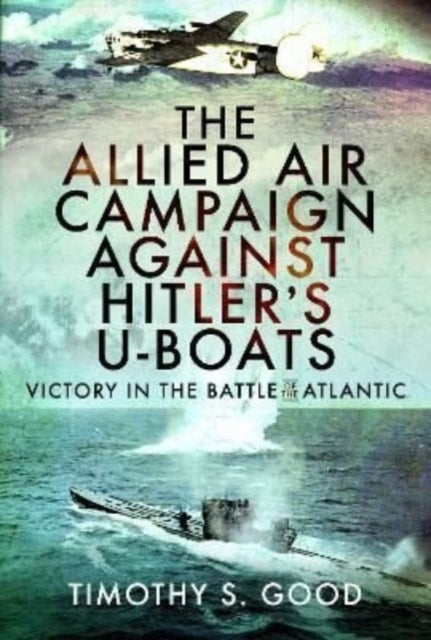
The Allied Air Campaign Against Hitler's U-boats: Victory in the Battle of the Atlantic
The Allied Air Campaign Against Hitler's U-boats: Victory in the Battle of the Atlantic
💎 Earn 88 Points (£0.88) on this item.
YOU SAVE £7.30
- Condition: Brand new
- UK Delivery times: Usually arrives within 2 - 3 working days
- UK Shipping: Fee starts at £2.39. Subject to product weight & dimension
Bulk ordering. Want 15 or more copies? Get a personalised quote and bigger discounts. Learn more about bulk orders.
Couldn't load pickup availability
- More about The Allied Air Campaign Against Hitler's U-boats: Victory in the Battle of the Atlantic
A detailed study of the Allied air campaign against Hitler's U-boats in the Second World War.
Format: Hardback
Length: 256 pages
Publication date: 16 August 2022
Publisher: Pen & Sword Books Ltd
No weapon platform sank more U-boats in the Second World War than the Allied aircraft. Whether it was an American plane operating from American escort carriers, US aircraft from Royal Air Force bases, or British aircraft from bases throughout the world, these officers and men became the most decisive factor in turning the tide of the Battle of the Atlantic against the German submarine threat. While the German crews could threaten escort vessels with torpedoes, or avoid them by remaining submerged, their leaders never developed an effective strategy against aircraft. However, the Allied aircraft did not enjoy much early success. British, Canadian, and Australian air crews that fought the U-boats from 1939 until 1941 achieved few triumphs. They possessed neither the aircraft nor the bases necessary to deliver consistent lethal attacks against German submarines. In 1941, the Royal Air Force finally began implementing an effective aircraft response when it initiated training on the American-built Consolidated B-24 Liberators. Supported by other types then in service, these four-engine bombers would prove to be decisive. With America's entry into the war, the United States Navy and the United States Army Air Forces also began employing Liberators against the U-boats so that by mid-1943, the Admiral Karl Donitz, commander of U-boat forces, withdrew his submarines from the North Atlantic in recognition of the Allied aircraft's new dominance. From Donitz's retreat to the end of the war, Allied aircraft continued to dominate the U-boat battle as it shifted to other areas, including the Bay of Biscay. Donitz eventually ordered his U-boats to remain on the surface and engage Allied aircraft as opposed to submerging. This approach did lead to the demise of some Allied aircraft, but it also allowed the Allies to gain the upper hand in the air war over the Atlantic.
The Allied aircraft played a crucial role in the Battle of the Atlantic, which was a pivotal conflict in World War II. The German submarine threat posed a significant danger to the Allied convoys, which were transporting supplies and troops to Europe. The German submarines were able to launch devastating attacks on the convoys, sinking many ships and causing significant loss of life.
However, the Allied aircraft were able to turn the tide of the battle against the German submarines. The first step was the development of the radar, which allowed the Allied aircraft to detect the German submarines at long distances. This allowed the Allied aircraft to launch pre-emptive attacks on the German submarines, before they could launch their attacks.
The Allied aircraft also developed new tactics and strategies to combat the German submarines. One of these was the use of convoys, which were groups of ships that sailed together in a formation to make it more difficult for the German submarines to target them. The Allied aircraft also used saturation bombing, which involved flying large numbers of aircraft over a target area and dropping bombs on it.
Another important factor in the Allied victory was the development of the Liberator, a four-engine bomber that was used by the Royal Air Force (RAF) in the Battle of the Atlantic. The Liberator was able to carry a large payload of bombs and was able to fly for long distances, making it an ideal weapon for attacking the German submarines.
The Allied aircraft also had the advantage of air superiority, which meant that they were able to control the skies over the Atlantic. This allowed them to launch their attacks on the German submarines without fear of being intercepted by German fighter planes.
In conclusion, the Allied aircraft played a crucial role in the Battle of the Atlantic, which was a pivotal conflict in World War II. The German submarine threat posed a significant danger to the Allied convoys, but the Allied aircraft were able to turn the tide of the battle against the German submarines. The development of radar, new tactics and strategies, the use of convoys, saturation bombing, and the development of the Liberator were all important factors in the Allied victory.
Weight: 616g
Dimension: 166 x 242 x 31 (mm)
ISBN-13: 9781399096492
This item can be found in:
UK and International shipping information
UK and International shipping information
UK Delivery and returns information:
- Delivery within 2 - 3 days when ordering in the UK.
- Shipping fee for UK customers from £2.39. Fully tracked shipping service available.
- Returns policy: Return within 30 days of receipt for full refund.
International deliveries:
Shulph Ink now ships to Australia, Belgium, Canada, France, Germany, Ireland, Italy, India, Luxembourg Saudi Arabia, Singapore, Spain, Netherlands, New Zealand, United Arab Emirates, United States of America.
- Delivery times: within 5 - 10 days for international orders.
- Shipping fee: charges vary for overseas orders. Only tracked services are available for most international orders. Some countries have untracked shipping options.
- Customs charges: If ordering to addresses outside the United Kingdom, you may or may not incur additional customs and duties fees during local delivery.