Kesha Grant
The Amazing History of Fashion
The Amazing History of Fashion
💎 Earn 55 Points (£0.55) on this item.
YOU SAVE £2.93
- Condition: Brand new
- UK Delivery times: Usually arrives within 2 - 3 working days
- UK Shipping: Fee starts at £2.39. Subject to product weight & dimension
Bulk ordering. Want 15 or more copies? Get a personalised quote and bigger discounts. Learn more about bulk orders.
Couldn't load pickup availability
- More about The Amazing History of Fashion
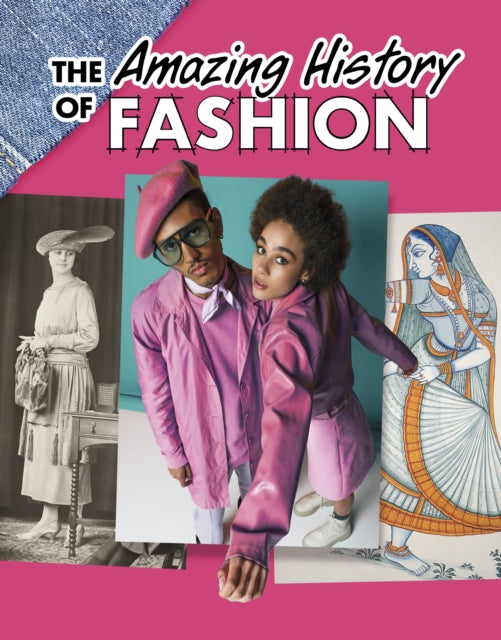
The way we dress today has evolved significantly over time, with clothing once used as a status symbol and denim and blue jeans becoming popular. The history of fashion is full of unusual, amazing, and fascinating facts, such as how people have used fashion to survive and thrive in everyday life.
Format: Hardback
Length: 32 pages
Publication date: 28 November 2023
Publisher: Capstone Global Library Ltd
The way we dress today has undergone a significant transformation compared to the past. Fashion has evolved from a mere accessory to a status symbol, and it has played a pivotal role in shaping our cultural identity. From the advent of denim and the rise of blue jeans to the evolution of clothing as a means of survival and prosperity, the history of fashion is a captivating journey filled with unusual, amazing, and fascinating facts.
In ancient times, clothing was not just a fashion statement but a vital tool for survival. People used different materials and colors to protect themselves from the harsh elements and convey their social status. For instance, the Egyptians wore elaborate wigs and makeup to symbolize their wealth and power, while the Spartans wore simple clothing made from animal hides to enhance their physical strength and agility.
The Middle Ages saw a significant shift in fashion trends. During this period, clothing was primarily functional, with layers of thick fabrics used to protect against the cold and heavy armor worn to protect against combat. However, some individuals still sought to express their style through accessories such as jewelry and embroidery.
The Renaissance period brought about a renewed interest in fashion and art. People began to experiment with new styles and materials, and fashion became a symbol of wealth and status. The invention of the printing press in the 15th century allowed for the mass production of clothing, making it more affordable and accessible to the general public.
The 18th and 19th centuries saw the rise of the fashion industry as we know it today. The Industrial Revolution led to the mass production of clothing, and new technologies such as the sewing machine and the loom made it possible to produce garments quickly and efficiently. This period also saw the emergence of fashion magazines and the rise of fashion designers such as Charles Frederick Worth and Coco Chanel.
The 20th century brought about a wave of new fashion trends and styles. The rise of consumerism and the media played a significant role in shaping fashion trends, with celebrities and fashion designers becoming household names. The Second World War saw a shift in fashion priorities, with women's clothing becoming more practical and functional while men's clothing became more military-inspired.
In the 21st century, fashion has continued to evolve and adapt to changing societal norms and technological advancements. The rise of social media and e-commerce has made fashion more accessible to people from all over the world, and designers have been able to experiment with new materials and styles more freely.
One of the most significant fashion trends in recent years has been the rise of sustainable fashion. With concerns about climate change and environmental sustainability growing, consumers are increasingly looking for clothing that is made from eco-friendly materials and produced in a sustainable manner. This has led to the development of new materials such as bamboo, organic cotton, and recycled polyester, as well as the adoption of ethical production practices such as fair trade and worker empowerment.
Another notable trend in fashion has been the rise of streetwear and hip-hop culture. Streetwear, which originated in the 1970s and 1980s, has become a global phenomenon, with brands such as Supreme, Nike, and Adidas becoming household names. Hip-hop culture, which emerged in the 1980s, has also influenced fashion trends, with artists such as Kanye West and Travis Scott creating their own clothing lines and collaborating with fashion designers.
In conclusion, the history of fashion is a rich and fascinating journey that has evolved over thousands of years. From the practical use of clothing in ancient times to the symbolic expression of wealth and status in the Renaissance, to the mass production and global accessibility of fashion in the 21st century, fashion has played a crucial role in shaping our cultural identity and our everyday lives. As we continue to evolve and adapt to changing societal norms and technological advancements, fashion will undoubtedly continue to be a powerful force in shaping our world.
Weight: 286g
Dimension: 179 x 237 x 10 (mm)
ISBN-13: 9781398251472
UK and International shipping information
UK and International shipping information
UK Delivery and returns information:
- Delivery within 2 - 3 days when ordering in the UK.
- Shipping fee for UK customers from £2.39. Fully tracked shipping service available.
- Returns policy: Return within 30 days of receipt for full refund.
International deliveries:
Shulph Ink now ships to Australia, Belgium, Canada, France, Germany, Ireland, Italy, India, Luxembourg Saudi Arabia, Singapore, Spain, Netherlands, New Zealand, United Arab Emirates, United States of America.
- Delivery times: within 5 - 10 days for international orders.
- Shipping fee: charges vary for overseas orders. Only tracked services are available for most international orders. Some countries have untracked shipping options.
- Customs charges: If ordering to addresses outside the United Kingdom, you may or may not incur additional customs and duties fees during local delivery.