David F.Lancy
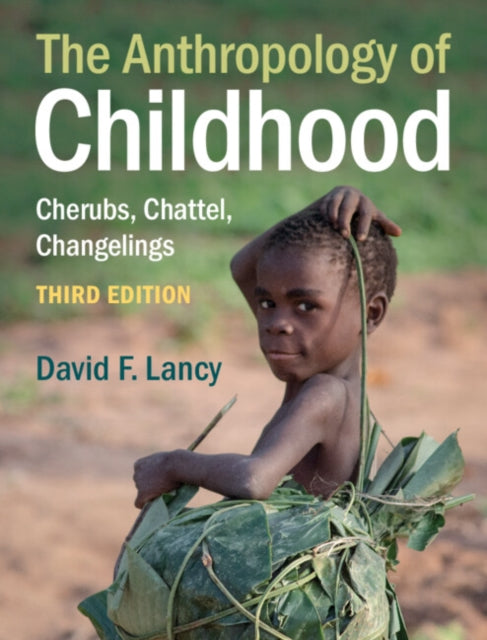
The Anthropology of Childhood: Cherubs, Chattel, Changelings
The Anthropology of Childhood: Cherubs, Chattel, Changelings
💎 Earn 160 Points (£1.60) on this item.
YOU SAVE £1.90
- Condition: Brand new
- UK Delivery times: Usually arrives within 2 - 3 working days
- UK Shipping: Fee starts at £2.39. Subject to product weight & dimension
Bulk ordering. Want 15 or more copies? Get a personalised quote and bigger discounts. Learn more about bulk orders.
Couldn't load pickup availability
- More about The Anthropology of Childhood: Cherubs, Chattel, Changelings
This book explores how children are raised in different cultures, the role of children in society, and how families and communities are structured around them. It is organized developmentally and enriched with anecdotes from ethnography and the daily media.
Format: Paperback / softback
Length: 584 pages
Publication date: 10 March 2022
Publisher: Cambridge University Press
Children are raised in diverse ways across different cultures, shaped by a complex interplay of cultural, social, and familial factors. The role of children in society is multifaceted, encompassing various aspects such as education, socialization, and contribution to the community. Families and communities play a crucial role in shaping children's lives, providing support, guidance, and a sense of belonging.
This engaging book, now in its third edition, delves into these questions by reviewing and cataloging the findings of over 100 years of anthropological scholarship on childhood and adolescence. Organized developmentally, it spans from infancy to adolescence and early adulthood, enriched with anecdotes from ethnography and the daily media to provide a nuanced and credible portrayal of childhood in different cultures, both past and present.
In this expanded and updated edition, over 350 new sources have been incorporated, covering a range of topics such as how children learn from their environment, the significance of middle childhood, and the transmission of culture between generations. This book remains an essential resource for understanding what it means to be a child in our complex and ever-changing world.
Infancy: Infancy is a critical period in a child's development, marked by rapid physical and cognitive growth. In many cultures, infants are highly valued and receive intensive care and attention from family members and caregivers. Breastfeeding is commonly practiced, and infants are often carried close to their parents or wrapped in blankets for warmth and security.
Toddlerhood: Toddlerhood is a period of exploration and independence, as children begin to develop their motor skills, language, and social interactions. They may become more mobile, curious, and assertive, and may engage in simple games and activities. Families may provide a structured environment with toys, books, and activities to encourage learning and development.
Preschool: Preschool is an important stage in a child's education, providing a foundation for learning and socialization. Children in preschool learn basic skills such as reading, writing, and counting, as well as develop social skills such as sharing, cooperation, and empathy. Preschool programs often incorporate play-based learning, allowing children to explore and experiment with their environment.
Elementary School: Elementary school is the first level of formal education in many countries, and it plays a crucial role in shaping a child's academic and social development. Children in elementary school learn basic academic skills such as reading, writing, and math, as well as develop social skills such as teamwork, communication, and problem-solving. Elementary school also introduces children to various subjects such as science, history, and art.
Middle School: Middle school is a transitional period between childhood and adolescence, marked by physical and emotional changes. Children in middle school may experience a heightened sense of self-awareness, social pressures, and a desire for independence. They may engage in more complex social interactions, participate in extracurricular activities, and begin to develop their own identities and interests.
High School: High school is a critical period in a child's education, as they transition from adolescence to adulthood. High school students are expected to be more independent and responsible, and they may begin to explore their academic and career interests. High school also provides opportunities for socialization, extracurricular activities, and personal growth.
Adolescence: Adolescence is a period of significant physical, emotional, and social changes. Children in adolescence may experience a heightened sense of self-awareness, a desire for independence, and a growing interest in social and cultural issues. They may also face challenges such as peer pressure, academic pressures, and identity development.
Early Adulthood: Early adulthood is a period of transition between adolescence and adulthood, characterized by increased independence, financial responsibility, and personal growth. Young adults may begin to establish their careers, form relationships, and establish their own families. They may also continue to explore their personal and cultural identities.
The role of children in society varies across different cultures, but there are some common themes that emerge. Children are often seen as a source of joy, happiness, and future growth, and they are valued for their potential and potential contributions to the community. Children are also often seen as a responsibility, and parents and caregivers are expected to provide for their physical, emotional, and social needs.
Families and communities play a crucial role in shaping children's lives. Families provide a nurturing and supportive environment for children, offering love, guidance, and a sense of belonging. Families may also play a role in transmitting cultural values, traditions, and beliefs to their children. Communities, on the other hand, provide a social and educational environment for children, offering opportunities for socialization, learning, and participation in various activities.
In conclusion, children are raised in diverse ways across different cultures, shaped by a complex interplay of cultural, social, and familial factors. The role of children in society is multifaceted, encompassing education, socialization, and contribution to the community. Families and communities play a crucial role in shaping children's lives, providing support, guidance, and a sense of belonging. This engaging book provides a comprehensive and nuanced portrayal of childhood in different cultures, offering valuable insights into what it means to be a child in our complex and ever-changing world.
Weight: 1274g
Dimension: 188 x 244 x 32 (mm)
ISBN-13: 9781108931991
Edition number: 3 Revised edition
This item can be found in:
UK and International shipping information
UK and International shipping information
UK Delivery and returns information:
- Delivery within 2 - 3 days when ordering in the UK.
- Shipping fee for UK customers from £2.39. Fully tracked shipping service available.
- Returns policy: Return within 30 days of receipt for full refund.
International deliveries:
Shulph Ink now ships to Australia, Belgium, Canada, France, Germany, Ireland, Italy, India, Luxembourg Saudi Arabia, Singapore, Spain, Netherlands, New Zealand, United Arab Emirates, United States of America.
- Delivery times: within 5 - 10 days for international orders.
- Shipping fee: charges vary for overseas orders. Only tracked services are available for most international orders. Some countries have untracked shipping options.
- Customs charges: If ordering to addresses outside the United Kingdom, you may or may not incur additional customs and duties fees during local delivery.