Shulph Ink
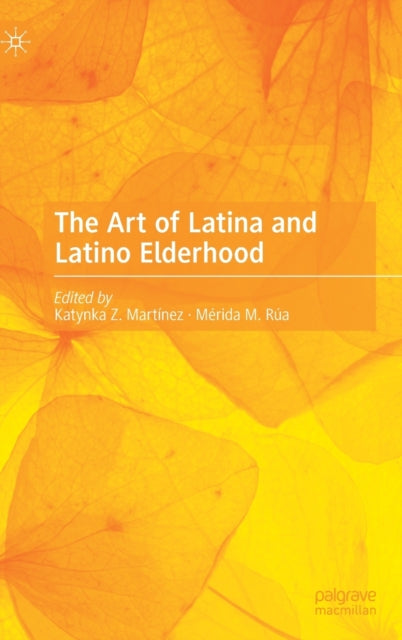
The Art of Latina and Latino Elderhood
The Art of Latina and Latino Elderhood
💎 Earn 412 Points (£4.12) on this item.
We can order this item for you. Delivery usually takes about 4 to 6 weeks.
This item is not held in our immediate stock. We will order it for you after checkout.
Estimated delivery: About 4 to 6 weeks
YOU SAVE £17.40
- Condition: Brand new
- UK Delivery times: Usually arrives within 2 - 3 working days
- UK Shipping: Fee starts at £2.39. Subject to product weight & dimension
Bulk ordering. Want 15 or more copies? Get a personalised quote and bigger discounts. Learn more about bulk orders.
Couldn't load pickup availability
- More about The Art of Latina and Latino Elderhood
Latinos are a young demographic, with a median age of 30, and this special issue of Latino Studies highlights the growing, aging Latino population that deserves attention. It features academic articles and creative contributions that challenge assumptions about Latinos and aging and encourages researchers and artists to share new stories about the pleasures, difficulties, and complexities of Latinx later life.
Format: Hardback
Length: 139 pages
Publication date: 21 November 2022
Publisher: Springer International Publishing AG
It is widely acknowledged that Latinos constitute a substantial and diverse population, and we are a youthful demographic. The median age of non-Hispanic white Americans is 58, while for Latinos, it is 30.Footnote1 Perhaps this partly explains the lack of attention given to the topic of aging Latinos by academic scholarship and the mainstream media. This special issue serves as a compelling reminder that there is a growing, aging Latino population about which we know very little and that merits our attention. I am grateful to Katynka Martínez and Mérida Rúa for curating "The Art of Latina and Latino Elderhood," as this special issue addresses this significant knowledge gap by presenting an exciting collection of academic articles and creative contributions that challenge our assumptions about Latinos and aging and also our approach to including contributions in our journal pages. Katynka and Mérida argue that the story of Latino elderhood is best conveyed through a truly multidisciplinary and interdisciplinary approach, bringing together public policy, humanistic social sciences, and artistic interventions. For the first time, Latino Studies is pleased to feature a novel in progress, a photo essay/dialogue, an artist's monologue, and a dialogue among actors alongside more traditional academic articles. I believe that you will agree that this issue before you beautifully conveys why the subject of Latinos and aging should concern all of us, and that it will inspire other researchers and artists to accept the invitation to continue sharing new evocative stories about the joys, challenges, and complexities of Latinx later life.
Introduction:
Latinos are a significant and diverse population, and we are a youthful demographic. The median age of non-Hispanic white Americans is 58, while for Latinos, it is 30.Footnote1 Perhaps this partly explains the lack of attention given to the topic of aging Latinos by academic scholarship and the mainstream media. This special issue serves as a compelling reminder that there is a growing, aging Latino population about which we know very little and that merits our attention. I am grateful to Katynka Martínez and Mérida Rúa for curating "The Art of Latina and Latino Elderhood," as this special issue addresses this significant knowledge gap by presenting an exciting collection of academic articles and creative contributions that challenge our assumptions about Latinos and aging and also our approach to including contributions in our journal pages. Katynka and Mérida argue that the story of Latino elderhood is best conveyed through a truly multidisciplinary and interdisciplinary approach, bringing together public policy, humanistic social sciences, and artistic interventions. For the first time, Latino Studies is pleased to feature a novel in progress, a photo essay/dialogue, an artist's monologue, and a dialogue among actors alongside more traditional academic articles. I believe that you will agree that this issue before you beautifully conveys why the subject of Latinos and aging should concern all of us, and that it will inspire other researchers and artists to accept the invitation to continue sharing new evocative stories about the joys, challenges, and complexities of Latinx later life.
The Growing, Aging Latino Population:
It is widely recognized that Latinos constitute a substantial and diverse population, and we are a youthful demographic. The median age of non-Hispanic white Americans is 58, while for Latinos, it is 30.Footnote1 Perhaps this partly explains the lack of attention given to the topic of aging Latinos by academic scholarship and the mainstream media. This special issue serves as a compelling reminder that there is a growing, aging Latino population about which we know very little and that merits our attention. I am grateful to Katynka Martínez and Mérida Rúa for curating "The Art of Latina and Latino Elderhood," as this special issue addresses this significant knowledge gap by presenting an exciting collection of academic articles and creative contributions that challenge our assumptions about Latinos and aging and also our approach to including contributions in our journal pages. Katynka and Mérida argue that the story of Latino elderhood is best conveyed through a truly multidisciplinary and interdisciplinary approach, bringing together public policy, humanistic social sciences, and artistic interventions. For the first time, Latino Studies is pleased to feature a novel in progress, a photo essay/dialogue, an artist's monologue, and a dialogue among actors alongside more traditional academic articles. I believe that you will agree that this issue before you beautifully conveys why the subject of Latinos and aging should concern all of us, and that it will inspire other researchers and artists to accept the invitation to continue sharing new evocative stories about the joys, challenges, and complexities of Latinx later life.
The Need for a Multidisciplinary and Interdisciplinary Approach:
It is widely recognized that Latinos constitute a substantial and diverse population, and we are a youthful demographic. The median age of non-Hispanic white Americans is 58, while for Latinos, it is 30.Footnote1 Perhaps this partly explains the lack of attention given to the topic of aging Latinos by academic scholarship and the mainstream media. This special issue serves as a compelling reminder that there is a growing, aging Latino population about which we know very little and that merits our attention. I am grateful to Katynka Martínez and Mérida Rúa for curating "The Art of Latina and Latino Elderhood," as this special issue addresses this significant knowledge gap by presenting an exciting collection of academic articles and creative contributions that challenge our assumptions about Latinos and aging and also our approach to including contributions in our journal pages. Katynka and Mérida argue that the story of Latino elderhood is best conveyed through a truly multidisciplinary and interdisciplinary approach, bringing together public policy, humanistic social sciences, and artistic interventions. For the first time, Latino Studies is pleased to feature a novel in progress, a photo essay/dialogue, an artist's monologue, and a dialogue among actors alongside more traditional academic articles. I believe that you will agree that this issue before you beautifully conveys why the subject of Latinos and aging should concern all of us, and that it will inspire other researchers and artists to accept the invitation to continue sharing new evocative stories about the joys, challenges, and complexities of Latinx later life.
Weight: 395g
Dimension: 235 x 155 (mm)
ISBN-13: 9783031190070
Edition number: 1st ed. 2022
UK and International shipping information
UK and International shipping information
UK Delivery and returns information:
- Delivery within 2 - 3 days when ordering in the UK.
- Shipping fee for UK customers from £2.39. Fully tracked shipping service available.
- Returns policy: Return within 30 days of receipt for full refund.
International deliveries:
Shulph Ink now ships to Australia, Belgium, Canada, France, Germany, Ireland, Italy, India, Luxembourg Saudi Arabia, Singapore, Spain, Netherlands, New Zealand, United Arab Emirates, United States of America.
- Delivery times: within 5 - 10 days for international orders.
- Shipping fee: charges vary for overseas orders. Only tracked services are available for most international orders. Some countries have untracked shipping options.
- Customs charges: If ordering to addresses outside the United Kingdom, you may or may not incur additional customs and duties fees during local delivery.