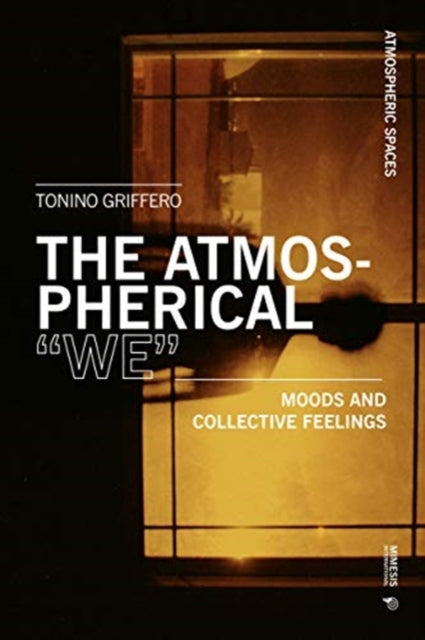
Tonino Griffero
The Atmospheric "We": Moods and Collective Feelings
The Atmospheric "We": Moods and Collective Feelings
💎 Earn 116 Points (£1.16) on this item.
YOU SAVE £3.74
- Condition: Brand new
- UK Delivery times: Usually arrives within 2 - 3 working days
- UK Shipping: Fee starts at £2.39. Subject to product weight & dimension
Bulk ordering. Want 15 or more copies? Get a personalised quote and bigger discounts. Learn more about bulk orders.
Couldn't load pickup availability
- More about The Atmospheric "We": Moods and Collective Feelings
The atmospherological approach can contribute to the debate on collective feelings by examining the complex emotional games that atmospheres give rise to and the power of atmospheric feelings. It also explores whether collective feelings are atmospheres or moods and what kind of we a collective atmosphere is based on.
Format: Paperback / softback
Length: 238 pages
Publication date: 28 December 2021
Publisher: Mimesis International
The Atmospheric Approach to Collective Feelings
The Atmospheric Turn
The Atmospheric Turn refers to a significant shift in the study of collective feelings, emphasizing the role of atmospheres in shaping and influencing emotional experiences. This shift recognizes that atmospheres are not mere physical phenomena but rather complex emotional entities that can evoke powerful and enduring sensations.
Complex Emotional Games
Atmospheres give rise to a range of complex emotional games that involve individuals and groups. These games are characterized by the interplay of different emotional states, such as joy, sadness, fear, and excitement. Atmospheres create a particular emotional atmosphere that can influence how people perceive and interpret their surroundings.
Realist Background
The inclusion of atmospheres in the ontological category of quasi-things is rooted in a realist background. Realists argue that atmospheres are not merely subjective experiences but rather objective entities that exist independently of human consciousness. This perspective allows for a more scientific understanding of the role of atmospheres in shaping emotional experiences.
Power of Atmospheric Feelings
The power of atmospheric feelings lies in their ability to create a sense of belonging, connection, and shared experience. Atmospheres can evoke strong emotions and create a sense of shared identity among individuals and groups. They can also shape how people interact with each other and influence their behavior.
Atmospheric Competence
There is an atmospheric competence that relates both to the intentional generation of atmospheres and to the ability not to be manipulated by them. This competence involves the ability to recognize and respond to the emotional cues that atmospheres provide, as well as the ability to create and maintain atmospheres that are conducive to positive emotional experiences.
Collective Feelings as Atmospheres or Moods
The question of whether collective feelings are atmospheres or moods is central to the debate surrounding the atmospheric approach. Some argue that collective feelings are atmospheres, characterized by a shared emotional atmosphere that can influence the behavior and attitudes of individuals. Others argue that collective feelings are moods, characterized by a temporary emotional state that can be influenced by external factors such as social context or individual experiences.
Collective Atmosphere Based on What?
The collective atmosphere is based on a range of factors, including social norms, cultural practices, and shared experiences. It is shaped by the interactions between individuals and groups, as well as by the physical environment and the social structures that exist within it. The collective atmosphere can be either positive, promoting social cohesion and well-being, or negative, creating oppressive atmospheres that can harm individuals and groups.
Well-Being and Oppressive Atmospheres
The Atmospheric Approach can be applied to the notion of well-being and to two oppressive atmospheres like permanent emergency and the uncanny. Permanent emergency is characterized by a sense of constant fear and anxiety, as individuals are constantly threatened by external threats such as war, natural disasters, and economic instability. The uncanny, on the other hand, is characterized by a sense of unease and discomfort, as individuals are unable to fully comprehend or explain the strange and unfamiliar aspects of their environment.
Conclusion
The Atmospheric Approach to Collective Feelings provides a valuable perspective on the role of atmospheres in shaping and influencing emotional experiences. It emphasizes the complex emotional games that atmospheres give rise to and the realist background underlying their inclusion in the ontological category of quasi-things. The power of atmospheric feelings lies in their ability to create a sense of belonging, connection, and shared experience, as well as their ability to shape how people interact with each other and influence their behavior. The debate surrounding collective feelings as atmospheres or moods is central to the understanding of the atmospheric approach, and the collective atmosphere is based on a range of factors that include social norms, cultural practices, and shared experiences. By applying this perspective to the notion of well-being and to oppressive atmospheres, we can gain a deeper understanding of the emotional dynamics that shape our lives and societies.
Weight: 310g
Dimension: 141 x 211 x 24 (mm)
ISBN-13: 9788869773334
This item can be found in:
UK and International shipping information
UK and International shipping information
UK Delivery and returns information:
- Delivery within 2 - 3 days when ordering in the UK.
- Shipping fee for UK customers from £2.39. Fully tracked shipping service available.
- Returns policy: Return within 30 days of receipt for full refund.
International deliveries:
Shulph Ink now ships to Australia, Belgium, Canada, France, Germany, Ireland, Italy, India, Luxembourg Saudi Arabia, Singapore, Spain, Netherlands, New Zealand, United Arab Emirates, United States of America.
- Delivery times: within 5 - 10 days for international orders.
- Shipping fee: charges vary for overseas orders. Only tracked services are available for most international orders. Some countries have untracked shipping options.
- Customs charges: If ordering to addresses outside the United Kingdom, you may or may not incur additional customs and duties fees during local delivery.