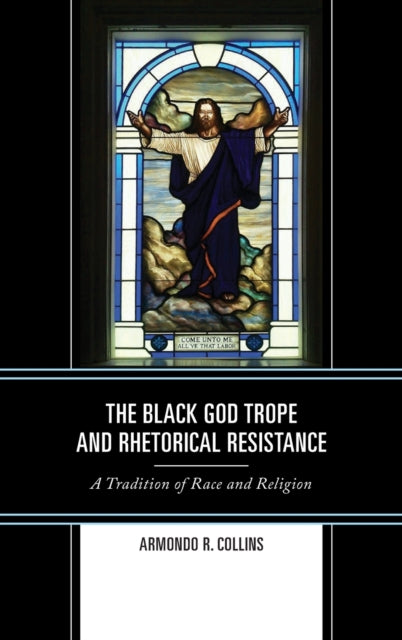
Armondo R. Collins
The Black God Trope and Rhetorical Resistance: A Tradition of Race and Religion
The Black God Trope and Rhetorical Resistance: A Tradition of Race and Religion
💎 Earn 371 Points (£3.71) on this item.
We can order this item for you. Delivery usually takes about 4 to 6 weeks.
This item is not held in our immediate stock. We will order it for you after checkout.
Estimated delivery: About 4 to 6 weeks
- Condition: Brand new
- UK Delivery times: Usually arrives within 2 - 3 working days
- UK Shipping: Fee starts at £2.39. Subject to product weight & dimension
Bulk ordering. Want 15 or more copies? Get a personalised quote and bigger discounts. Learn more about bulk orders.
Couldn't load pickup availability
- More about The Black God Trope and Rhetorical Resistance: A Tradition of Race and Religion
Armondo R. Collins' book explores how black rhetors use the Black God trope to create a language that reflects African Americans' shifting subjectivity and functions as a gendered critique of white western patriarchy. It is of interest to scholars of rhetoric, African American literature, and religious studies.
Format: Hardback
Length: 152 pages
Publication date: 15 May 2023
Publisher: Lexington Books
In his groundbreaking work, "The Black God Trope and Rhetorical Resistance: A Tradition of Race and Religion," Armondo R. Collins delves into the intricate realm of Black Nationalist rhetorical strategies, offering a profound exploration into African American communication practices. Through his insightful analysis, the author unveils how black rhetors employ the powerful tool of writing about God to shape a language that authentically captures the evolving subjectivity of African Americans within the American experience. This captivating book serves as a testament to the embodied nature of the Black God trope and Black Nationalist religious rhetoric, highlighting their role as vehicles for expressing ideological positions and challenging dominant societal structures.
Drawing from a wide range of scholarly disciplines, including rhetoric, African American literature, and religious studies, this book appeals to scholars seeking a deeper understanding of the complex interplay between race, religion, and communication. Collins' meticulous research and thoughtful insights shed light on the ways in which the Black God trope and Black Nationalist religious rhetoric have been employed as powerful tools for social change and cultural resistance. By examining the ways in which these tropes are deployed in literature, speeches, and other forms of public discourse, Collins demonstrates how they contribute to the construction of African American identities and the broader struggle for racial justice.
One of the key themes explored in "The Black God Trope and Rhetorical Resistance" is the gendered critique of white western patriarchy. Collins argues that the Black God trope serves as a means for authors to express their feminist ideals and challenge the dominant patriarchal structures that have shaped society. By invoking the image of a powerful and transcendent Black God, authors can subvert traditional gender roles and promote a more inclusive and equitable worldview. This book provides valuable insights into the ways in which literature and rhetoric can be used as tools for promoting social change and challenging oppressive systems of power.
Furthermore, "The Black God Trope and Rhetorical Resistance" explores the intersection of race, religion, and communication in a global context. Collins recognizes that the Black God trope is not limited to the African American experience but is also prevalent in other cultures and religious traditions. By examining the global spread of the Black God trope, Collins highlights the ways in which it resonates with diverse communities and contributes to the broader dialogue on race, religion, and identity. This book offers valuable insights into the transnational nature of communication and the ways in which it can shape cultural and social identities.
In conclusion, "The Black God Trope and Rhetorical Resistance: A Tradition of Race and Religion" is a groundbreaking work that offers a comprehensive and nuanced exploration of Black Nationalist rhetorical strategies and their impact on African American communication practices. Through his insightful analysis, Armondo R. Collins provides scholars with a deeper understanding of the complex interplay between race, religion, and communication, and how the Black God trope and Black Nationalist religious rhetoric function as powerful tools for social change and cultural resistance. This book will be of interest to scholars across a wide range of disciplines and will contribute to the ongoing dialogue on race, religion, and identity in contemporary society.
Weight: 382g
Dimension: 160 x 237 x 19 (mm)
ISBN-13: 9781666921564
UK and International shipping information
UK and International shipping information
UK Delivery and returns information:
- Delivery within 2 - 3 days when ordering in the UK.
- Shipping fee for UK customers from £2.39. Fully tracked shipping service available.
- Returns policy: Return within 30 days of receipt for full refund.
International deliveries:
Shulph Ink now ships to Australia, Belgium, Canada, France, Germany, Ireland, Italy, India, Luxembourg Saudi Arabia, Singapore, Spain, Netherlands, New Zealand, United Arab Emirates, United States of America.
- Delivery times: within 5 - 10 days for international orders.
- Shipping fee: charges vary for overseas orders. Only tracked services are available for most international orders. Some countries have untracked shipping options.
- Customs charges: If ordering to addresses outside the United Kingdom, you may or may not incur additional customs and duties fees during local delivery.