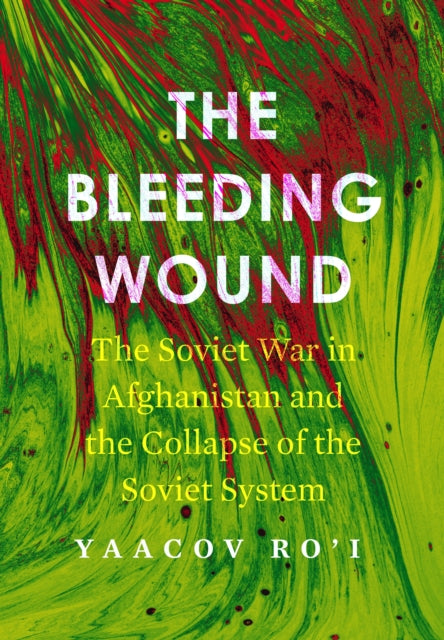
Yaacov Ro'i
The Bleeding Wound: The Soviet War in Afghanistan and the Collapse of the Soviet System
The Bleeding Wound: The Soviet War in Afghanistan and the Collapse of the Soviet System
💎 Earn 179 Points (£1.79) on this item.
YOU SAVE £31.12
- Condition: Brand new
- UK Delivery times: Usually arrives within 2 - 3 working days
- UK Shipping: Fee starts at £2.39. Subject to product weight & dimension
Bulk ordering. Want 15 or more copies? Get a personalised quote and bigger discounts. Learn more about bulk orders.
Couldn't load pickup availability
- More about The Bleeding Wound: The Soviet War in Afghanistan and the Collapse of the Soviet System
The Soviet-Afghan War was a long and painful conflict that caused a devastating ripple effect within Soviet society, leading to the collapse of the Soviet Union. Yaacov Roi's book examines the opinions of Soviet citizens on the war and documents the systemic change that occurred when Soviet leadership took public opinion into account. The war undermined the self-esteem and prestige of the Soviet armed forces and provided ammunition for media correspondents who challenged the Soviet system.
Format: Hardback
Length: 424 pages
Publication date: 19 February 2022
Publisher: Stanford University Press
By the mid-1980s, public opinion in the Soviet Union had begun to shift significantly against Soviet involvement in Afghanistan. The Soviet-Afghan War, which lasted from 1979 to 1989, had become a protracted, painful, and ultimately unsuccessful conflict, often referred to as a "bleeding wound" by Mikhail Gorbachev in a 1986 speech. The decision to withdraw Soviet troops from Afghanistan had far-reaching consequences that would play a pivotal role in the collapse of the Soviet Union.
In this comprehensive examination of the war's impact on Soviet society and politics, Yaacov Roi delves into the opinions of Soviet citizens on a range of issues related to the conflict. He also documents the systemic changes that occurred when Soviet leadership began to take public opinion into account. The war and the challenges faced by returning veterans undermined the self-esteem and prestige of the Soviet armed forces, providing fertile ground for media correspondents who sought to challenge the norms of the Soviet system.
Through extensive analysis of Soviet newspapers and interviews conducted with Soviet war veterans and ordinary citizens in the early 1990s, Roi argues that the effects of the war precipitated processes that would ultimately reveal the inherent limitations of the Soviet body politic and contribute to the dissolution of the USSR by 1991.
The Soviet-Afghan War had a profound impact on the lives of ordinary Soviet citizens, who bore the brunt of the conflict's hardships. The war led to a significant increase in military spending, which strained the Soviet economy and contributed to the country's economic decline. Thousands of Soviet soldiers lost their lives in the war, and many more were injured, leaving a lasting impact on their families and communities.
The war also had a significant impact on Soviet society's cultural and social norms. The conflict exposed the weaknesses of the Soviet government and military, leading to a sense of disillusionment and frustration among the public. The war also led to a rise in nationalism and a sense of pride in the Soviet armed forces, which were seen as the defenders of the motherland.
However, the war's effects were not limited to the Soviet Union. The conflict also had a significant impact on Afghanistan, which was left in ruins after years of war and occupation. The war led to the emergence of various militant groups, including the Taliban, who would later gain control of Afghanistan and impose strict Islamic law on the country.
In conclusion, the Soviet-Afghan War was a protracted and devastating conflict that had far-reaching consequences for the Soviet Union and Afghanistan. The decision to withdraw Soviet troops from Afghanistan was a significant factor in the collapse of the Soviet Union, but the war's effects were felt far beyond the borders of the former superpower. The war led to a rise in nationalism, a sense of disillusionment, and a decline in the prestige of the Soviet armed forces, and it also had a devastating impact on Afghanistan, which was left in ruins.
Dimension: 229 x 152 (mm)
ISBN-13: 9781503628748
This item can be found in:
UK and International shipping information
UK and International shipping information
UK Delivery and returns information:
- Delivery within 2 - 3 days when ordering in the UK.
- Shipping fee for UK customers from £2.39. Fully tracked shipping service available.
- Returns policy: Return within 30 days of receipt for full refund.
International deliveries:
Shulph Ink now ships to Australia, Belgium, Canada, France, Germany, Ireland, Italy, India, Luxembourg Saudi Arabia, Singapore, Spain, Netherlands, New Zealand, United Arab Emirates, United States of America.
- Delivery times: within 5 - 10 days for international orders.
- Shipping fee: charges vary for overseas orders. Only tracked services are available for most international orders. Some countries have untracked shipping options.
- Customs charges: If ordering to addresses outside the United Kingdom, you may or may not incur additional customs and duties fees during local delivery.