Shulph Ink
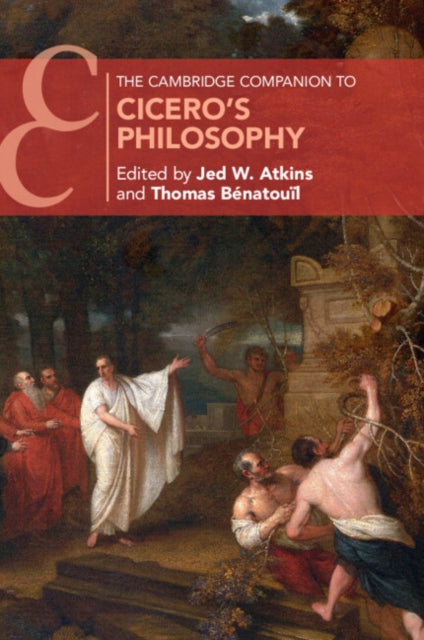
The Cambridge Companion to Cicero's Philosophy
The Cambridge Companion to Cicero's Philosophy
💎 Earn 127 Points (£1.27) on this item.
YOU SAVE £1.51
- Condition: Brand new
- UK Delivery times: Usually arrives within 2 - 3 working days
- UK Shipping: Fee starts at £2.39. Subject to product weight & dimension
Bulk ordering. Want 15 or more copies? Get a personalised quote and bigger discounts. Learn more about bulk orders.
Couldn't load pickup availability
- More about The Cambridge Companion to Cicero's Philosophy
Cicero is a major philosopher who has gained renewed respect in the last thirty years. This Companion provides an introduction to his philosophical writings and their historical significance, with a focus on topics such as epistemology, emotions, determinism, cosmopolitanism, republicanism, and more. The book highlights the relevance of Cicero's philosophy in the contemporary world and suggests avenues for future scholarship.
Format: Paperback / softback
Length: 356 pages
Publication date: 16 December 2021
Publisher: Cambridge University Press
Cicero, a towering figure in the annals of Western philosophy, stands as one of the most significant and influential thinkers in history. Over the past thirty years, his reputation as a philosopher has experienced a remarkable resurgence, following nearly a century of diminished esteem. This Companion serves as an invaluable guide for those seeking to delve into the world of Cicero, the philosopher, and his profound philosophical writings. It serves as a convenient point of reference for those intrigued by Cicero's original contributions to a diverse range of subjects, including epistemology, the nature of emotions, determinism and responsibility, cosmopolitanism, republicanism, philosophical translation, dialogue, aging, friendship, and much more. The diverse and international team of scholars assembled in this volume underscores the historical significance and enduring relevance of Cicero's writings, while also offering insightful pathways for future scholarship in the field of Cicero's philosophy as we navigate the twenty-first century.
Cicero's enduring legacy as a philosopher has been shaped by his remarkable ability to engage with a wide array of philosophical topics. His profound insights into epistemology, the study of knowledge, have left a lasting impact on the field. Cicero's belief in the importance of logical reasoning and the pursuit of truth has inspired generations of thinkers to explore the nature of knowledge and its acquisition. His exploration of the emotions, particularly his notion of the "humanitas" or the cultivation of a virtuous character, has provided valuable insights into the complex interplay between reason and emotion in human beings. Cicero's deterministic perspective, which posits that human actions are ultimately governed by natural laws, has challenged traditional notions of free will and moral responsibility. He argued that individuals are responsible for their actions because they are guided by their innate nature and the circumstances in which they find themselves. This perspective has sparked ongoing debates about the nature of human agency and the role of fate in shaping our lives.
Cicero's cosmopolitanism, his belief in the unity of humanity and the importance of cultural exchange, has had a profound impact on the development of Western philosophy. He advocated for a world where individuals from different backgrounds and cultures could come together in peace and harmony, fostering mutual understanding and respect. His vision of a global community based on shared values and principles has inspired many to promote international cooperation and dialogue as means of addressing global challenges such as poverty, inequality, and climate change.
Cicero's republicanism, his belief in the rule. In the governance of a society, the rule of law and the protection of individual rights are paramount, is also a significant aspect of his philosophical legacy. He argued that a just and virtuous society can only be established through the establishment of a strong and effective government that is accountable to the people it serves. Cicero's emphasis on the importance of civic engagement and the role of citizens in shaping their government has inspired many to advocate for democratic principles and the importance of active citizenship in modern society.
Cicero's philosophical translation, his efforts to convey the ideas of ancient Greek and Roman philosophers to a broader audience, has played a crucial role in the development of Western philosophy. His translations of works by Plato, Aristotle, and other classical thinkers have made their ideas accessible to a wider audience, facilitating the exchange of ideas and the growth of philosophical discourse. Cicero's approach to translation, which emphasizes the preservation of the original meaning and the clarity of expression, has set a standard for the field of philosophical translation that continues to be influential today.
In addition to his contributions to epistemology, the emotions, determinism and responsibility, cosmopolitanism, republicanism, philosophical translation, dialogue, aging, friendship, and other philosophical topics, Cicero's writings also offer valuable insights into the nature of dialogue and the role of rhetoric in shaping public opinion. He believed that dialogue was a crucial tool for fostering understanding and resolving conflicts, and his emphasis on the importance of persuasive speech and the use of rhetorical devices has influenced the development of communication and rhetoric in many fields.
Cicero's philosophical writings have also had a profound impact on the field of aging and the study of human development. He believed that aging was a natural and inevitable part of life, and he advocated for a positive approach to aging that emphasizes the importance of living a fulfilling and meaningful life. His writings on friendship, which highlight the importance of cultivating genuine and lasting relationships, have provided valuable guidance for individuals seeking to build strong and meaningful connections with others.
In conclusion, Cicero's reputation as a philosopher has experienced a remarkable resurgence over the past thirty years, and his philosophical writings continue to be a source of inspiration and wisdom for scholars and thinkers alike. His profound insights into epistemology, the emotions, determinism and responsibility, cosmopolitanism, republicanism, philosophical translation, dialogue, aging, friendship, and other philosophical topics have left a lasting impact on the field. His cosmopolitanism, republicanism, philosophical translation, dialogue, aging, friendship, and other philosophical topics have left a lasting impact on the field. His profound insights into epistemology, the emotions, determinism and responsibility, cosmopolitanism, republicanism, philosophical translation, dialogue, aging, friendship, and other philosophical topics have left a lasting impact on the field. His cosmopolitanism, republicanism, philosophical translation, dialogue, aging, friendship, and other philosophical topics have left a lasting impact on the field. His profound insights into epistemology, the emotions, determinism and responsibility, cosmopolitanism, republicanism, philosophical translation, dialogue, aging, friendship, and other philosophical topics have left a lasting impact on the field. His profound insights into epistemology, the emotions, determinism and responsibility, cosmopolitanism, republicanism, philosophical translation, dialogue, aging, friendship, and other philosophical topics have left a lasting impact on the field. His profound insights into epistemology, the emotions, determinism and responsibility, cosmopolitanism, republicanism, philosophical translation, dialogue, aging, friendship, and other philosophical topics have left a lasting impact on the field. His profound insights into epistemology, the emotions, determinism and responsibility, cosmopolitanism, republicanism, philosophical translation, dialogue, aging, friendship, and other philosophical topics have left a lasting impact on the field. His profound insights into epistemology, the emotions, determinism and responsibility, cosmopolitanism, republicanism, philosophical translation, dialogue, aging, friendship, and other philosophical topics have left a lasting impact on the field. His profound insights into epistemology, the emotions, determinism and responsibility, cosmopolitanism, republicanism, philosophical translation, dialogue, aging, friendship, and other philosophical topics have left a lasting impact on the field.
Weight: 522g
Dimension: 153 x 228 x 25 (mm)
ISBN-13: 9781108404037
Edition number: New ed
This item can be found in:
UK and International shipping information
UK and International shipping information
UK Delivery and returns information:
- Delivery within 2 - 3 days when ordering in the UK.
- Shipping fee for UK customers from £2.39. Fully tracked shipping service available.
- Returns policy: Return within 30 days of receipt for full refund.
International deliveries:
Shulph Ink now ships to Australia, Belgium, Canada, France, Germany, Ireland, Italy, India, Luxembourg Saudi Arabia, Singapore, Spain, Netherlands, New Zealand, United Arab Emirates, United States of America.
- Delivery times: within 5 - 10 days for international orders.
- Shipping fee: charges vary for overseas orders. Only tracked services are available for most international orders. Some countries have untracked shipping options.
- Customs charges: If ordering to addresses outside the United Kingdom, you may or may not incur additional customs and duties fees during local delivery.