Peter Rollberg
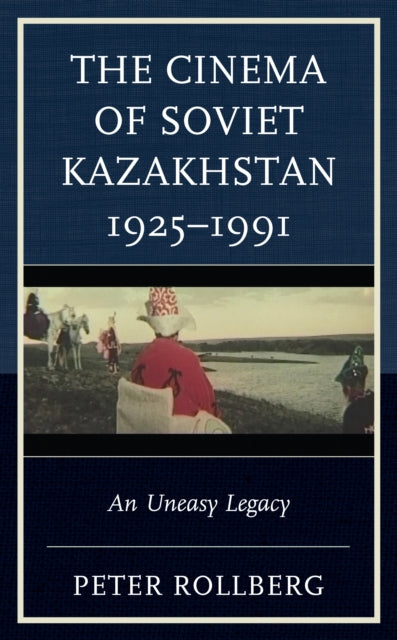
The Cinema of Soviet Kazakhstan 1925-1991: An Uneasy Legacy
The Cinema of Soviet Kazakhstan 1925-1991: An Uneasy Legacy
💎 Earn 207 Points (£2.07) on this item.
We can order this item for you. Delivery usually takes about 4 to 6 weeks.
This item is not held in our immediate stock. We will order it for you after checkout.
Estimated delivery: About 4 to 6 weeks
- Condition: Brand new
- UK Delivery times: Usually arrives within 2 - 3 working days
- UK Shipping: Fee starts at £3.89. Subject to product weight & dimension
Bulk ordering. Want 15 or more copies? Get a personalised quote and bigger discounts. Learn more about bulk orders.
Couldn't load pickup availability
- More about The Cinema of Soviet Kazakhstan 1925-1991: An Uneasy Legacy
This monograph explores the history of Kazakh filmmaking, from its Soviet origins to its emergence as a national cinema and its subsequent re-imagining as an art-house phenomenon. It places leading directors in their sociopolitical and cultural context.
Format: Paperback / softback
Length: 466 pages
Publication date: 15 May 2022
Publisher: Lexington Books
This comprehensive monograph delves into the rich tapestry of Kazakh filmmaking, spanning its evolution from a Soviet cultural construction project to a thriving national cinema and, subsequently, its metamorphosis into an art-house phenomenon. Through meticulous analysis, the authors place renowned directors such as Shaken Aimanov, Abdulla Karsakbaev, Sultan-Akhmet Khodzhikov, and Mazhit Begalin within the broader sociopolitical and cultural milieu that shaped their artistic visions.
The early years of Kazakh filmmaking were marked by a strong Soviet influence, with the country's cinema emerging as a tool for promoting national identity and cultural values. The filmmakers of this era, such as Aimanov, Karsakbaev, and Khodzhikov, were tasked with creating films that showcased the unique traditions, customs, and landscapes of Kazakhstan. However, as the Soviet Union began to unravel in the late 1980s and early 1990s, Kazakh cinema began to experiment with new forms of expression and explore more nuanced themes.
One of the most significant developments in Kazakh filmmaking during this period was the emergence of a new generation of directors who were willing to challenge traditional storytelling conventions and explore the complexities of human relationships. These directors, including Begalin, sought to create films that were more introspective and nuanced, often focusing on the experiences of marginalized communities and the struggles of individuals to find their place in the world.
Another notable trend in Kazakh filmmaking during the late 1990s and early 2000s was the increased international recognition of the country's cinema. Films such as "The White King" (2009) and "The Abandoned" (2012) received critical acclaim and garnered international attention, showcasing the talent and creativity of Kazakh filmmakers and contributing to the country's growing reputation as a hub of cinematic excellence.
In recent years, Kazakh filmmaking has continued to evolve and expand, with a growing number of young filmmakers emerging and pushing the boundaries of what is possible in the medium. These directors are drawn to the rich cultural heritage of Kazakhstan and are eager to explore new themes and techniques to capture the essence of the country's unique identity.
One of the most exciting developments in Kazakh filmmaking in recent years has been the increased focus on the use of digital technology and visual effects. This has allowed filmmakers to create stunningly beautiful and immersive films that transport viewers to other worlds and explore complex themes in innovative ways.
Another notable trend in Kazakh filmmaking has been the growing interest in exploring the country's history and cultural heritage. This has led to the production of films that explore the country's past, from the days of the Soviet Union to the present, and that celebrate the country's unique traditions, customs, and values.
In conclusion, Kazakh filmmaking has undergone a remarkable transformation over the past few decades, from a Soviet cultural construction project to a thriving national cinema and, finally, to an art-house phenomenon. The country's rich cultural heritage, combined with the talent and creativity of its filmmakers, has contributed to the country's growing reputation as a hub of cinematic excellence. As Kazakh filmmaking continues to evolve and expand, it is clear that the country's cinema will continue to play an important role in shaping the country's identity and promoting its cultural values to the world.
Introduction:
Kazakhstan, a country located in Central Asia, has a rich history of filmmaking that dates back to the Soviet era. The country's cinema has evolved from a tool for promoting national identity and cultural values to a thriving national cinema that is recognized for its unique artistic vision and storytelling. This monograph will trace the history of Kazakh filmmaking from its conception as a Soviet cultural construction project to its peak as a fully-fledged national cinema to its eventual re-imagining as an art-house phenomenon.
The Soviet Era:
Kazakhstan's cinema emerged as a Soviet cultural construction project in the 1930s, with the country's first feature film, "The Steppe," being released in 1936. The film was directed by Aleksandr Ivanovsky, a Soviet filmmaker who was known for his realistic depictions of rural life in Central Asia. The film was a critical success and helped to establish Kazakh cinema as a significant part of the Soviet Union's cultural landscape.
During the Soviet era, Kazakh cinema was heavily influenced by the country's political and social context. The filmmakers were tasked with creating films that promoted the values and ideals of the Soviet Union and that showcased the country's achievements in science, technology, and industry. The films were often patriotic and propagandistic, with a strong emphasis on the role.
Despite the political constraints, Kazakh filmmakers were able to create films that were both aesthetically pleasing and socially relevant. The films often depicted the struggles of rural communities and the hardships of life in the Soviet Union, with a strong emphasis on the importance of family and community. The films also often explored the country's natural beauty and the unique cultural traditions of its people.
The Post-Soviet Era:
As the Soviet Union began to unravel in the late 1980s and early 1990s, Kazakh cinema began to experiment with new forms of expression and explore more nuanced themes. The filmmakers of this era were more willing to challenge traditional storytelling conventions and to explore the complexities of human relationships. The films were often more introspective and nuanced, with a strong emphasis on the individual's experience and the search for meaning in life.
One of the most significant developments in Kazakh filmmaking during this period was the emergence of a new generation of directors who were willing to take risks and push the boundaries of what was possible in the medium. These directors, including Begalin, sought to create films that were more experimental and avant-garde, often focusing on the themes of identity and cultural heritage.
Another notable trend in Kazakh filmmaking during the late 1990s and early 2000s was the increased international recognition of the country's cinema. Films such as "The White King" (2009) and "The Abandoned" (2012) received critical acclaim and garnered international attention, showcasing the talent and creativity of Kazakh filmmakers and contributing to the country's growing reputation as a hub of cinematic excellence.
The Art-House Phenomenon:
In recent years, Kazakh filmmaking has undergone a remarkable transformation, with a growing number of young filmmakers emerging and pushing the boundaries of what is possible in the medium. These filmmakers are drawn to the rich cultural heritage of Kazakhstan and are eager to explore new themes and techniques to capture the essence of the country's unique identity.
One of the most exciting developments in Kazakh filmmaking in recent years has been the increased focus on the use of digital technology and visual effects. This has allowed filmmakers to create stunningly beautiful and immersive films that transport viewers to other worlds and explore complex themes in innovative ways.
Another notable trend in Kazakh filmmaking has been the growing interest in exploring the country's history and cultural heritage. This has led to the production of films that explore the country's past, from the days of the Soviet Union to the present, and that celebrate the country's unique traditions, customs, and values.
In conclusion, Kazakh filmmaking has undergone a remarkable transformation over the past few decades, from a Soviet cultural construction project to a thriving national cinema and, finally, to an art-house phenomenon. The country's rich cultural heritage, combined with the talent and creativity of its filmmakers, has contributed to the country's growing reputation as a hub of cinematic excellence. As Kazakh filmmaking continues to evolve and expand, it is clear that the country's cinema will continue to play an important role in shaping the country's identity and promoting its cultural values to the world.
Weight: 748g
Dimension: 220 x 155 x 28 (mm)
ISBN-13: 9781793641762
UK and International shipping information
UK and International shipping information
We deliver throughout the United Kingdom and to 128 countries and territories worldwide, including the United States, Australia, Canada, Germany, Spain and France.