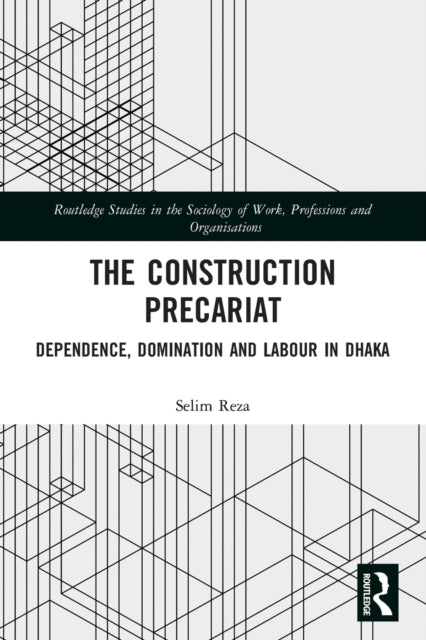
SelimReza
The Construction Precariat: Dependence, Domination and Labour in Dhaka
The Construction Precariat: Dependence, Domination and Labour in Dhaka
💎 Earn 221 Points (£2.21) on this item.
We can order this item for you. Delivery usually takes about 4 to 6 weeks.
This item is not held in our immediate stock. We will order it for you after checkout.
Estimated delivery: About 4 to 6 weeks
YOU SAVE £2.63
- Condition: Brand new
- UK Delivery times: Usually arrives within 2 - 3 working days
- UK Shipping: Fee starts at £2.39. Subject to product weight & dimension
Bulk ordering. Want 15 or more copies? Get a personalised quote and bigger discounts. Learn more about bulk orders.
Couldn't load pickup availability
- More about The Construction Precariat: Dependence, Domination and Labour in Dhaka
This book examines the role of recruiting individuals as the key actors in labor recruitment and management practices that produce precarious work conditions, based on empirical work on migrant construction workers and their recruiters in Dhaka, Bangladesh. It explores how exploitative employment relationships contribute to pressures and insecurities amongst migrant workers and limit the scope for labor protection.
Format: Paperback / softback
Length: 210 pages
Publication date: 29 April 2022
Publisher: Taylor & Francis Ltd
This book, situated within the realm of neoliberalism and precarious work, delves into the critical role of recruiting individuals as the primary drivers of labor recruitment and management practices that perpetuate precarious work conditions. Drawing upon Guy Standing's notion of the precariat, the book conducts an in-depth examination of the ways in which exploitative employment relationships contribute to various pressures and insecurities among migrant workers, while simultaneously limiting their ability to safeguard their rights and well-being. Through extensive empirical research on migrant construction workers and their recruiters in Dhaka, the capital of Bangladesh and one of the fastest-growing cities globally, the book explores the intricate connections between rural-urban labor migration, recruitment, and the emergence of precarious employment. By unpacking these interconnections, The Construction Precariat offers novel insights into the field of labor migration, shedding light on the dominance of recruiters as a catalyst for the production of hyper-individualized employment relationships. Moreover, it sheds light on the profound ways in which this relationship of domination and dependence contributes heavily to the conditions of precariousness and the control and exploitation of migrant workers.
This book, situated within the realm of neoliberalism and precarious work, delves into the critical role of recruiting individuals as the primary drivers of labor recruitment and management practices that perpetuate precarious work conditions. Drawing upon Guy Standing's notion of the precariat, the book conducts an in-depth examination of the ways in which exploitative employment relationships contribute to various pressures and insecurities among migrant workers, while simultaneously limiting their ability to safeguard their rights and well-being. Through extensive empirical research on migrant construction workers and their recruiters in Dhaka, the capital of Bangladesh and one of the fastest-growing cities globally, the book explores the intricate connections between rural-urban labor migration, recruitment, and the emergence of precarious employment. By unpacking these interconnections, The Construction Precariat offers novel insights into the field of labor migration, shedding light on the dominance of recruiters as a catalyst for the production of hyper-individualized employment relationships. Moreover, it sheds light on the profound ways in which this relationship of domination and dependence contributes heavily to the conditions of precariousness and the control and exploitation of migrant workers.
This book, situated within the realm of neoliberalism and precarious work, delves into the critical role of recruiting individuals as the primary drivers of labor recruitment and management practices that perpetuate precarious work conditions. Drawing upon Guy Standing's notion of the precariat, the book conducts an in-depth examination of the ways in which exploitative employment relationships contribute to various pressures and insecurities among migrant workers, while simultaneously limiting their ability to safeguard their rights and well-being. Through extensive empirical research on migrant construction workers and their recruiters in Dhaka, the capital of Bangladesh and one of the fastest-growing cities globally, the book explores the intricate connections between rural-urban labor migration, recruitment, and the emergence of precarious employment. By unpacking these interconnections, The Construction Precariat offers novel insights into the field of labor migration, shedding light on the dominance of recruiters as a catalyst for the production of hyper-individualized employment relationships. Moreover, it sheds light on the profound ways in which this relationship of domination and dependence contributes heavily to the conditions of precariousness and the control and exploitation of migrant workers.
This book, situated within the realm of neoliberalism and precarious work, delves into the critical role of recruiting individuals as the primary drivers of labor recruitment and management practices that perpetuate precarious work conditions. Drawing upon Guy Standing's notion of the precariat, the book conducts an in-depth examination of the ways in which exploitative employment relationships contribute to various pressures and insecurities among migrant workers, while simultaneously limiting their ability to safeguard their rights and well-being. Through extensive empirical research on migrant construction workers and their recruiters in Dhaka, the capital of Bangladesh and one of the fastest-growing cities globally, the book explores the intricate connections between rural-urban labor migration, recruitment, and the emergence of precarious employment. By unpacking these interconnections, The Construction Precariat offers novel insights into the field of labor migration, shedding light on the dominance of recruiters as a catalyst for the production of hyper-individualized employment relationships. Moreover, it sheds light on the profound ways in which this relationship of domination and dependence contributes heavily to the conditions of precariousness and the control and exploitation of migrant workers.
Weight: 385g
Dimension: 234 x 156 (mm)
ISBN-13: 9780367529031
This item can be found in:
UK and International shipping information
UK and International shipping information
UK Delivery and returns information:
- Delivery within 2 - 3 days when ordering in the UK.
- Shipping fee for UK customers from £2.39. Fully tracked shipping service available.
- Returns policy: Return within 30 days of receipt for full refund.
International deliveries:
Shulph Ink now ships to Australia, Belgium, Canada, France, Germany, Ireland, Italy, India, Luxembourg Saudi Arabia, Singapore, Spain, Netherlands, New Zealand, United Arab Emirates, United States of America.
- Delivery times: within 5 - 10 days for international orders.
- Shipping fee: charges vary for overseas orders. Only tracked services are available for most international orders. Some countries have untracked shipping options.
- Customs charges: If ordering to addresses outside the United Kingdom, you may or may not incur additional customs and duties fees during local delivery.