Shulph Ink
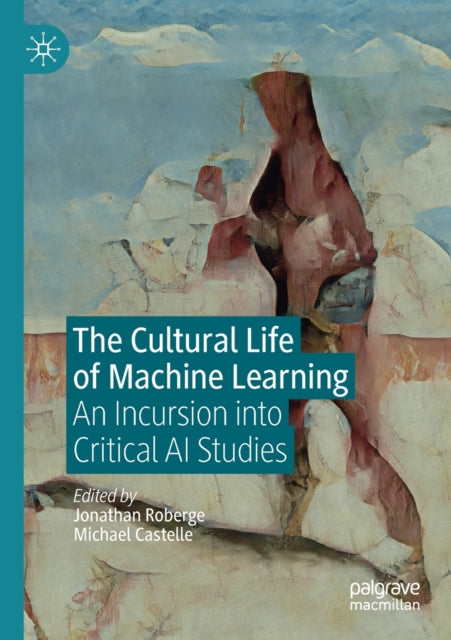
The Cultural Life of Machine Learning: An Incursion into Critical AI Studies
The Cultural Life of Machine Learning: An Incursion into Critical AI Studies
💎 Earn 227 Points (£2.27) on this item.
We can order this item for you. Delivery usually takes about 4 to 6 weeks.
This item is not held in our immediate stock. We will order it for you after checkout.
Estimated delivery: About 4 to 6 weeks
YOU SAVE £9.57
- Condition: Brand new
- UK Delivery times: Usually arrives within 2 - 3 working days
- UK Shipping: Fee starts at £2.39. Subject to product weight & dimension
Bulk ordering. Want 15 or more copies? Get a personalised quote and bigger discounts. Learn more about bulk orders.
Couldn't load pickup availability
- More about The Cultural Life of Machine Learning: An Incursion into Critical AI Studies
This book explores the origins, practices, and potential futures of contemporary machine learning, bringing together perspectives from historians, sociologists, media studies, communication studies, cultural studies, and information studies. It addresses controversial issues such as the disentangling of machine learning from conventional histories of artificial intelligence, the theorization of machinic agents' capacity for novelty, and the realization of reform initiatives for fairness and equity in AI and machine learning.
Format: Paperback / softback
Length: 289 pages
Publication date: 02 December 2021
Publisher: Springer Nature Switzerland AG
This book is a groundbreaking exploration of the origins, practices, and potential futures of contemporary machine learning, a field that has become increasingly intertwined with our daily lives. Drawing on the expertise of historians, sociologists, media studies, communication studies, cultural studies, and information studies, the authors offer a comprehensive analysis of the field's development from its early foundations in pattern recognition and neural network research to the modern-day social and technological dramas of DeepMind's AlphaGo, predictive political forecasting, and the governmentality of extractive logistics.
The controversy surrounding machine learning arises from its increased embeddedness and agency, which have led to questions about its ability to be disentangled from conventional histories of artificial intelligence. The book also delves into the theoretical implications of machinic agents' capacity for novelty, exploring how this can be theorized and applied to understanding the evolution of machine learning.
Furthermore, the authors examine reform initiatives for fairness and equity in AI and machine learning, assessing their potential for success and the challenges they face. They explore the complexities of realizing these initiatives, including the potential for cooptation and failure, and provide a baseline for future research in this area.
In addition to its theoretical and empirical contributions, the book also offers a wealth of insights into the nature of machine learning itself. The authors challenge traditional understandings of learning as a passive process and argue that machine learning represents a form of active, generative knowledge production. They explore the ethical and social implications of this new form of learning, including issues of privacy, surveillance, and bias.
Overall, this book is a must-read for anyone interested in the future of machine learning and the complex social, technological, and ethical challenges it presents. Its interdisciplinary approach and comprehensive coverage make it an invaluable resource for researchers, policymakers, and practitioners alike.
Introduction:
Contemporary machine learning has emerged as a transformative technology that has revolutionized the way we interact with the world. From its early foundations in pattern recognition and neural network research to its modern-day applications in fields such as artificial intelligence, predictive analytics, and healthcare, machine learning has become an integral part of our daily lives. However, with its increasing embeddedness and agency, machine learning has also become controversial, raising questions about its ability to be disentangled from conventional histories of artificial intelligence, its capacity for novelty, and its potential for reform initiatives.
Origins and Development of Machine Learning:
The origins of machine learning can be traced back to the 1950s and 1960s, when researchers began to explore the use of computers to recognize patterns and make predictions. In the 1950s, researchers such as Frank Rosenblatt and Warren McCulloch developed neural networks, which were inspired by the workings of the human brain. These neural networks were able to learn and adapt to new data, making them capable of recognizing complex patterns and making predictions.
In the 1960s, researchers such as Marvin Minsky and Seymour Papert developed the concept of artificial intelligence, which aimed to create machines that could mimic human intelligence and perform tasks that were traditionally done by humans. Machine learning was a key component of this vision, as it allowed machines to learn from data and improve their performance over time.
Over the years, machine learning has evolved and become more sophisticated, with the development of new algorithms and techniques such as deep learning, which allows machines to learn from large amounts of data and make complex predictions. Today, machine learning is used in a wide range of applications, from healthcare and finance to transportation and entertainment.
Controversies Surrounding Machine Learning:
Despite its many benefits, machine learning has also become controversial due to its increased embeddedness and agency. One of the main concerns is the potential for machine learning to perpetuate or amplify existing biases and discrimination. For example, if machine learning algorithms are trained on data that contains biases, they may produce biased predictions or recommendations. This can have serious consequences, particularly in fields such as healthcare and employment, where biased decisions can have significant impacts on individuals' lives.
Another concern is the potential for machine learning to be used for surveillance and monitoring. With the increasing amount of data that is being collected and analyzed, machine learning algorithms can be used to track individuals' movements, monitor their behavior, and even predict their future actions. This raises concerns about privacy and autonomy, as individuals may feel that their actions are being monitored and controlled without their consent.
In addition to these concerns, machine learning has also been criticized for its lack of transparency and accountability. Many machine learning algorithms are complex and opaque, making it difficult for individuals to understand how they make decisions and what factors influence their outcomes. This lack of transparency can lead to distrust and skepticism towards machine learning, particularly in fields such as healthcare and finance.
Theoretical Implications of Machine Learning:
The theoretical implications of machine learning are vast and diverse. One of the key challenges is the question of how machine learning can be disentangled from conventional histories of artificial intelligence. While machine learning is often seen as a new and distinct field, it is important to recognize that it has its roots in the broader field of artificial intelligence.
Another challenge is the question of how machinic agents' capacity for novelty can be theorized. Machine learning algorithms are able to learn and adapt to new data, making them capable of generating novel ideas and solutions. However, it is difficult to understand how this capacity for novelty can be explained in terms of traditional theories of intelligence and consciousness.
In addition to these challenges, machine learning also raises questions about the nature of knowledge and learning. Machine learning algorithms are able to learn from data and improve their performance over time, but it is unclear whether this process is equivalent to the human process of learning and understanding. Some researchers argue that machine learning is more akin to a form of pattern recognition than to traditional forms of knowledge acquisition.
Reform Initiatives for Fairness and Equity in AI and Machine Learning:
Reform initiatives for fairness and equity in AI and machine learning are crucial to address the concerns raised by machine learning's increased embeddedness and agency. These initiatives aim to ensure that machine learning algorithms are fair, transparent, and accountable, and that they do not perpetuate or amplify existing biases and discrimination.
One of the key challenges in these reform initiatives is the need to balance the need for innovation and the need for fairness. While it is important to encourage innovation in AI and machine learning, it is also important to ensure that these technologies are used in a way that benefits society as a whole. This requires a commitment to transparency and accountability, as well as a willingness to address the ethical and social implications of these technologies.
Another challenge is the need to develop and implement effective policies and regulations to govern the use of AI and machine learning. These policies and regulations should be designed to ensure that these technologies are used in a way that is safe, ethical, and beneficial to society. They should also be designed to ensure that these technologies are accessible to all individuals, regardless of their background or socioeconomic status.
In conclusion, contemporary machine learning has become a transformative technology that has revolutionized the way we interact with the world. However, with its increased embeddedness and agency, machine learning has also become controversial, raising questions about its ability to be disentangled from conventional histories of artificial intelligence, its capacity for novelty, and its potential for reform initiatives. This book brings together the work of historians, sociologists, media studies, communication studies, cultural studies, and information studies to address these questions and provide a baseline for future research. By exploring the origins, practices, and potential futures of contemporary machine learning, this book offers a comprehensive analysis of the field's development and its implications for our daily lives.
Weight: 406g
Dimension: 210 x 148 (mm)
ISBN-13: 9783030562885
Edition number: 1st ed. 2021
This item can be found in:
UK and International shipping information
UK and International shipping information
UK Delivery and returns information:
- Delivery within 2 - 3 days when ordering in the UK.
- Shipping fee for UK customers from £2.39. Fully tracked shipping service available.
- Returns policy: Return within 30 days of receipt for full refund.
International deliveries:
Shulph Ink now ships to Australia, Belgium, Canada, France, Germany, Ireland, Italy, India, Luxembourg Saudi Arabia, Singapore, Spain, Netherlands, New Zealand, United Arab Emirates, United States of America.
- Delivery times: within 5 - 10 days for international orders.
- Shipping fee: charges vary for overseas orders. Only tracked services are available for most international orders. Some countries have untracked shipping options.
- Customs charges: If ordering to addresses outside the United Kingdom, you may or may not incur additional customs and duties fees during local delivery.