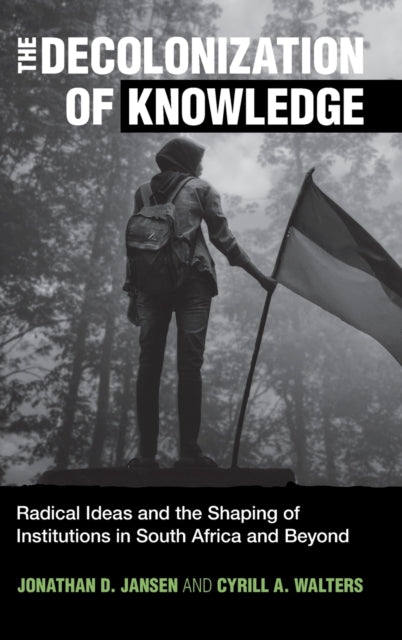
Jonathan D.Jansen,Cyrill A.Walters
The Decolonization of Knowledge: Radical Ideas and the Shaping of Institutions in South Africa and Beyond
The Decolonization of Knowledge: Radical Ideas and the Shaping of Institutions in South Africa and Beyond
We can order this item for you. Delivery usually takes about 4 to 6 weeks.
This item is not held in our immediate stock. We will order it for you after checkout.
Estimated delivery: About 4 to 6 weeks
YOU SAVE £6.77
- Condition: Brand new
- UK Delivery times: Usually arrives within 2 - 3 working days
- UK Shipping: Fee starts at £3.89. Subject to product weight & dimension
Bulk ordering. Want 15 or more copies? Get a personalised quote and bigger discounts. Learn more about bulk orders.
Couldn't load pickup availability
- More about The Decolonization of Knowledge: Radical Ideas and the Shaping of Institutions in South Africa and Beyond
In 2015, students at the University of Cape Town and Oxford University demanded the removal of monuments of Cecil John Rhodes, the empire builder of British South Africa, from their campuses. This book explores the uptake of decolonization in the institutional curriculum, given the political demands for decolonization on South African campuses, and the generally positive reception of the idea by university leaders.
Format: Hardback
Length: 272 pages
Publication date: 30 June 2022
Publisher: Cambridge University Press
In 2015, a significant movement emerged on the campuses of the University of Cape Town (UCT) and Oxford University, where students demanded the removal of monuments commemorating Cecil John Rhodes, a prominent empire builder in British South Africa. The slogan #RhodesMustFall resonated with students across these institutions, sparking a wave of protests and debates about decolonization.
The radical idea of decolonization, which seeks to dismantle the legacy of colonialism and its impact on societies, played a central role in these student protests. The movement aimed to challenge the symbols and institutions that perpetuated the dominance of colonial powers and promote a more inclusive and equitable education system.
Since the #RhodesMustFall movement, decolonization has gained traction in South African educational institutions and beyond. This book explores the uptake of decolonization in the institutional curriculum, considering the political demands for decolonization on South African campuses and the generally positive reception of the idea by university leaders.
Through in-depth interviews with over two hundred academic teachers from ten universities, this book offers an innovative account of how institutions have engaged with, subverted, and transformed the decolonization movement. It sheds light on the challenges and opportunities that arise as institutions attempt to integrate decolonization into their teaching and learning practices.
One of the key findings of the book is that decolonization is not a one-size-fits-all approach. Different institutions have adopted different strategies, ranging from curriculum changes to cultural events and dialogue initiatives. Some universities have taken a more proactive approach, engaging with students and community organizations to address historical injustices and promote a more inclusive curriculum.
However, the book also highlights the challenges that institutions face in implementing decolonization. Resistance from faculty members, who may be resistant to change or have different perspectives on decolonization, can be a significant obstacle. Additionally, institutional structures and policies can hinder the full realization of decolonization, as they may perpetuate colonial legacies or prioritize other priorities.
Despite these challenges, the book argues that decolonization is an essential movement for promoting social justice and equality. It emphasizes the importance of education as a tool for dismantling colonialism and promoting a more inclusive and equitable society. The book calls for continued engagement and collaboration between university leaders, faculty members, students, and community organizations to advance the decolonization movement and create a more just and equitable world.
In conclusion, the #RhodesMustFall movement has sparked a global conversation about decolonization and its impact on education. This book offers an insightful account of how institutions have engaged with, subverted, and transformed the decolonization movement, highlighting the challenges and opportunities that arise as institutions attempt to integrate decolonization into their teaching and learning practices. Decolonization is an essential movement for promoting social justice and equality, and it requires continued engagement and collaboration from all stakeholders to achieve its goals.
Weight: 530g
Dimension: 235 x 159 x 21 (mm)
ISBN-13: 9781316514184
UK and International shipping information
UK and International shipping information
We deliver throughout the United Kingdom and to 128 countries and territories worldwide, including the United States, Australia, Canada, Germany, Spain and France.