Dr Davidde Boer
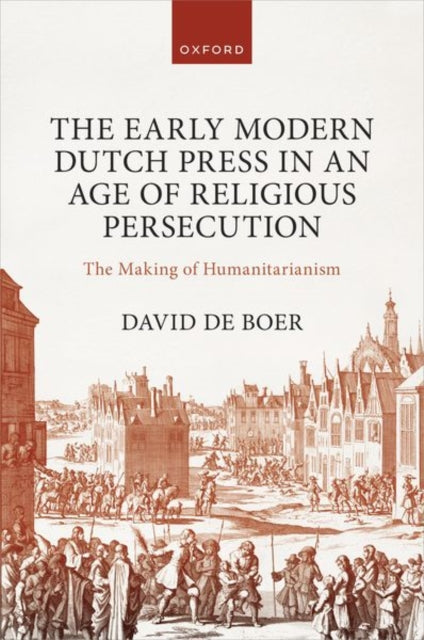
The Early Modern Dutch Press in an Age of Religious Persecution: The Making of Humanitarianism
The Early Modern Dutch Press in an Age of Religious Persecution: The Making of Humanitarianism
💎 Earn 414 Points (£4.14) on this item.
- Condition: Brand new
- UK Delivery times: Usually arrives within 2 - 3 working days
- UK Shipping: Fee starts at £3.89. Subject to product weight & dimension
Bulk ordering. Want 15 or more copies? Get a personalised quote and bigger discounts. Learn more about bulk orders.
Couldn't load pickup availability
- More about The Early Modern Dutch Press in an Age of Religious Persecution: The Making of Humanitarianism
This study explores how confessional minorities and their advocates used the press to combat religiously inspired maltreatments, executions, and massacres in seventeenth-century Europe. By generating public outrage and pressuring others to intervene, they laid the foundations of a humanitarian culture in Europe. However, they also had to navigate a fraught and dangerous political landscape, marked by confessional tension, volatile alliances, and incessant warfare.
Format: Hardback
Length: 224 pages
Publication date: 28 September 2023
Publisher: Oxford University Press
For victims of persecution around the world, attracting international media attention for their plight is often a matter of life and death. This study takes us back to the news revolution of seventeenth-century Europe, when people first discovered in the press a powerful new weapon to combat religiously inspired maltreatments, executions, and massacres. To affect and mobilize foreign audiences, confessional minorities and their advocates faced an acute dilemma, one that we still grapple with today: how to make people care about distant suffering? David de Boer argues that by answering this question, they laid the foundations of a humanitarian culture in Europe. As consuming news became an everyday practice for many Europeans, the Dutch Republic emerged as an international hub of printed protest against religious violence. De Boer traces how a diverse group of people, including Waldensians refugees, Huguenot ministers, Savoyard office holders, and many others, all sought access to the Dutch printing presses in their efforts to raise transnational solidarity for their cause. By generating public outrage, calling out rulers, and pressuring others to intervene, producers of printed opinion could have a profound impact on international relations. But crying out against persecution also meant navigating a fraught and dangerous political landscape, marked by confessional tension, volatile alliances, and incessant warfare. Opinion makers had to think carefully about the audiences they hoped to reach through pamphlets, periodicals, and newspapers. But they also had to navigate the complex web of religious and political alliances that shaped the European continent. This study offers a fresh perspective on the role of print in shaping international relations during the seventeenth century. By examining the ways in which confessional minorities and their advocates used print to mobilize support for their causes, it sheds light on the complex and often fraught relationship between religion, politics, and media in early modern Europe. It also highlights the ways in which the Dutch Republic emerged as a hub of printed protest against religious violence, and the ways in which this activism contributed to the development of a humanitarian culture in Europe.
For victims of persecution around the world, attracting international media attention for their plight is often a matter of life and death. This study takes us back to the news revolution of seventeenth-century Europe, when people first discovered in the press a powerful new weapon to combat religiously inspired maltreatments, executions, and massacres. To affect and mobilize foreign audiences, confessional minorities and their advocates faced an acute dilemma, one that we still grapple with today: how to make people care about distant suffering? David de Boer argues that by answering this question, they laid the foundations of a humanitarian culture in Europe. As consuming news became an everyday practice for many Europeans, the Dutch Republic emerged as an international hub of printed protest against religious violence. De Boer traces how a diverse group of people, including Waldensians refugees, Huguenot ministers, Savoyard office holders, and many others, all sought access to the Dutch printing presses in their efforts to raise transnational solidarity for their cause. By generating public outrage, calling out rulers, and pressuring others to intervene, producers of printed opinion could have a profound impact on international relations. But crying out against persecution also meant navigating a fraught and dangerous political landscape, marked by confessional tension, volatile alliances, and incessant warfare. Opinion makers had to think carefully about the audiences they hoped to reach through pamphlets, periodicals, and newspapers. But they also had to navigate the complex web of religious and political alliances that shaped the European continent. This study offers a fresh perspective on the role of print in shaping international relations during the seventeenth century. By examining the ways in which confessional minorities and their advocates used print to mobilize support for their causes, it sheds light on the complex and often fraught relationship between religion, politics, and media in early modern Europe. It also highlights the ways in which the Dutch Republic emerged as a hub of printed protest against religious violence, and the ways in which this activism contributed to the development of a humanitarian culture in Europe.
Weight: 498g
Dimension: 165 x 241 x 21 (mm)
ISBN-13: 9780198876809
UK and International shipping information
UK and International shipping information
We deliver throughout the United Kingdom and to 128 countries and territories worldwide, including the United States, Australia, Canada, Germany, Spain and France.