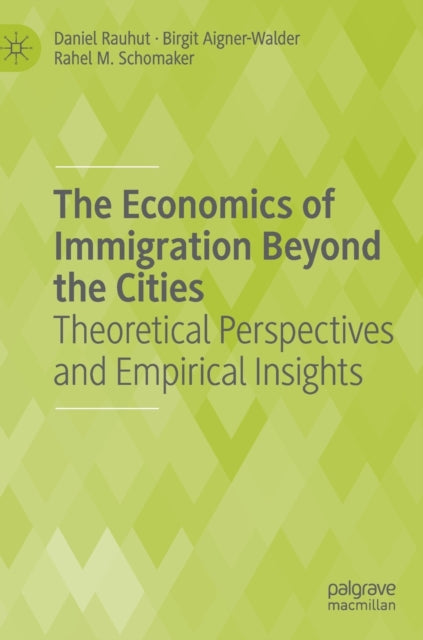
Daniel Rauhut,Birgit Aigner-Walder,Rahel M. Schomaker
The Economics of Immigration Beyond the Cities: Theoretical Perspectives and Empirical Insights
The Economics of Immigration Beyond the Cities: Theoretical Perspectives and Empirical Insights
💎 Earn 454 Points (£4.54) on this item.
We can order this item for you. Delivery usually takes about 4 to 6 weeks.
This item is not held in our immediate stock. We will order it for you after checkout.
Estimated delivery: About 4 to 6 weeks
YOU SAVE £19.14
- Condition: Brand new
- UK Delivery times: Usually arrives within 2 - 3 working days
- UK Shipping: Fee starts at £2.39. Subject to product weight & dimension
Bulk ordering. Want 15 or more copies? Get a personalised quote and bigger discounts. Learn more about bulk orders.
Couldn't load pickup availability
- More about The Economics of Immigration Beyond the Cities: Theoretical Perspectives and Empirical Insights
This book explores how migrants and refugees can revitalise peripheral regions and communities economically, examining the EU as a whole and through empirical case studies. It focuses on the economic consequences of Third Country Nationals to places beyond the cities, and provides innovative policy recommendations to stimulate the positive economic consequences of immigration.
Format: Hardback
Length: 172 pages
Publication date: 14 June 2023
Publisher: Springer International Publishing AG
Migrants and refugees can play a significant role in revitalizing peripheral regions and communities economically. This book explores the extent to which migrants stimulate the economic activities of these regions through labor market participation, entrepreneurship, innovation, and consumption. It examines the economic consequences of Third Country Nationals to places beyond the cities, such as the peripheral and remote regions of Europe. The authors provide innovative policy recommendations to stimulate the positive economic consequences of immigration to these areas. This book is intended for students, researchers, and policymakers working within labor economics and migration and integration policies.
Migrants and Refugees: Revitalizing Peripheral Regions and Communities Economically
Migrants and refugees can have a significant impact on the economic development of peripheral regions and communities. This book explores the various ways in which migrants can contribute to the economic growth of these areas, including through labor market participation, entrepreneurship, innovation, and consumption. The authors examine the economic consequences of migration for the EU as a whole, as well as through empirical case studies that highlight the impact of migration at macro, company, and individual levels. A particular focus is given to the economic consequences of Third Country Nationals to places beyond the cities, such as the peripheral and remote regions of Europe. The book aims to provide insight into the role of migrations in low productive and labor-intensive regions and to offer innovative policy recommendations to stimulate the positive economic consequences of immigration to these areas. It will be of interest to students, researchers, and policymakers working within labor economics and migration and integration policies.
The Extent of Migrants' Economic Impact
Migrants can have a significant impact on the economic activities of peripheral regions and communities. They can contribute to the labor market through labor market participation, which can increase the supply of labor and reduce unemployment rates. Migrants can also start their own businesses, which can create new jobs and stimulate economic growth. Additionally, migrants can bring new ideas and innovations to the region, which can lead to the development of new products and services. However, the economic impact of migrants can also be negative, particularly in the case of Third Country Nationals. Third Country Nationals may face barriers to accessing employment, education, and healthcare, which can limit their ability to contribute to the economy. Additionally, Third Country Nationals may be more likely to engage in criminal activity, which can negatively impact the safety and security of the region.
The Economic Consequences of Migration for the EU
Migration has had a significant impact on the economic development of the EU. The EU has experienced a significant increase in the number of migrants over the past few decades, and this has led to a number of economic consequences. On the one hand, migration has contributed to the growth of the EU's economy. Migrants have brought new skills and knowledge to the region, which has led to the development of new products and services. Migrants have also contributed to the growth of the EU's labor force, which has led to lower unemployment rates. On the other hand, migration has also had negative economic consequences. Migrants can compete with native workers for jobs, which can lead to lower wages and reduced job security. Migrants can also be a burden on the healthcare system, as they may require more healthcare services than native workers. Additionally, migrants can be a source of crime and violence, which can negatively impact the safety and security of the region.
Empirical Case Studies of Migration's Impact
Empirical case studies have been conducted to examine the impact of migration on peripheral regions and communities. These studies have shown that migration can have both positive and negative economic consequences. For example, a study of the impact of migration on the city of Barcelona found that migration had led to the development of new industries and the creation of new jobs. However, the study also found that migration had led to increased competition for jobs and reduced job security for native workers. Another study of the impact of migration on the city of London found that migration had led to the development of new industries and the creation of new jobs. However, the study also found that migration had led to increased competition for jobs and reduced job security for native workers. A study of the impact of migration on the city of Paris found that migration had led to the development of new industries and the creation of new jobs. However, the study also found that migration had led to increased competition for jobs and reduced job security for native workers.
The Economic Consequences of Migration for Third Country Nationals
Migration has had a significant impact on the economic development of Third Country Nationals. Third Country Nationals are individuals who are not citizens of the EU but who live in the EU. Third Country Nationals can face a number of economic barriers, including barriers to accessing employment, education, and healthcare. Third Country Nationals may also be more likely to engage in criminal activity, which can negatively impact the safety and security of the region. Additionally, Third Country Nationals may be more likely to be deported, which can lead to a loss of income and a loss of social connections. The economic consequences of migration for Third Country Nationals can be particularly severe in the case of Third Country Nationals who are not legally allowed to work in the EU. These individuals may be forced to engage in illegal activities to survive, which can lead to further criminal activity and social exclusion. The economic consequences of migration for Third Country Nationals can be addressed through a number of policy recommendations. These recommendations include increasing access to employment, education, and healthcare for Third Country Nationals, reducing the number of deportations, and providing support for integration into the EU.
Policy Recommendations to Stimulate the Positive Economic Consequences of Immigration
There are a number of policy recommendations that can be made to stimulate the positive economic consequences of immigration to peripheral regions and communities. These recommendations include increasing access to employment, education, and healthcare for migrants, reducing the number of deportations, and providing support for integration into the EU. Additionally, policymakers can work to create a more welcoming and inclusive environment for migrants, which can help to reduce the negative economic consequences of migration. Policymakers can also work to promote economic growth in peripheral regions and communities, which can help to attract migrants and reduce the negative economic consequences of migration. Finally, policymakers can work to address the root causes of migration, such as poverty and inequality, which can help to reduce the number of migrants and the negative economic consequences of migration.
Conclusion
Migrants and refugees can have a significant impact on the economic development of peripheral regions and communities. This book explores the various ways in which migrants can contribute to the economic growth of these areas, including through labor market participation, entrepreneurship, innovation, and consumption. The authors examine the economic consequences of migration for the EU as a whole, as well as through empirical case studies that highlight the impact of migration at macro, company, and individual levels. A particular focus is given to the economic consequences of Third Country Nationals to places beyond the cities, such as the peripheral and remote regions of Europe. The book aims to provide insight into the role of migrations in low productive and labor-intensive regions and to offer innovative policy recommendations to stimulate the positive economic consequences of immigration to these areas. It will be of interest to students, researchers, and policymakers working within labor economics and migration and integration policies.
Weight: 381g
Dimension: 210 x 148 (mm)
ISBN-13: 9783031309670
Edition number: 1st ed. 2023
This item can be found in:
UK and International shipping information
UK and International shipping information
UK Delivery and returns information:
- Delivery within 2 - 3 days when ordering in the UK.
- Shipping fee for UK customers from £2.39. Fully tracked shipping service available.
- Returns policy: Return within 30 days of receipt for full refund.
International deliveries:
Shulph Ink now ships to Australia, Belgium, Canada, France, Germany, Ireland, Italy, India, Luxembourg Saudi Arabia, Singapore, Spain, Netherlands, New Zealand, United Arab Emirates, United States of America.
- Delivery times: within 5 - 10 days for international orders.
- Shipping fee: charges vary for overseas orders. Only tracked services are available for most international orders. Some countries have untracked shipping options.
- Customs charges: If ordering to addresses outside the United Kingdom, you may or may not incur additional customs and duties fees during local delivery.