Joseph McKenna
The Fight for Dublin, 1919-1921: Urban Warfare in the Irish Struggle for Independence
The Fight for Dublin, 1919-1921: Urban Warfare in the Irish Struggle for Independence
💎 Earn 141 Points (£1.41) on this item.
We can order this item for you. Delivery usually takes about 4 to 6 weeks.
This item is not held in our immediate stock. We will order it for you after checkout.
Estimated delivery: About 4 to 6 weeks
YOU SAVE £1.68
- Condition: Brand new
- UK Delivery times: Usually arrives within 2 - 3 working days
- UK Shipping: Fee starts at £2.39. Subject to product weight & dimension
Bulk ordering. Want 15 or more copies? Get a personalised quote and bigger discounts. Learn more about bulk orders.
Couldn't load pickup availability
- More about The Fight for Dublin, 1919-1921: Urban Warfare in the Irish Struggle for Independence
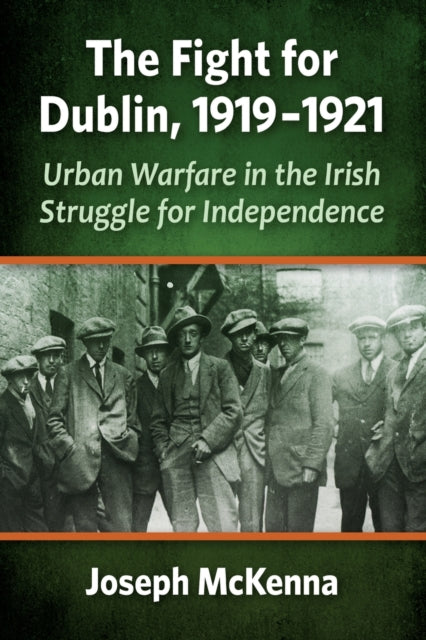
During the War of Irish Independence (1919-1921), a covert war of assassinations, arrests, torture, and murder occurred in Dublin between military intelligence agents of the IRA and British Intelligence. This history chronicles the events that led to the Bloody Sunday mass assassination of British intelligence officers by IRA squads in November 1920, based on witness statements and documents from both sides.
Format: Paperback / softback
Length: 244 pages
Publication date: 01 June 2021
Publisher: McFarland & Co Inc
In the bustling city of Dublin, a fierce and treacherous war unfolded between military intelligence agents during the War of Irish Independence (1919-1921). While the IRA flying columns engaged in fierce battles with the British Army and the Black and Tans in the rural landscapes, the capital city became the stage for a captivating clash of wits between IRA commander Michael Collins and British Intelligence chief Colonel Ormonde de l Epee Winter. This captivating history, meticulously researched using detailed witness statements of Irish participants, documents, and biographies from the British side, unveils the clandestine war of assassinations, arrests, torture, and murder that reached its dramatic climax on Bloody Sunday, November 1920.
As the conflict escalated, both sides resorted to covert tactics to gain an advantage. The IRA, known for their daring and audacious operations, employed a range of strategies, including assassinations, bombings, and armed resistance. On the other hand, British Intelligence relied on its sophisticated intelligence network, surveillance, and counterintelligence operations to track down and neutralize IRA threats.
One of the most significant events of this period was the assassination of British intelligence officers by IRA squads. On Sunday, November 24, 1920, a group of IRA men, disguised as British soldiers, attacked a British intelligence convoy in Dublin. The convoy was ambushed, and several officers were killed, including the head of British Intelligence in Ireland, Major General Richard Hayes.
The aftermath of Bloody Sunday was a watershed moment in the War of Irish Independence. It led to increased tensions between the British government and the Irish Republican Army, and it contributed to the eventual signing of the Anglo-Irish Treaty in 1921, which ended the war and established the Irish Free State.
However, the legacy of the War of Irish Independence continues to be a subject of debate and controversy. Some argue that the IRA's actions were necessary to achieve Irish independence, while others condemn their methods as violent and unethical. The conflict also had a lasting impact on the political landscape of Ireland, shaping the country's history and relationship with the United Kingdom for decades to come.
In conclusion, the War of Irish Independence was a complex and multifaceted conflict that involved intense military intelligence operations on both sides. The assassination of British intelligence officers by IRA squads on Bloody Sunday was a pivotal moment in the war, and it had a lasting impact on the political landscape of Ireland and the relationship between the two countries. While the war ultimately led to Irish independence, its legacy remains a subject of debate and controversy.
Weight: 382g
Dimension: 229 x 152 x 12 (mm)
ISBN-13: 9781476684413
This item can be found in:
UK and International shipping information
UK and International shipping information
UK Delivery and returns information:
- Delivery within 2 - 3 days when ordering in the UK.
- Shipping fee for UK customers from £2.39. Fully tracked shipping service available.
- Returns policy: Return within 30 days of receipt for full refund.
International deliveries:
Shulph Ink now ships to Australia, Belgium, Canada, France, Germany, Ireland, Italy, India, Luxembourg Saudi Arabia, Singapore, Spain, Netherlands, New Zealand, United Arab Emirates, United States of America.
- Delivery times: within 5 - 10 days for international orders.
- Shipping fee: charges vary for overseas orders. Only tracked services are available for most international orders. Some countries have untracked shipping options.
- Customs charges: If ordering to addresses outside the United Kingdom, you may or may not incur additional customs and duties fees during local delivery.