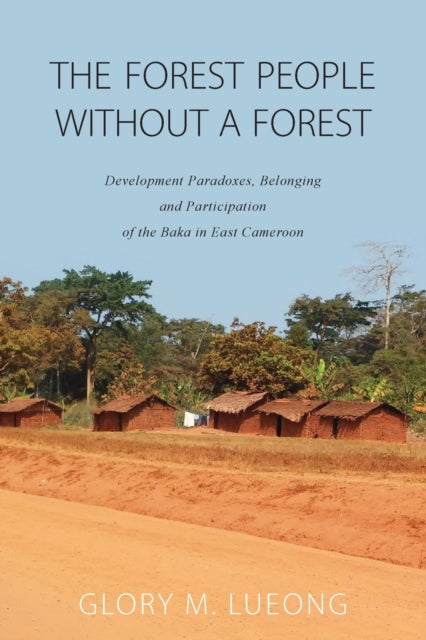
Glory M. Lueong
The Forest People without a Forest: Development Paradoxes, Belonging and Participation of the Baka in East Cameroon
The Forest People without a Forest: Development Paradoxes, Belonging and Participation of the Baka in East Cameroon
💎 Earn 119 Points (£1.19) on this item.
We can order this item for you. Delivery usually takes about 4 to 6 weeks.
This item is not held in our immediate stock. We will order it for you after checkout.
Estimated delivery: About 4 to 6 weeks
YOU SAVE £4.04
- Condition: Brand new
- UK Delivery times: Usually arrives within 2 - 3 working days
- UK Shipping: Fee starts at £2.39. Subject to product weight & dimension
Bulk ordering. Want 15 or more copies? Get a personalised quote and bigger discounts. Learn more about bulk orders.
Couldn't load pickup availability
- More about The Forest People without a Forest: Development Paradoxes, Belonging and Participation of the Baka in East Cameroon
This book explores how the Baka, a community in Eastern Cameroon, assert forms of belonging to participate in development interventions and how community life is shaped and reshaped by these interventions.
Format: Paperback / softback
Length: 218 pages
Publication date: 14 January 2022
Publisher: Berghahn Books
Development interventions often create complexities and disagreements regarding who benefits from these initiatives and which communities are intended to receive assistance. This book delves into the examination of how the Baka, a community residing in Eastern Cameroon, assert their sense of belonging to engage in development interventions, and how these interventions shape and reshape the fabric of community life. Often labeled as "forest people," the Baka have experienced a multitude of recent development interventions that encompass a range of policies, some of which are competing and contradictory. These policies include initiatives aimed at promoting "civilization," "assimilation," and "integration" of the Baka into "full citizenship," safeguarding forest and wildlife resources, and preserving indigenous cultures that are on the brink of extinction.
The Baka's engagement with development interventions is intricately linked to their pursuit of belonging and identity. These interventions often challenge the traditional ways of life and cultural practices of the Baka, leading to tensions and conflicts within the community. However, the Baka have also found ways to adapt and incorporate these interventions into their own cultural frameworks, creating new forms of social organization and collective identity.
One of the key themes explored in this book is the impact of development interventions on community life. The Baka's interactions with development agencies, government officials, and other stakeholders often result in changes to their livelihoods, access to resources, and social structures. These changes can have both positive and negative consequences, with some individuals and communities benefiting while others face marginalization or displacement.
The book also examines the role of cultural heritage and identity in shaping the Baka's response to development interventions. The Baka have a rich cultural heritage that includes traditional practices, beliefs, and customs. These cultural assets are often seen as valuable by development agencies and policymakers, who seek to incorporate them into development initiatives. However, the Baka may have different interpretations of their cultural heritage and its relevance to modern development, leading to conflicts and tensions.
To address these challenges, the book proposes a multifaceted approach that involves collaboration between the Baka, development agencies, and other stakeholders. This approach emphasizes the importance of respecting and valuing the Baka's cultural heritage and identity while also promoting sustainable development practices that benefit both the community and the environment.
In conclusion, this book provides a valuable insight into the complex dynamics of development interventions and their impact on communities. By examining the case of the Baka, it sheds light on the ways in which individuals and communities assert their sense of belonging and engage with development interventions, and how these interventions shape and reshape community life. The book's findings offer valuable lessons for policymakers, development agencies, and other stakeholders who are working to promote sustainable development and address the challenges faced by marginalized communities.
Development interventions often generate contradictions around questions of who benefits from development and which communities are targeted for intervention. This book examines how the Baka, who live in Eastern Cameroon, assert forms of belonging in order to participate in development interventions, and how community life is shaped and reshaped through these interventions.
Often referred to as ‘forest people, the Baka have witnessed many recent development interventions that include competing and contradictory policies such as ‘civilize, assimilate and integrate the Baka into ‘full citizenship, conserve the forest and wildlife resources, and preserve indigenous cultures at the verge of extinction.’
The Baka's engagement with development interventions is intricately linked to their pursuit of belonging and identity. These interventions often challenge the traditional ways of life and cultural practices of the Baka, leading to tensions and conflicts within the community. However, the Baka have also found ways to adapt and incorporate these interventions into their own cultural frameworks, creating new forms of social organization and collective identity.
One of the key themes explored in this book is the impact of development interventions on community life. The Baka's interactions with development agencies, government officials, and other stakeholders often result in changes to their livelihoods, access to resources, and social structures. These changes can have both positive and negative consequences, with some individuals and communities benefiting while others face marginalization or displacement.
The book also examines the role of cultural heritage and identity in shaping the Baka's response to development interventions. The Baka have a rich cultural heritage that includes traditional practices, beliefs, and customs. These cultural assets are often seen as valuable by development agencies and policymakers, who seek to incorporate them into development initiatives. However, the Baka may have different interpretations of their cultural heritage and its relevance to modern development, leading to conflicts and tensions.
To address these challenges, the book proposes a multifaceted approach that involves collaboration between the Baka, development agencies, and other stakeholders. This approach emphasizes the importance of respecting and valuing the Baka's cultural heritage and identity while also promoting sustainable development practices that benefit both the community and the environment.
In conclusion, this book provides a valuable insight into the complex dynamics of development interventions and their impact on communities. By examining the case of the Baka, it sheds light on the ways in which individuals and communities assert their sense of belonging and engage with development interventions, and how these interventions shape and reshape community life. The book's findings offer valuable lessons for policymakers, development agencies, and other stakeholders who are working to promote sustainable development and address the challenges faced by marginalized communities.
Weight: 330g
Dimension: 153 x 228 x 20 (mm)
ISBN-13: 9781800732162
This item can be found in:
UK and International shipping information
UK and International shipping information
UK Delivery and returns information:
- Delivery within 2 - 3 days when ordering in the UK.
- Shipping fee for UK customers from £2.39. Fully tracked shipping service available.
- Returns policy: Return within 30 days of receipt for full refund.
International deliveries:
Shulph Ink now ships to Australia, Belgium, Canada, France, Germany, Ireland, Italy, India, Luxembourg Saudi Arabia, Singapore, Spain, Netherlands, New Zealand, United Arab Emirates, United States of America.
- Delivery times: within 5 - 10 days for international orders.
- Shipping fee: charges vary for overseas orders. Only tracked services are available for most international orders. Some countries have untracked shipping options.
- Customs charges: If ordering to addresses outside the United Kingdom, you may or may not incur additional customs and duties fees during local delivery.