Anthony Webster
The Foundation of Australia's Capital Cities: Geology, Landscape, and Urban Character
The Foundation of Australia's Capital Cities: Geology, Landscape, and Urban Character
💎 Earn 504 Points (£5.04) on this item.
We can order this item for you. Delivery usually takes about 4 to 6 weeks.
This item is not held in our immediate stock. We will order it for you after checkout.
Estimated delivery: About 4 to 6 weeks
- Condition: Brand new
- UK Delivery times: Usually arrives within 2 - 3 working days
- UK Shipping: Fee starts at £2.39. Subject to product weight & dimension
Bulk ordering. Want 15 or more copies? Get a personalised quote and bigger discounts. Learn more about bulk orders.
Couldn't load pickup availability
- More about The Foundation of Australia's Capital Cities: Geology, Landscape, and Urban Character
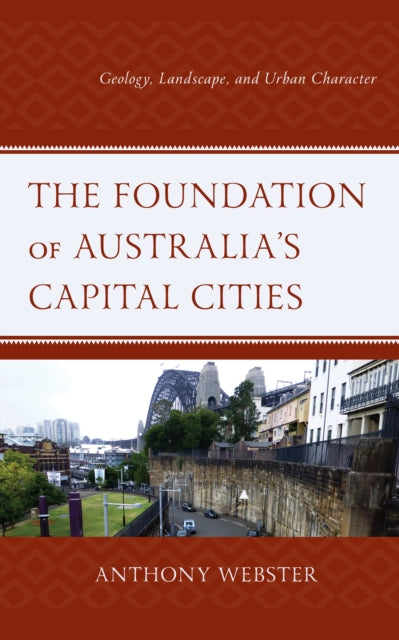
The Foundation of Australias Capital Cities explores how the geology and original landforms of each city shaped its urban character and built environment, resulting in development patterns that have persisted today.
Format: Hardback
Length: 340 pages
Publication date: 31 March 2022
Publisher: Lexington Books
The Foundation of Australias Capital Cities is a captivating tale that delves into the intricate process of how the locations selected for Australias seven colonial capitals have shaped their distinct urban identities and architectural landscapes. Tony Webster takes us on a journey to explore the profound impact of each citys geologically diverse coastal or riverine landforms and the locally available natural materials for construction. Through his meticulous research, Webster highlights how the geology and original landforms have shaped development patterns that continue to endure to this day.
In the early days of Australian colonization, the selection of capital cities was driven by strategic and practical considerations. The colonial governments sought to establish centers of administration, trade, and governance that would facilitate the growth and development of the fledgling nation. However, it was not just the practicalities that shaped the cities. The natural environment, particularly the geology and landforms, played a significant role in determining their character and appearance.
Take, for example, Canberra, the capital of Australia. Located in the Australian Capital Territory (ACT), Canberra is situated on the banks of the Molonglo River. The city was carefully planned to take advantage of the natural topography, with the main administrative buildings and government institutions located on the higher slopes of the hills. This strategic placement not only provided a commanding view of the surrounding landscape but also ensured that the city was well-protected from potential threats.
Canberra is renowned for its modern and efficient infrastructure, which is a testament to the careful planning that went into its development. The city is home to a well-developed public transportation system, including buses, trains, and light rail, making it easy for residents and visitors to navigate the city. The city also boasts a wide range of cultural institutions, including museums, galleries, and theaters, which contribute to its vibrant and diverse community.
Another example is Sydney, the largest city in Australia and the cultural and economic hub of the country. Located on the eastern coast of Australia, Sydney is surrounded by stunning beaches, iconic landmarks, and a vibrant cultural scene. The city was built on the foundations of colonial settlement, with the first European settlers arriving in 1788. Over the years, Sydney has grown and evolved, becoming a global city that is home to a diverse range of industries and cultures.
The geology of Sydney is characterized by its coastal plains and sandstone cliffs, which provide a stunning backdrop to the city. The city is also home to a number of iconic landmarks, such as the Sydney Opera House, the Sydney Harbour Bridge, and the iconic Sydney Tower. These landmarks not only serve as tourist attractions but also as symbols of the citys rich history and cultural heritage.
In conclusion, the Foundation of Australias Capital Cities is a story that showcases the intricate interplay between geology, landforms, and urban development. The cities chosen for Australias colonial capitals have been shaped by the unique geological characteristics of their locations, resulting in urban landscapes that are both distinctive and enduring. By exploring the effects of each citys geologically diverse coastal or riverine landform and the local natural materials that were available for construction, Webster provides a valuable insight into the rich history and cultural heritage of Australias capital cities.
Weight: 735g
Dimension: 238 x 161 x 27 (mm)
ISBN-13: 9781498597951
This item can be found in:
UK and International shipping information
UK and International shipping information
UK Delivery and returns information:
- Delivery within 2 - 3 days when ordering in the UK.
- Shipping fee for UK customers from £2.39. Fully tracked shipping service available.
- Returns policy: Return within 30 days of receipt for full refund.
International deliveries:
Shulph Ink now ships to Australia, Belgium, Canada, France, Germany, Ireland, Italy, India, Luxembourg Saudi Arabia, Singapore, Spain, Netherlands, New Zealand, United Arab Emirates, United States of America.
- Delivery times: within 5 - 10 days for international orders.
- Shipping fee: charges vary for overseas orders. Only tracked services are available for most international orders. Some countries have untracked shipping options.
- Customs charges: If ordering to addresses outside the United Kingdom, you may or may not incur additional customs and duties fees during local delivery.