Shulph Ink
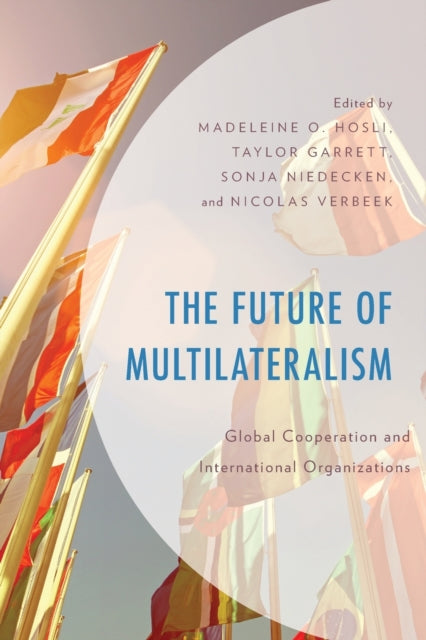
The Future of Multilateralism: Global Cooperation and International Organizations
The Future of Multilateralism: Global Cooperation and International Organizations
💎 Earn 191 Points (£1.91) on this item.
We can order this item for you. Delivery usually takes about 4 to 6 weeks.
This item is not held in our immediate stock. We will order it for you after checkout.
Estimated delivery: About 4 to 6 weeks
- Condition: Brand new
- UK Delivery times: Usually arrives within 2 - 3 working days
- UK Shipping: Fee starts at £2.39. Subject to product weight & dimension
Bulk ordering. Want 15 or more copies? Get a personalised quote and bigger discounts. Learn more about bulk orders.
Couldn't load pickup availability
- More about The Future of Multilateralism: Global Cooperation and International Organizations
The Future of Multilateralism examines the foundations of global cooperation and the challenges posed by unilateral and protectionist practices, as well as COVID-19. It explores the establishment of international institutions to prevent future conflicts and ensure peace and prosperity. However, the impact of COVID-19 on multilateral institutions is a recent phenomenon, and there is limited research on the challenges they face. The book aims to uncover the future of these organizations and the multilateral system.
Format: Paperback / softback
Length: 328 pages
Publication date: 23 February 2023
Publisher: Rowman & Littlefield
The Future of Multilateralism: Navigating Current Challenges and Shaping the Future of International and Regional Organizations
Multilateralism is a cornerstone of global cooperation, and its foundations are being tested in the face of recent unilateral and protectionist practices and the challenges posed by COVID-19. The post-World War II global order was built on the principles of multilateralism, with the establishment of international institutions aimed at preventing another global conflict and ensuring peace and prosperity. However, the effects of COVID-19 on the global, regional, state, and individual levels are relatively recent, and there has been limited research to understand the challenges faced by multilateral institutions due to the pandemic. This book aims to uncover the future of such organizations and the prospects for the multilateral system, which they constitute the building blocks.
Multilateralism is a system of international relations that involves the cooperation of multiple countries or organizations to address global issues. It has been the dominant form of international relations since the end of World War II, and has been instrumental in promoting peace, security, and economic development. However, multilateralism has faced several challenges in recent years, including the rise of unilateralism, protectionism, and the COVID-19 pandemic.
One of the main challenges facing multilateralism is the rise of unilateralism. Unilateralism is the practice of a country or organization acting independently of other countries or organizations to achieve its goals. This can lead to conflict and instability, as other countries may not agree with the actions taken by the unilateralist. Unilateralism has been particularly prevalent in recent years, with the United States withdrawing from the Paris Agreement on climate change, the United Kingdom leaving the European Union, and China asserting its dominance in the global economy.
Protectionism is another challenge facing multilateralism. Protectionism is the practice of imposing tariffs, quotas, and other trade barriers to protect domestic industries from foreign competition. This can lead to economic inefficiency, as it reduces the flow of goods and services between countries. Protectionism has been particularly prevalent in recent years, with the United States imposing tariffs on Chinese goods, the European Union imposing tariffs on American goods, and China imposing tariffs on European goods.
The COVID-19 pandemic has also posed several challenges to multilateralism. The pandemic has led to a global economic downturn, with many countries experiencing significant job losses and economic instability. This has made it difficult for multilateral institutions to provide financial assistance to countries in need. Additionally, the pandemic has led to increased tensions between countries, as some countries have accused others of not taking sufficient action to address the pandemic.
Despite these challenges, multilateralism remains a vital form of international relations. Multilateral institutions such as the United Nations, the World Bank, and the International Monetary Fund have played a critical role in promoting peace, security, and economic development. These institutions have been able to provide financial assistance to countries in need, and have been instrumental in addressing global issues such as climate change, poverty, and disease.
However, multilateralism faces several challenges in the future. One of the main challenges is the need to address the growing inequality between countries. Inequality has been a major factor in the rise of unilateralism and protectionism, and it has led to a lack of trust between countries. Multilateral institutions need to work to address this inequality by promoting economic growth and reducing poverty.
Another challenge facing multilateralism is the need to address the impact of climate change. Climate change is a global issue that has the potential to cause significant damage to the planet. Multilateral institutions need to work to address this issue by promoting sustainable development and reducing greenhouse gas emissions.
In addition to these challenges, multilateralism faces several other challenges. For example, the rise of populism and nationalism has led to a decline in trust between countries. Multilateral institutions need to work to address this issue by promoting dialogue and understanding between countries.
To address these challenges, multilateral institutions need to work to strengthen their governance structures. This can include increasing the transparency of their decision-making processes, and increasing the accountability of their leaders. Multilateral institutions also need to work to increase their funding and resources.
In conclusion, multilateralism is a cornerstone of global cooperation, and its foundations are being tested in the face of recent unilateral and protectionist practices and the challenges posed by COVID-19. While multilateralism faces several challenges in the future, it remains a vital form of international relations. Multilateral institutions need to work to strengthen their governance structures, increase their funding and resources, and address the growing inequality between countries and the impact of climate change. By doing so, multilateralism can continue to promote peace, security, and economic development for all countries.
Weight: 494g
Dimension: 229 x 151 x 24 (mm)
ISBN-13: 9781538157923
UK and International shipping information
UK and International shipping information
UK Delivery and returns information:
- Delivery within 2 - 3 days when ordering in the UK.
- Shipping fee for UK customers from £2.39. Fully tracked shipping service available.
- Returns policy: Return within 30 days of receipt for full refund.
International deliveries:
Shulph Ink now ships to Australia, Belgium, Canada, France, Germany, Ireland, Italy, India, Luxembourg Saudi Arabia, Singapore, Spain, Netherlands, New Zealand, United Arab Emirates, United States of America.
- Delivery times: within 5 - 10 days for international orders.
- Shipping fee: charges vary for overseas orders. Only tracked services are available for most international orders. Some countries have untracked shipping options.
- Customs charges: If ordering to addresses outside the United Kingdom, you may or may not incur additional customs and duties fees during local delivery.