Shulph Ink
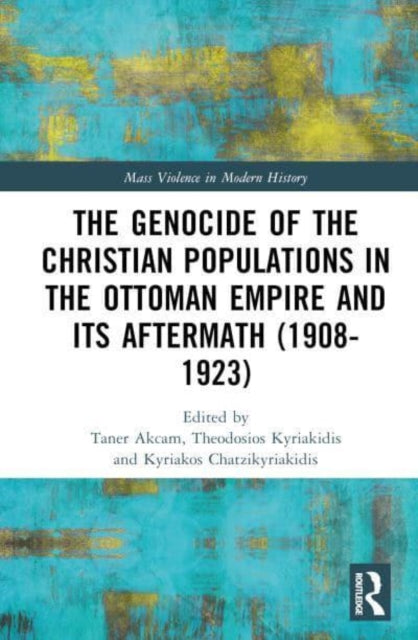
The Genocide of the Christian Populations in the Ottoman Empire and its Aftermath (1908-1923)
The Genocide of the Christian Populations in the Ottoman Empire and its Aftermath (1908-1923)
💎 Earn 689 Points (£6.89) on this item.
We can order this item for you. Delivery usually takes about 4 to 6 weeks.
This item is not held in our immediate stock. We will order it for you after checkout.
Estimated delivery: About 4 to 6 weeks
YOU SAVE £8.18
- Condition: Brand new
- UK Delivery times: Usually arrives within 2 - 3 working days
- UK Shipping: Fee starts at £2.39. Subject to product weight & dimension
Bulk ordering. Want 15 or more copies? Get a personalised quote and bigger discounts. Learn more about bulk orders.
Couldn't load pickup availability
- More about The Genocide of the Christian Populations in the Ottoman Empire and its Aftermath (1908-1923)
During the twilight years of the Ottoman Empire, the administration carried out a systematic destruction of the Armenian people, accompanied by the mass murder of Syriac and Greek Orthodox Christians. This book explores the events and their legacy in comparative perspective, using unpublished archival material and an innovative historiographical approach. It also highlights the fate of the Greek and Assyrian peoples, providing a more comprehensive understanding of the complexity of the situation.
Format: Hardback
Length: 264 pages
Publication date: 31 January 2023
Publisher: Taylor & Francis Ltd
During the twilight years of the Ottoman Empire, a period marked by ethnic tensions and strife, the administration embarked on a systematic campaign of destruction aimed at the Armenian people. This tragic event not only brought an end to 2,000 years of Armenian civilization within Anatolia but also resulted in the mass murder of Syriac and Greek Orthodox Christians. The Ottoman Empire, known for its diverse and multicultural society, had been plagued by sectarianism and religious conflicts for centuries. However, the genocide of the Christian populations during this period reached unprecedented levels of brutality and cruelty.
The Armenian case, in particular, stands out as a symbol of the atrocities committed during this time. The Armenian population had been living in the Ottoman Empire for centuries, contributing significantly to the economic, cultural, and social life of the empire. However, their presence was perceived as a threat by certain Ottoman elites, who saw them as a potential source of instability and rebellion. As a result, the Armenian people were subjected to a series of discriminatory policies and laws that gradually eroded their rights and freedoms.
The persecution of the Armenian people began in the early 19th century and intensified over the years. In 1894, the Young Turk Revolution led to the establishment of a new government in the Ottoman Empire, which was characterized by a more nationalist and authoritarian approach. The new regime saw the Armenian population as a threat to the stability of the empire and launched a campaign of extermination.
The genocide of the Armenian people involved a range of tactics, including mass murder, forced displacement, and sexual violence. Thousands of Armenian men, women, and children were killed in massacres, while others were forced to flee their homes and communities. Women were subjected to rape and sexual abuse, and children were taken away from their parents and sold into slavery. The perpetrators of the genocide were not only members of the Ottoman government but also local Turkish communities who collaborated with the authorities.
The aftermath of the genocide was devastating for the Armenian people and the broader Christian communities in the Ottoman Empire. The destruction of Armenian communities and the displacement of millions of people led to the loss of cultural heritage and the displacement of entire communities. The genocide also had a lasting impact on the political and social landscape of the region, as it contributed to the rise of nationalism and the emergence of new political movements.
In order to understand the historical context of the Ottoman Genocide, it is important to study the fate of the Greek and Assyrian peoples, who were also subjected to persecution and mass murder during this period. The Greek population had been living in the Ottoman Empire for centuries and had contributed significantly to the cultural and intellectual life of the empire. However, they were also perceived as a threat by certain Ottoman elites, who saw them as a potential source of rebellion.
The Greek population was subjected to a series of discriminatory policies and laws that gradually eroded their rights and freedoms. They were forced to pay higher taxes, were denied access to certain professions, and were subjected to forced conversions to Islam. In 1915, the Ottoman Empire entered World War I, and the Greek population was used as a scapegoat by the Turkish government. The Greek population was subjected to massacres, forced displacement, and sexual violence, and thousands of Greek men, women, and children were killed in massacres.
The Assyrian population, on the other hand, had been living in the Ottoman Empire for centuries and had established a distinct cultural and religious identity. However, they were also subjected to persecution and mass murder by the Ottoman government. The Assyrian people were forced to pay higher taxes, were denied access to certain professions, and were subjected to forced conversions to Islam. In 1915, the Ottoman Empire entered World War I, and the Assyrian population was targeted by the Turkish government in a campaign of genocide. Thousands of Assyrian men, women, and children were killed in massacres, and their communities were destroyed.
The genocide of the Christian populations of the Ottoman Empire and its aftermath is a complex and multifaceted issue that requires a comprehensive understanding. The book, "The Genocide of the Christian Populations of the Ottoman Empire and Its Aftermath (1908–1923)," contains a selection of papers presented at an international conference hosted by the Chair for Pontic Studies at the Aristotle University of Thessaloniki. The conference aimed to analyze the events and their legacy in comparative perspective, providing a more comprehensive understanding of the complexity of the situation.
The book draws on unpublished archival material and an innovative historiographical approach to analyze the events and their legacy. The authors of the papers explore various aspects of the genocide, including its historical context, the political and social factors that contributed to it, and the impact it had on the Armenian, Greek, and Assyrian peoples. The book also discusses the international response to the genocide and the efforts made to commemorate and prevent future genocides.
One of the key themes of the book is the role of nationalism in the genocide of the Christian populations. The authors argue that the rise of nationalism in the Ottoman Empire and the emergence of new political movements played a significant role in the persecution and mass murder of the Christian communities. The Ottoman Empire, which had been a multi-ethnic and multi-religious empire for centuries, was gradually transformed into a nation-state that prioritized the interests of the Turkish people. The Armenian, Greek, and Assyrian populations, who had been living in the empire for centuries, were perceived as threats to the stability and identity of the Turkish nation.
The book also highlights the role of the Ottoman government in the genocide of the Christian populations. The Ottoman government, which had been characterized by a mixture of authoritarianism and bureaucracy, was unable to control the widespread violence and destruction that occurred during the genocide. The government's policies and actions, which included the implementation of discriminatory laws and policies, the use of forced labor, and the deployment of military forces, contributed to the genocide.
The book also discusses the international response to the genocide of the Christian populations. The international community, including the United States, the United Kingdom, and the European Union, expressed outrage and condemnation of the genocide. However, the international response was slow and inadequate, and the Turkish government was able to evade international sanctions and punishment. The genocide of the Christian populations of the Ottoman Empire and its aftermath is a tragic and painful chapter in human history. It serves as a reminder of the importance of promoting tolerance, respect, and human rights, and of the dangers of nationalism and religious extremism.
In conclusion, the genocide of the Christian populations of the Ottoman Empire and its aftermath is a complex and multifaceted issue that requires a comprehensive understanding. The book, "The Genocide of the Christian Populations of the Ottoman Empire and Its Aftermath (1908–1923)," provides a valuable contribution to the study of this tragic event and its legacy. By drawing on unpublished archival material and an innovative historiographical approach, the book offers a more comprehensive understanding of the historical context, the political and social factors that contributed to it, and the impact it had on the Armenian, Greek, and Assyrian peoples. The book also highlights the role of nationalism and the Ottoman government in the genocide and the international response to it. The genocide of the Christian populations of the Ottoman Empire and its aftermath is a reminder of the importance of promoting tolerance, respect, and human rights, and of the dangers of nationalism and religious extremism.
Weight: 690g
Dimension: 234 x 156 (mm)
ISBN-13: 9781032075037
UK and International shipping information
UK and International shipping information
UK Delivery and returns information:
- Delivery within 2 - 3 days when ordering in the UK.
- Shipping fee for UK customers from £2.39. Fully tracked shipping service available.
- Returns policy: Return within 30 days of receipt for full refund.
International deliveries:
Shulph Ink now ships to Australia, Belgium, Canada, France, Germany, Ireland, Italy, India, Luxembourg Saudi Arabia, Singapore, Spain, Netherlands, New Zealand, United Arab Emirates, United States of America.
- Delivery times: within 5 - 10 days for international orders.
- Shipping fee: charges vary for overseas orders. Only tracked services are available for most international orders. Some countries have untracked shipping options.
- Customs charges: If ordering to addresses outside the United Kingdom, you may or may not incur additional customs and duties fees during local delivery.