Shulph Ink
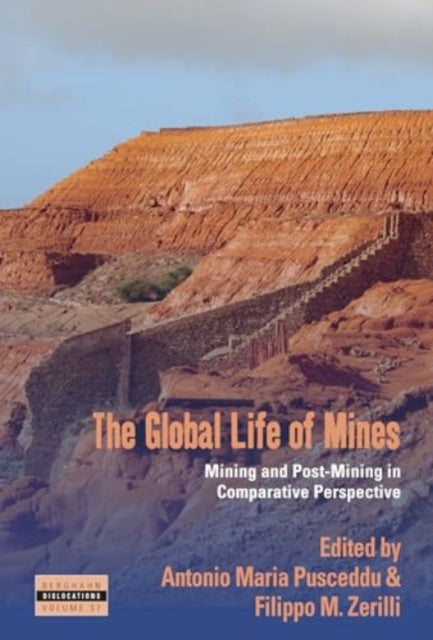
The Global Life of Mines: Mining and Post-Mining in Comparative Perspective
The Global Life of Mines: Mining and Post-Mining in Comparative Perspective
💎 Earn 506 Points (£5.06) on this item.
YOU SAVE £2.76
- Condition: Brand new
- UK Delivery times: Usually arrives within 2 - 3 working days
- UK Shipping: Fee starts at £2.39. Subject to product weight & dimension
Bulk ordering. Want 15 or more copies? Get a personalised quote and bigger discounts. Learn more about bulk orders.
Couldn't load pickup availability
- More about The Global Life of Mines: Mining and Post-Mining in Comparative Perspective
Resource extraction occurs globally and is studied in the Global Life of Mines, which examines spatial and temporal relationships between mining and postmining. It includes ethnographic case studies from various regions.
Format: Hardback
Length: 226 pages
Publication date: 01 July 2024
Publisher: Berghahn Books
Resource extraction is a global phenomenon that takes place in various settings and involves a range of practices. The Global Life of Mines provides a comprehensive framework for understanding the spatial and temporal relationships between mining and postmining as interrelated and coexisting features within the global minescape. The book brings together scholars from diverse fields, including anthropology, geography, sociology, and political science, to examine ethnographic case studies from across the Americas (Bolivia, Brazil, Peru, USA), Africa (Democratic Republic of Congo), and Europe (Italy, Arctic Norway, and Spain).
Mining activities have significant environmental and social impacts, including land degradation, water pollution, and human displacement. These impacts can have long-term consequences for local communities and the environment. Resource extraction can also contribute to economic development, providing jobs and income to local communities. However, the benefits of resource extraction must be balanced against the negative impacts.
One of the key challenges facing resource extraction is the need to manage resources sustainably. This requires a combination of technical, economic, and social measures. Technical measures include the use of advanced mining technologies, such as hydraulic fracturing and open-pit mining, to extract resources more efficiently and safely. Economic measures include the development of sustainable mining practices, such as reducing waste and pollution, and the promotion of fair trade practices. Social measures include the engagement of local communities in the decision-making process and the provision of social services, such as healthcare and education.
Resource extraction can also have negative impacts on human health. Exposure to toxic chemicals and heavy metals can lead to a range of health problems, including cancer, respiratory diseases, and neurological disorders. Resource extraction can also contribute to social inequality, as the benefits of resource extraction are often concentrated in a small number of individuals and communities.
To address these challenges, there have been a number of initiatives and policies implemented at the global, national, and local levels. At the global level, the United Nations has established a number of international agreements and conventions, such as the Convention on Biological Diversity and the Convention on Climate Change, that aim to protect the environment and promote sustainable development. At the national level, governments have implemented policies and regulations to manage resource extraction, such as environmental impact assessments and land use planning. At the local level, communities have implemented their own initiatives to protect their resources and promote sustainable development.
One of the most significant initiatives in resource extraction is the development of renewable energy sources. Renewable energy sources, such as solar, wind, and hydropower, are more sustainable than traditional fossil fuels and can provide a significant source of energy for the world. However, the development of renewable energy sources can also have negative impacts on the environment, such as the displacement of local communities and the destruction of natural habitats.
Another important initiative in resource extraction is the development of sustainable mining practices. Sustainable mining practices include the use of advanced mining technologies, the reduction of waste and pollution, and the promotion of fair trade practices. Sustainable mining practices can help to reduce the negative impacts of resource extraction on the environment and local communities.
In addition to these initiatives, there have been a number of challenges facing resource extraction. One of the most significant challenges is the increasing demand for resources. As the world's population continues to grow, the demand for resources such as oil, gas, and minerals is increasing. This has led to the development of new mining projects in remote and environmentally sensitive areas, which can have negative impacts on the environment and local communities.
Another challenge facing resource extraction is the impact of climate change. Climate change is causing a range of environmental problems, including sea level rise, drought, and extreme weather events. These problems can have negative impacts on resource extraction, as they can lead to the loss of resources and the displacement of local communities.
To address these challenges, there have been a number of initiatives and policies implemented at the global, national, and local levels. At the global level, the United Nations has established a number of international agreements and conventions, such as the Paris Agreement on Climate Change, that aim to reduce greenhouse gas emissions and promote sustainable development. At the national level, governments have implemented policies and regulations to manage resource extraction, such as carbon pricing and renewable energy subsidies. At the local level, communities have implemented their own initiatives to protect their resources and promote sustainable development.
In conclusion, resource extraction is a global phenomenon that has significant environmental and social impacts. The Global Life of Mines provides a comprehensive framework for understanding the spatial and temporal relationships between mining and postmining as interrelated and coexisting features within the global minescape. Resource extraction can also contribute to economic development, but the benefits of resource extraction must be balanced against the negative impacts. To address these challenges, there have been a number of initiatives and policies implemented at the global, national, and local levels. Renewable energy sources, sustainable mining practices, and the development of sustainable mining practices are all important initiatives in resource extraction. However, there are still many challenges facing resource extraction, and it is important for governments, businesses, and individuals to work together to address these challenges.
Weight: 476g
Dimension: 236 x 160 x 20 (mm)
ISBN-13: 9781805395911
UK and International shipping information
UK and International shipping information
UK Delivery and returns information:
- Delivery within 2 - 3 days when ordering in the UK.
- Shipping fee for UK customers from £2.39. Fully tracked shipping service available.
- Returns policy: Return within 30 days of receipt for full refund.
International deliveries:
Shulph Ink now ships to Australia, Belgium, Canada, France, Germany, Ireland, Italy, India, Luxembourg Saudi Arabia, Singapore, Spain, Netherlands, New Zealand, United Arab Emirates, United States of America.
- Delivery times: within 5 - 10 days for international orders.
- Shipping fee: charges vary for overseas orders. Only tracked services are available for most international orders. Some countries have untracked shipping options.
- Customs charges: If ordering to addresses outside the United Kingdom, you may or may not incur additional customs and duties fees during local delivery.