CindyErmus
The Great Plague Scare of 1720: Disaster and Diplomacy in the Eighteenth-Century Atlantic World
The Great Plague Scare of 1720: Disaster and Diplomacy in the Eighteenth-Century Atlantic World
💎 Earn 155 Points (£1.55) on this item.
We can order this item for you. Delivery usually takes about 4 to 6 weeks.
This item is not held in our immediate stock. We will order it for you after checkout.
Estimated delivery: About 4 to 6 weeks
YOU SAVE £1.85
- Condition: Brand new
- UK Delivery times: Usually arrives within 2 - 3 working days
- UK Shipping: Fee starts at £2.39. Subject to product weight & dimension
Bulk ordering. Want 15 or more copies? Get a personalised quote and bigger discounts. Learn more about bulk orders.
Couldn't load pickup availability
- More about The Great Plague Scare of 1720: Disaster and Diplomacy in the Eighteenth-Century Atlantic World
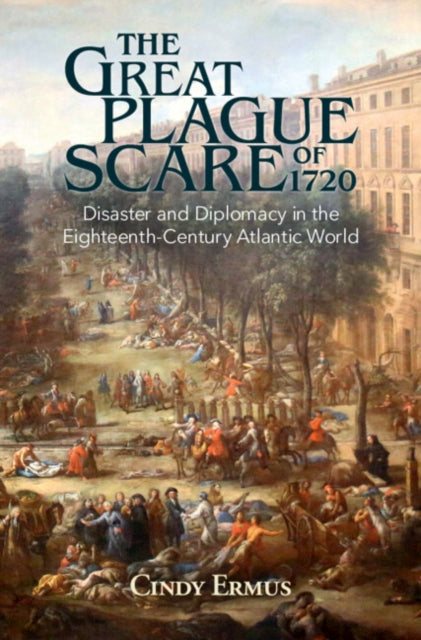
The Plague of Provence was a major epidemic that struck Western Europe from 1720 to 1722, killing 126,000 people and leading to new understandings of contagion and management. This transnational study examines the social, commercial, and diplomatic impact of the epidemic beyond French borders, revealing how it influenced society, politics, and public health policy in regions far from the epicenter.
Format: Hardback
Length: 258 pages
Publication date: 01 December 2022
Publisher: Cambridge University Press
From 1720 to 1722, the French region of Provence and its surrounding areas witnessed one of the last major epidemics of plague to strike Western Europe. The Plague of Provence, a catastrophic event, resulted in the loss of up to 126,000 lives, while also shedding light on the nature of contagion and the most effective strategies for managing its threat. In this transnational study, Cindy Ermus delves into the far-reaching social, economic, and diplomatic consequences of the epidemic beyond French borders. She explores the reactions to this public health crisis across Italy, Great Britain, Spain, and the overseas colonies, highlighting how a crisis in one part of the globe can transcend geographical boundaries and exert a profound influence on society, politics, and public health policies in regions far removed from the epicenter of disaster.
The Plague of Provence, which occurred between 1720 and 1722, was a devastating epidemic that had a profound impact on the French region of Provence and its surrounding areas. The disease caused widespread suffering and resulted in the loss of thousands of lives, leaving a lasting legacy in the region.
The epidemic began in Marseille, France, and quickly spread throughout Provence and other parts of France. The symptoms of the disease were severe and included fever, vomiting, and diarrhea, which often led to death within days. The disease was highly contagious and spread rapidly through contact with infected individuals, leading to a rapid increase in the number of cases.
The response to the epidemic was initially slow and inadequate, with many authorities failing to take the necessary measures to control the spread of the disease. This led to a sense of panic and confusion among the population, as people sought medical help and tried to protect themselves from the disease.
However, as the epidemic progressed, the French government took steps to address the crisis. They implemented measures such as quarantine, isolation, and disinfection to control the spread of the disease. They also provided financial assistance to affected families and implemented measures to improve sanitation and hygiene in the region.
Despite these efforts, the epidemic continued to spread, and it eventually reached other parts of Europe, including Italy, Great Britain, and Spain. The disease caused widespread devastation and resulted in the loss of thousands of lives.
The epidemic also had a significant impact on the social and economic structures of the region. Many families were forced to leave their homes and move to other areas, leading to a decline in the population and a loss of economic activity. The epidemic also led to a rise in social inequality, as those who were able to afford medical care and protection were more likely to survive than those who were not.
In addition to the immediate impact on the region, the epidemic also had long-term consequences. It led to a greater understanding of the nature of contagion and the importance of public health measures to control the spread of disease. It also led to the development of new medical treatments and technologies, such as the use of antibiotics, which helped to control the spread of disease in the future.
Overall, the Plague of Provence was a devastating epidemic that had a profound impact on the French region and its surrounding areas. It resulted in the loss of thousands of lives, led to a decline in economic activity, and had long-term consequences for public health and society. The epidemic serves as a reminder of the importance of preparedness and response to public health emergencies and the need for effective government intervention to protect the health and well-being of the population.
Weight: 558g
Dimension: 159 x 237 x 21 (mm)
ISBN-13: 9781108489546
UK and International shipping information
UK and International shipping information
UK Delivery and returns information:
- Delivery within 2 - 3 days when ordering in the UK.
- Shipping fee for UK customers from £2.39. Fully tracked shipping service available.
- Returns policy: Return within 30 days of receipt for full refund.
International deliveries:
Shulph Ink now ships to Australia, Belgium, Canada, France, Germany, Ireland, Italy, India, Luxembourg Saudi Arabia, Singapore, Spain, Netherlands, New Zealand, United Arab Emirates, United States of America.
- Delivery times: within 5 - 10 days for international orders.
- Shipping fee: charges vary for overseas orders. Only tracked services are available for most international orders. Some countries have untracked shipping options.
- Customs charges: If ordering to addresses outside the United Kingdom, you may or may not incur additional customs and duties fees during local delivery.