Magda Gargulakova
The Hand Book: A Complete Guide
The Hand Book: A Complete Guide
💎 Earn 53 Points (£0.53) on this item.
YOU SAVE £3.26
- Condition: Brand new
- UK Delivery times: Usually arrives within 2 - 3 working days
- UK Shipping: Fee starts at £2.39. Subject to product weight & dimension
Bulk ordering. Want 15 or more copies? Get a personalised quote and bigger discounts. Learn more about bulk orders.
Couldn't load pickup availability
- More about The Hand Book: A Complete Guide
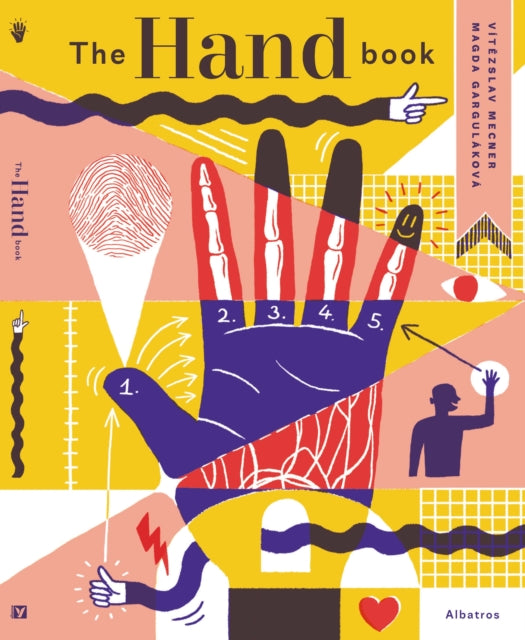
The book "Handy Hands" explores the unique aspects of hands, including sign language, handedness, and the hands of different professions. It features original designs and a tactile cover.
Format: Hardback
Length: 80 pages
Publication date: 22 December 2022
Publisher: Albatros nakladatelstvi as
Hands are undeniably one of the most unique and versatile tools in our arsenal. They can perform a wide range of tasks, from delicate precision to powerful strength. In this book, we will explore the hand from a range of expected and unexpected aspects.
Did you know that sign language varies from country to country? Each country has its own unique set of gestures and symbols that are used to communicate. This diversity is a testament to the richness and complexity of human communication.
Have you ever wondered why some of us are left-handed while others are right-handed? The answer to this question is still not fully understood, but researchers have made some interesting discoveries. It seems that genetics plays a role in determining hand dominance, but environmental factors can also play a part.
Can you imagine how the hand of a sculptor differs from that of a pianist or a bricklayer? Each profession requires a different set of skills and techniques, and the hand plays a crucial role in achieving success. Sculptors use their hands to shape and manipulate materials, while pianists use their hands to play the keys. Bricklayers use their hands to lay bricks and mortar.
Despite the many differences between hands, there are still many things that they can do together. For example, you can applaud with one hand, write with the other, and even perform simple tasks like opening a door or picking up a glass.
In this book, we will explore the many uses and applications of the hand. We will learn about the different types of hands, including the dominant hand and the non-dominant hand. We will also learn about the muscles and bones that make up the hand and how they work together to perform tasks.
We will also explore the role of the hand in art and culture. Hands have been used to create some of the most famous works of art in history, from sculptures to paintings to drawings. We will learn about the different techniques that artists use to capture the essence of the hand in their work.
Finally, we will explore the future of the hand. As technology continues to advance, we will see new and innovative ways that the hand is being used. We will learn about the latest developments in prosthetics and robotics, and how they are changing the way that we interact with the world.
Hands are undeniably one of the most unique and versatile tools in our arsenal. They can perform a wide range of tasks, from delicate precision to powerful strength. In this book, we will explore the hand from a range of expected and unexpected aspects.
Did you know that sign language varies from country to country? Each country has its own unique set of gestures and symbols that are used to communicate. This diversity is a testament to the richness and complexity of human communication.
Have you ever wondered why some of us are left-handed while others are right-handed? The answer to this question is still not fully understood, but researchers have made some interesting discoveries. It seems that genetics plays a role in determining hand dominance, but environmental factors can also play a part.
Can you imagine how the hand of a sculptor differs from that of a pianist or a bricklayer? Each profession requires a different set of skills and techniques, and the hand plays a crucial role in achieving success. Sculptors use their hands to shape and manipulate materials, while pianists use their hands to play the keys. Bricklayers use their hands to lay bricks and mortar.
Despite the many differences between hands, there are still many things that they can do together. For example, you can applaud with one hand, write with the other, and even perform simple tasks like opening a door or picking up a glass.
In this book, we will explore the many uses and applications of the hand. We will learn about the different types of hands, including the dominant hand and the non-dominant hand. We will also learn about the muscles and bones that make up the hand and how they work together to perform tasks.
We will also explore the role of the hand in art and culture. Hands have been used to create some of the most famous works of art in history, from sculptures to paintings to drawings. We will learn about the different techniques that artists use to capture the essence of the hand in their work.
Finally, we will explore the future of the hand. As technology continues to advance, we will see new and innovative ways that the hand is being used. We will learn about the latest developments in prosthetics and robotics, and how they are changing the way that we interact with the world.
Hands are undeniably one of the most unique and versatile tools in our arsenal. They can perform a wide range of tasks, from delicate precision to powerful strength. In this book, we will explore the hand from a range of expected and unexpected aspects.
Did you know that sign language varies from country to country? Each country has its own unique set of gestures and symbols that are used to communicate. This diversity is a testament to the richness and complexity of human communication.
Have you ever wondered why some of us are left-handed while others are right-handed? The answer to this question is still not fully understood, but researchers have made some interesting discoveries. It seems that genetics plays a role in determining hand dominance, but environmental factors can also play a part.
Can you imagine how the hand of a sculptor differs from that of a pianist or a bricklayer? Each profession requires a different set of skills and techniques, and the hand plays a crucial role in achieving success. Sculptors use their hands to shape and manipulate materials, while pianists use their hands to play the keys. Bricklayers use their hands to lay bricks and mortar.
Despite the many differences between hands, there are still many things that they can do together. For example, you can applaud with one hand, write with the other, and even perform simple tasks like opening a door or picking up a glass.
In this book, we will explore the many uses and applications of the hand. We will learn about the different types of hands, including the dominant hand and the non-dominant hand. We will also learn about the muscles and bones that make up the hand and how they work together to perform tasks.
We will also explore the role of the hand in art and culture. Hands have been used to create some of the most famous works of art in history, from sculptures to paintings to drawings. We will learn about the different techniques that artists use to capture the essence of the hand in their work.
Finally, we will explore the future of the hand. As technology continues to advance, we will see new and innovative ways that the hand is being used. We will learn about the latest developments in prosthetics and robotics, and how they are changing the way that we interact with the world.
Hands are undeniably one of the most unique and versatile tools in our arsenal. They can perform a wide range of tasks, from delicate precision to powerful strength. In this book, we will explore the hand from a range of expected and unexpected aspects.
Did you know that sign language varies from country to country? Each country has its own unique set of gestures and symbols that are used to communicate. This diversity is a testament to the richness and complexity of human communication.
Have you ever wondered why some of us are left-handed while others are right-handed? The answer to this question is still not fully understood, but researchers have made some interesting discoveries. It seems that genetics plays a role in determining hand dominance, but environmental factors can also play a part.
Can you imagine how the hand of a sculptor differs from that of a pianist or a bricklayer? Each profession requires a different set of skills and techniques, and the hand plays a crucial role in achieving success. Sculptors use their hands to shape and manipulate materials, while pianists use their hands to play the keys. Bricklayers use their hands to lay bricks and mortar.
Despite the many differences between hands, there are still many things that they can do together. For example, you can applaud with one hand, write with the other, and even perform simple tasks like opening a door or picking up a glass.
In this book, we will explore the many uses and applications of the hand. We will learn about the different types of hands, including the dominant hand and the non-dominant hand. We will also learn about the muscles and bones that make up the hand and how they work together to perform tasks.
We will also explore the role of the hand in art and culture. Hands have been used to create some of the most famous works of art in history, from sculptures to paintings to drawings. We will learn about the different techniques that artists use to capture the essence of the hand in their work.
Finally, we will explore the future of the hand. As technology continues to advance, we will see new and innovative ways that the hand is being used. We will learn about the latest developments in prosthetics and robotics, and how they are changing the way that we interact with the world.
Hands are undeniably one of the most unique and versatile tools in our arsenal. They can perform a wide range of tasks, from delicate precision to powerful strength. In this book, we will explore the hand from a range of expected and unexpected aspects.
Did you know that sign language varies from country to country? Each country has its own unique set of gestures and symbols that are used to communicate. This diversity is a testament to the richness and complexity of human communication.
Have you ever wondered why some of us are left-handed while others are right-handed? The answer to this question is still not fully understood, but researchers have made some interesting discoveries. It seems that genetics plays a role in determining hand dominance, but environmental factors can also play a part.
Can you imagine how the hand of a sculptor differs from that of a pianist or a bricklayer? Each profession requires a different set of skills and techniques, and the hand plays a crucial role in achieving success. Sculptors use their hands to shape and manipulate materials, while pianists use their hands to play the keys. Bricklayers use their hands to lay bricks and mortar.
Despite the many differences between hands, there are still many things that they can do together. For example, you can applaud with one hand, write with the other, and even perform simple tasks like opening a door or picking up a glass.
In this book, we will explore the many uses and applications of the hand. We will learn about the different types of hands, including the dominant hand and the non-dominant hand. We will also learn about the muscles and bones that make up the hand and how they work together to perform tasks.
We will also explore the role of the hand in art and culture. Hands have been used to create some of the most famous works of art in history, from sculptures to paintings to drawings. We will learn about the different techniques that artists use to capture the essence of the hand in their work.
Finally, we will explore the future of the hand. As technology continues to advance, we will see new and innovative ways that the hand is being used. We will learn about the latest developments in prosthetics and robotics, and how they are changing the way that we interact with the world.
Weight: 732g
Dimension: 246 x 318 x 15 (mm)
ISBN-13: 9788000066004
UK and International shipping information
UK and International shipping information
UK Delivery and returns information:
- Delivery within 2 - 3 days when ordering in the UK.
- Shipping fee for UK customers from £2.39. Fully tracked shipping service available.
- Returns policy: Return within 30 days of receipt for full refund.
International deliveries:
Shulph Ink now ships to Australia, Belgium, Canada, France, Germany, Ireland, Italy, India, Luxembourg Saudi Arabia, Singapore, Spain, Netherlands, New Zealand, United Arab Emirates, United States of America.
- Delivery times: within 5 - 10 days for international orders.
- Shipping fee: charges vary for overseas orders. Only tracked services are available for most international orders. Some countries have untracked shipping options.
- Customs charges: If ordering to addresses outside the United Kingdom, you may or may not incur additional customs and duties fees during local delivery.