Martin Gitlin
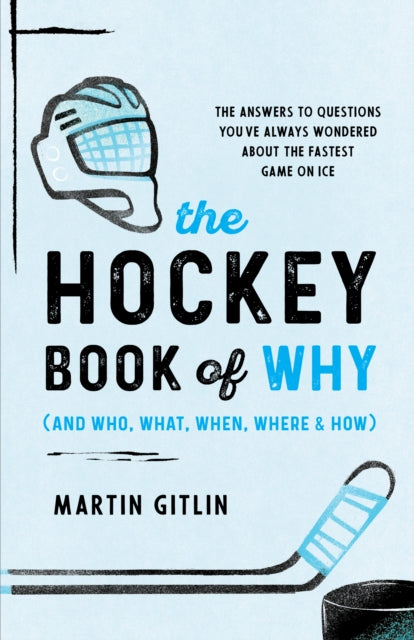
The Hockey Book of Why (and Who, What, When, Where, and How): The Answers to Questions You've Always Wondered about the Fastest Game on Ice
The Hockey Book of Why (and Who, What, When, Where, and How): The Answers to Questions You've Always Wondered about the Fastest Game on Ice
💎 Earn 57 Points (£0.57) on this item.
YOU SAVE £3.50
- Condition: Brand new
- UK Delivery times: Usually arrives within 2 - 3 working days
- UK Shipping: Fee starts at £3.89. Subject to product weight & dimension
Bulk ordering. Want 15 or more copies? Get a personalised quote and bigger discounts. Learn more about bulk orders.
Couldn't load pickup availability
- More about The Hockey Book of Why (and Who, What, When, Where, and How): The Answers to Questions You've Always Wondered about the Fastest Game on Ice
This book provides a plethora of questions and in-depth answers about the traditions, rules, records, and history of hockey, covering topics such as fighting, the Stanley Cup, line changes, goalies, and the Original Six. It is a valuable resource for fans of the sport.
Format: Paperback / softback
Length: 178 pages
Publication date: 01 December 2023
Publisher: Rowman & Littlefield
Why is fighting more accepted in hockey than in other sports?
Fighting is a common occurrence in hockey, and it is often seen as a part of the game's culture. While fighting may be seen as a way to intimidate opponents or protect teammates, it can also lead to serious injuries and penalties. In other sports, such as football or basketball, fighting is generally not accepted and can result in ejection or suspension.
There are several reasons why fighting is more accepted in hockey than in other sports. One reason is that hockey is a physical sport that involves a lot of contact and physical aggression. Players are often willing to take risks and engage in physical altercations to gain an advantage on the ice. Additionally, the rules of hockey allow for more physical contact than in other sports, which can contribute to the prevalence of fighting.
Another reason why fighting is more accepted in hockey is that the sport has a long history of toughness and physicality. Players in the past were often willing to take on opponents of larger stature and physical strength, and fighting was a way to assert themselves and protect their teammates. This culture of toughness and physicality has continued to influence the sport today, and players are still willing to engage in physical altercations to gain an advantage.
However, it is important to note that fighting is not without its risks. Players who engage in fighting can be seriously injured, and they can also face penalties and suspensions from the league. Additionally, fighting can distract from the game and undermine the spirit of fair play and sportsmanship.
Despite these risks, fighting remains a common occurrence in hockey. Some fans and players argue that fighting is an essential part of the game and that it adds to the excitement and intensity of the sport. Others argue that fighting should be eliminated from the sport to promote safety and fair play.
In conclusion, fighting is more accepted in hockey than in other sports due to the physical nature of the sport, the sport's history of toughness and physicality, and the rules that allow for more physical contact. While fighting can be a dangerous and distracting aspect of the game, it remains a part of the sport's culture and will likely continue to be so in the future.
Who inspired the name of the Stanley Cup?
The Stanley Cup, one of the most prestigious trophies in sports, is named after Lord Stanley of Preston, a former Governor General of Canada. The trophy was first presented in 1892 by Lord Stanley as a reward to the best amateur ice hockey team in Canada.
The name of the trophy is a tribute to Lord Stanley's commitment to promoting ice hockey in Canada and his belief in the sport's potential to unite people and promote healthy living. Lord Stanley was a passionate hockey fan who had played the game himself and was deeply involved in the development of the sport in Canada.
The original design of the Stanley Cup was created by Montreal jeweler George Stanley, who was a friend of Lord Stanley. The trophy features a gold-plated bowl with a sterling silver base and a gold-plated band that reads "The Stanley Cup." The bowl is decorated with a relief of a hockey player holding a stick and a shield with the words "Dominion Hockey Challenge Cup" engraved on it.
Over the years, the Stanley Cup has become one of the most iconic symbols of hockey and sports in general. It has been won by many different teams and players, and it has been featured in countless movies, TV shows, and commercials. The trophy is also a popular tourist attraction, with thousands of people visiting the Hockey Hall of Fame in Toronto, Canada, to see it up close.
In addition to its historical significance, the Stanley Cup has also become a symbol of Canadian pride and identity. The trophy is seen as a representation of the country's rich hockey history and its commitment to promoting the sport. It has also become a source of inspiration for young hockey players around the world, who dream of winning the Stanley Cup and becoming a champion.
Overall, the name of the Stanley Cup is a tribute to Lord Stanley's commitment to promoting ice hockey in Canada and his belief in the sport's potential to unite people and promote healthy living. The trophy is a symbol of Canadian pride and identity and a source of inspiration for young hockey players around the world.
How do players on the bench know when to make line
Line changes in hockey are a crucial aspect of the game, as they allow teams to adjust their strategy and personnel based on the current situation on the ice. The decision to make a line change is typically made by the coach, who analyzes the performance of the players on the ice and the opposing team's lineup. Here are some factors that coaches consider when making a line.
Offensive Possession: When a team is in possession of the puck, they are trying to score goals. Coaches may make a line change to bring in a more offensive player or to change the formation of their lines to create more scoring opportunities. For example, if a team is struggling to generate scoring chances, a coach may bring in a player with a high skill level or a player with a strong shot.
Defensive Possession: When a team is not in possession of the puck, they are trying to prevent the opposing team from scoring goals. Coaches may make a line change to bring in a more defensive player or to change the formation of their lines to protect their goaltender and prevent scoring opportunities. For example, if a team is facing a strong offensive attack, a coach may bring in a player with a strong defensive skill set or a player with a physical presence.
Player Performance: Coaches may also make a line change based on the performance of individual players. For example, if a player is not producing enough goals or is taking too many penalties, a coach may make a line change to bring in a player with a different skill set or a player with a more physical presence.
Opposing Team's Lineup: Coaches may also make a line change to counter the opposing team's lineup. For example, if a team is facing a strong offensive line, a coach may bring in a line with a more defensive skill set or a line with a more physical presence.
Energy Level: Coaches may also make a line change to change the energy level of their team. For example, if a team is tired or sluggish, a coach may bring in a line with a more energetic player or a line with a more physical presence.
Matchup: Coaches may also make a line change to match up their players against the opposing team's players. For example, if a player is facing a player with a strong offensive skill set, a coach may bring in a player with a strong defensive skill set or a player with a physical presence.
Overall, making a line change in hockey is a complex decision that requires coaches to analyze a variety of factors. By considering these factors, coaches can make informed decisions that help their team succeed on the ice.
When did goalies begin wearing masks?
Goalie masks have been used in hockey for over a century, with the first known use dating back to 1894. The masks were initially designed to protect goaltenders from the puck, which was a dangerous and unpredictable object that could cause serious injury if it hit them in the face. However, as the game evolved and the puck became more powerful and faster, the masks also became more sophisticated, with modern masks featuring a variety of materials and designs to improve protection and visibility.
The first goalie mask was made of leather and featured a simple design that covered the goaltender's face and neck. However, as the game became more physical, the masks began to evolve, with the introduction of fiberglass in the 1950s and 1960s. Fiberglass masks were lighter and more durable than leather masks, making them more comfortable for goaltenders to wear. However, they were also more prone to breaking and cracking, which could compromise the goaltender's protection.
In the 1970s, the introduction of Kevlar and carbon fiber made goalie masks even more durable and lightweight. Kevlar is a strong and lightweight material that is used in a variety of applications, including military and aerospace. Carbon fiber is a strong and lightweight material that is used in a variety of applications, including automotive and aerospace. Goalie masks made of Kevlar and carbon fiber are more durable and lightweight than fiberglass masks, making them more comfortable for goaltenders to wear. However, they are also more expensive and can be difficult to repair if they are damaged.
Today, goalie masks are made of a variety of materials, including Kevlar, carbon fiber, and fiberglass. The masks are designed to protect goaltenders from the puck, as well as from sticks, pucks, and other objects that can be thrown at them during a game. The masks are also designed to improve visibility, with many modern masks featuring a clear visor that allows goaltenders to see the puck and other objects on the ice.
In addition to protecting goaltenders from injury, goalie masks also help to improve their performance. The masks can help to reduce the amount of distractions that goaltenders face during a game, allowing them to focus on the puck and other objects on the ice. The masks can also help to improve airflow, which can help to keep goaltenders cool and comfortable during a game.
Overall, goalie masks have become an essential piece of equipment for goaltenders in hockey. The masks have evolved over the years to become more durable, lightweight, and comfortable, while also improving visibility and airflow. The masks have also become an important part of the game, helping to protect goaltenders from injury and improve their performance.
What teams made up the NHLs Original Six?
The National Hockey League (NHL) was founded in 1917 with six teams: the Boston Bruins, the Montreal Canadiens, the New York Rangers, the Toronto Maple Leafs, the Detroit Red Wings, and the Chicago Blackhawks. These six teams were known as the Original Six and were the only teams in the NHL for the first 25 years of its existence.
The Original Six was formed as a result of a merger between the National Hockey Association (NHA) and the National Hockey League (NHL). The NHA was founded in 1909 and consisted of six teams: the Montreal Maroons, the Toronto Maple Leafs, the Montreal Wanderers, the Ottawa Senators, the New York Rangers, and the Boston Bruins. The NHL was founded in 1917 and consisted of four teams: the Montreal Canadiens, the Toronto Maple Leafs, the New York Rangers, and the Boston Bruins.
The Original Six was a dominant force in the NHL for many years, winning the Stanley Cup a total of 12 times between them. The Montreal Canadiens won the most Stanley Cups, with six championships, while the Toronto Maple Leafs won the second most, with four championships. The New York Rangers and the Detroit Red Wings each won three Stanley Cups, while the Chicago Blackhawks won two Stanley Cups.
The Original Six was a unique era in the history of the NHL, with a sense of camaraderie and tradition that is still felt today. The teams were known for their rivalry, with the Montreal Canadiens and the Toronto Maple Leafs being the most bitter rivals. The rivalry was fueled by a series of playoff battles between the two teams, including the 1954 Stanley Cup Finals, which is considered one of the most iconic games in hockey history.
The Original Six was also known for its unique style of play, with a focus on defense and physicality. The teams were known for their hard-nosed style of play, with a strong emphasis on hitting and fighting. This style of play was a result of the rules of the game at the time, which allowed for more physical contact than is allowed today.
The Original Six was also known for its unique uniforms and logos. The Montreal Canadiens were known for their iconic red, white, and blue uniforms, with a large "C" logo on the front. The Toronto Maple Leafs were known for their iconic green and white uniforms, with a large "T" logo on the front. The New York Rangers were known for their iconic blue and white uniforms, with a large "R" logo on the front. The Detroit Red Wings were known for their iconic red, white, and blue uniforms, with a large "D" logo on the front. The Chicago Blackhawks were known for their iconic black, red, and white uniforms, with a large "H" logo on the front.
The Original Six was a significant era in the history of the NHL, and its legacy is still felt today. The teams were known for their rivalry, their unique style of play, and their unique uniforms and logos. The legacy of the Original Six is a testament to the power of sports to bring people together and create a sense of community.
What is an “odd man rush”?
An "odd man rush" is a situation in hockey where one team has an extra player on the ice compared to the other team. This can happen when a player is injured, or when a team makes a strategic line change. The extra player is often referred to as an "extra attacker" or an "extra forward."
When an odd man rush occurs, the attacking team has a numerical advantage over the defending team. This can lead to a number of advantages for the attacking team, including more scoring opportunities and more control of the puck. However, the defending team can also use a number of strategies to counter an odd man rush, including using a defensive formation, applying pressure to the attacking player, and taking away passing lanes.
One of the most effective strategies for defending against an odd man rush is to use a defensive formation. This can involve using a 1-3-1 or 1-2-2 formation, which involves having three players in the defensive zone and two players in the offensive zone. This formation can help to limit the number of passing lanes that the attacking team has and can also help to protect the goaltender.
Another strategy for defending against an odd man rush is to apply pressure to the attacking player. This can involve using a player to cover the attacking player, or by using a player to block the passing lane. This can help to limit the number of scoring opportunities that the attacking team has and can also help to disrupt the attacking team's rhythm.
Finally, taking away passing lanes can be an effective strategy for defending against an odd man rush. This can involve using a player to cover the attacking player, or by using a player to block the passing lane. This can help to limit the number of scoring opportunities that the attacking team has and can also help to disrupt the attacking team's rhythm.
Overall, an odd man rush is a situation in hockey where one team has an extra player on the ice compared to the other team. This can lead to a number of advantages for the attacking team, but the defending team can use a number of strategies to counter an odd man rush, including using a defensive formation, applying pressure to the attacking player, and taking away passing lanes.
Weight: 244g
Dimension: 139 x 216 x 14 (mm)
ISBN-13: 9781493070923
UK and International shipping information
UK and International shipping information
We deliver throughout the United Kingdom and to 128 countries and territories worldwide, including the United States, Australia, Canada, Germany, Spain and France.