Shulph Ink
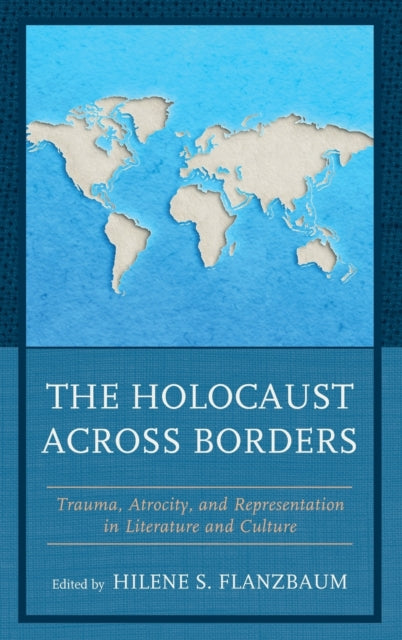
The Holocaust across Borders: Trauma, Atrocity, and Representation in Literature and Culture
The Holocaust across Borders: Trauma, Atrocity, and Representation in Literature and Culture
💎 Earn 504 Points (£5.04) on this item.
We can order this item for you. Delivery usually takes about 4 to 6 weeks.
This item is not held in our immediate stock. We will order it for you after checkout.
Estimated delivery: About 4 to 6 weeks
- Condition: Brand new
- UK Delivery times: Usually arrives within 2 - 3 working days
- UK Shipping: Fee starts at £2.39. Subject to product weight & dimension
Bulk ordering. Want 15 or more copies? Get a personalised quote and bigger discounts. Learn more about bulk orders.
Couldn't load pickup availability
- More about The Holocaust across Borders: Trauma, Atrocity, and Representation in Literature and Culture
This book explores how national context shapes representations of the Holocaust in text, film, and material culture, providing a valuable pedagogical resource for instructors. It covers well-known texts like Night, Survival in Auschwitz, MAUS, This Way to the Gas, and The Reader, as well as lesser-known representations from countries like Argentina or Australia.
Format: Hardback
Length: 296 pages
Publication date: 29 June 2021
Publisher: Lexington Books
“Literature of the Holocaust” courses, whether taught in high schools or at universities, necessarily cover texts from a broad range of international contexts. Instructors are required, regardless of their own disciplinary training, to become comparatists and discuss all works with equal expertise. This book offers analyses of the ways in which representations of the Holocaust—whether in text, film, or material culture—are shaped by national context, providing a valuable pedagogical source in terms of both content and methodology. As memory yields to post-memory, the nation of origin plays a larger role in each re-telling, and the chapters in this book explore this notion, covering well-known texts like Night (Hungary), Survival in Auschwitz (Italy), MAUS (United States), This Way to the Gas (Poland), and The Reader (Germany), while also introducing lesser-known representations from countries like Argentina or Australia.
The study of the Holocaust through literature is a complex and multifaceted endeavor that requires a deep understanding of the historical context in which it occurred. Courses on the literature of the Holocaust, whether taught in high schools or universities, aim to provide students with a comprehensive understanding of this tragic period in history by exploring a wide range of literary works from different international contexts.
One of the key aspects of these courses is the requirement for instructors to become comparatists, which means that they must have a thorough knowledge of all the works that are studied. This requires a significant investment of time and effort, as instructors must read and analyze a wide range of texts, including novels, memoirs, plays, and films. In addition, instructors must be able to discuss these works with equal expertise, regardless of their own disciplinary background.
One of the most valuable resources for instructors in the study of the literature of the Holocaust is this book. It offers a comprehensive analysis of the ways in which representations of the Holocaust are shaped by national context. The book explores a wide range of literary works, including well-known texts such as Night by Elie Wiesel, Survival in Auschwitz by Primo Levi, MAUS by Art Spiegelman, This Way to the Gas by Janusz Korczak, and The Reader by Bernhard Schlink.
In addition to these well-known works, the book also introduces lesser-known representations of the Holocaust from countries such as Argentina and Australia. This is important, as it allows students to gain a broader understanding of the global impact of the Holocaust and to recognize the ways in which different cultures have responded to this tragic event.
One of the key themes that emerges from the book is the role that national context plays in shaping representations of the Holocaust. Different countries have different historical, cultural, and political backgrounds, and these factors can have a significant impact on the way event. For example, the Holocaust was primarily a Jewish event, but it also had a profound impact on other minority groups, such as Roma and Sinti. Different countries have different ways of memorializing and commemorating the Holocaust, and these differences can be seen in the literature that is produced.
Another important theme that emerges from the book is the impact of memory on the re-telling of the Holocaust. As time passes, memory fades, and new perspectives and interpretations emerge. The chapters in this book explore the ways in which memory yields to post-memory, and how this affects the way that the Holocaust is represented in literature.
In conclusion, the literature of the Holocaust is a rich and complex field that requires a deep understanding of the historical context in which it occurred. Courses on the literature of the Holocaust must cover a wide range of literary works from different international contexts, and instructors must become comparatists to discuss these works with equal expertise. This book offers a valuable resource for instructors in the study of the literature of the Holocaust, providing a comprehensive analysis of the ways in which representations of the Holocaust are shaped by national context. By exploring a wide range of literary works, including well-known and lesser-known representations, the book allows students to gain a broader understanding of this tragic period in history and to recognize the ways in which different cultures have responded to this event.
Weight: 653g
Dimension: 228 x 161 x 25 (mm)
ISBN-13: 9781793612052
UK and International shipping information
UK and International shipping information
UK Delivery and returns information:
- Delivery within 2 - 3 days when ordering in the UK.
- Shipping fee for UK customers from £2.39. Fully tracked shipping service available.
- Returns policy: Return within 30 days of receipt for full refund.
International deliveries:
Shulph Ink now ships to Australia, Belgium, Canada, France, Germany, Ireland, Italy, India, Luxembourg Saudi Arabia, Singapore, Spain, Netherlands, New Zealand, United Arab Emirates, United States of America.
- Delivery times: within 5 - 10 days for international orders.
- Shipping fee: charges vary for overseas orders. Only tracked services are available for most international orders. Some countries have untracked shipping options.
- Customs charges: If ordering to addresses outside the United Kingdom, you may or may not incur additional customs and duties fees during local delivery.