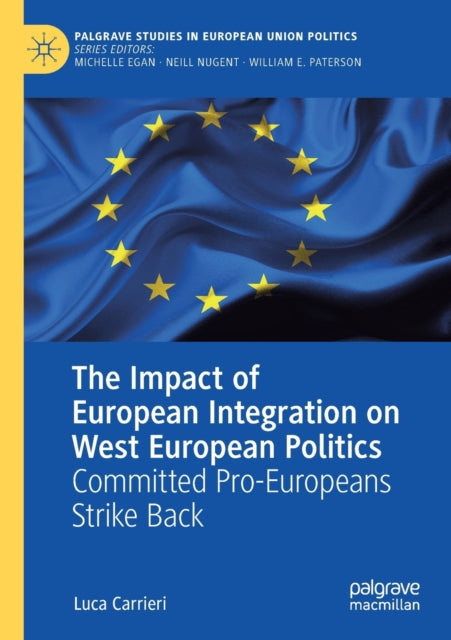
Luca Carrieri
The Impact of European Integration on West European Politics: Committed Pro-Europeans Strike Back
The Impact of European Integration on West European Politics: Committed Pro-Europeans Strike Back
💎 Earn 330 Points (£3.30) on this item.
We can order this item for you. Delivery usually takes about 4 to 6 weeks.
This item is not held in our immediate stock. We will order it for you after checkout.
Estimated delivery: About 4 to 6 weeks
YOU SAVE £13.92
- Condition: Brand new
- UK Delivery times: Usually arrives within 2 - 3 working days
- UK Shipping: Fee starts at £2.39. Subject to product weight & dimension
Bulk ordering. Want 15 or more copies? Get a personalised quote and bigger discounts. Learn more about bulk orders.
Couldn't load pickup availability
- More about The Impact of European Integration on West European Politics: Committed Pro-Europeans Strike Back
The politicization of EU conflicts in Western Europe between 2006 and 2019 is analyzed, with an emphasis on the transformative effects of multiple crises such as the Euro crisis, migration crisis, and Brexit Referendum. It investigates the fluctuations in EU issue entrepreneurship and voting, identifies which party types have benefited from their EU issue proximity to voters, and assesses the growing politicization of the EU conflict in both South European and North-Western countries.
Format: Paperback / softback
Length: 236 pages
Publication date: 28 October 2021
Publisher: Springer Nature Switzerland AG
This comprehensive book delves into the intricate dynamics of the politicization of EU conflicts in Western Europe, spanning from 2006 to 2019. It meticulously examines the transformative effects resulting from a series of crises, including the Euro crisis, the migration crisis, and the Brexit Referendum. Through detailed analysis, it sheds light on how EU issues have gained heightened prominence and become increasingly polarizing, influencing the choices of voters across different political parties. The book explores the shifting patterns of EU issue entrepreneurship and voting behavior, identifying which party types have benefited from their proximity to EU-related concerns. Furthermore, it assesses the growing politicization of EU conflicts in both South European and North-Western countries, contributing valuable insights to students and scholars of political parties, European politics, Euroscepticism, and voting behavior.
Introduction:
The politicization of EU conflicts in Western Europe has witnessed a significant surge in recent years, driven by a multitude of crises that have impacted the region. These crises, such as the Euro crisis, the migration crisis, and the Brexit Referendum, have not only shaped the political landscape but also had profound effects on the public's perception and engagement with EU-related issues. This book aims to explore the evolving trends in the politicization of EU conflicts in Western Europe, evaluating the transformative outcomes arising from these crises.
The Euro Crisis:
The Euro crisis, which erupted in 2009, marked a pivotal moment in the politicization of EU conflicts. The crisis originated from the financial instability of several European countries, particularly Greece, Ireland, and Portugal. As the crisis unfolded, it exposed deep divisions within the EU, with some member states advocating for stricter fiscal policies and others advocating for more lenient measures. This crisis not only led to significant economic and financial challenges for the affected countries but also sparked widespread Euroscepticism and anti-EU sentiment.
The migration crisis, which began in 2015, further intensified the politicization of EU conflicts. The influx of refugees and migrants into Europe, primarily from war-torn regions such as Syria and Afghanistan, posed significant challenges to the existing immigration policies and systems of many EU member states. This crisis led to increased tensions between member states, with some advocating for stricter border controls and others calling for more humanitarian approaches. The migration crisis also sparked a rise in populist and nationalist movements, which capitalized on public fears and anxieties about immigration.
The Brexit Referendum, held in 2016, was another significant event that contributed to the politicization of EU conflicts. The referendum resulted in the United Kingdom's decision to leave the EU, triggering a period of uncertainty and political upheaval. The decision to leave the EU was driven by a range of factors, including concerns about immigration, sovereignty, and the influence of the EU on national policies. The referendum also highlighted the deep divisions within the UK, with supporters of Brexit arguing that it would give the country more control over its affairs and supporters of remaining in the EU emphasizing the benefits of continued membership.
The Transformative Effects:
The politicization of EU conflicts has had a profound impact on the region's political landscape. It has led to the emergence of new political parties and movements that prioritize EU-related issues, such as the Brexit Party in the UK and the Alternative for Germany in Germany. These parties have gained significant support from voters who are concerned about the impact of the EU on their national identities and economies.
Furthermore, the politicization of EU conflicts has led to a greater emphasis on EU issues in the political discourse. Political parties have increasingly used EU-related issues as a means to differentiate themselves from their competitors and appeal to voters. This has resulted in a more polarized and fragmented political landscape, with voters increasingly divided along ideological lines.
The politicization of EU conflicts has also had implications for the functioning of the EU itself. The increased tensions and divisions within the EU have made it more difficult for the institution to achieve consensus on important issues, such as immigration policy and economic regulation. This has led to a sense of paralysis and inaction, as member states are unable to reach a compromise on key issues.
Conclusion:
In conclusion, the politicization of EU conflicts in Western Europe has been a significant phenomenon in recent years. The crises, such as the Euro crisis, the migration crisis, and the Brexit Referendum, have not only shaped the political landscape but also had profound effects on the public's perception and engagement with EU-related issues. The book has explored the shifting patterns of EU issue entrepreneurship and voting behavior, identifying which party types have benefited from their proximity to EU-related concerns. It has also assessed the growing politicization of EU conflicts in both South European and North-Western countries, contributing valuable insights to students and scholars of political parties, European politics, Euroscepticism, and voting behavior. As the EU continues to face challenges and uncertainties, it is crucial to understand the dynamics of the politicization of EU conflicts and their implications for the future of the region.
Weight: 338g
Dimension: 210 x 148 (mm)
ISBN-13: 9783030481056
Edition number: 1st ed. 2021
This item can be found in:
UK and International shipping information
UK and International shipping information
UK Delivery and returns information:
- Delivery within 2 - 3 days when ordering in the UK.
- Shipping fee for UK customers from £2.39. Fully tracked shipping service available.
- Returns policy: Return within 30 days of receipt for full refund.
International deliveries:
Shulph Ink now ships to Australia, Belgium, Canada, France, Germany, Ireland, Italy, India, Luxembourg Saudi Arabia, Singapore, Spain, Netherlands, New Zealand, United Arab Emirates, United States of America.
- Delivery times: within 5 - 10 days for international orders.
- Shipping fee: charges vary for overseas orders. Only tracked services are available for most international orders. Some countries have untracked shipping options.
- Customs charges: If ordering to addresses outside the United Kingdom, you may or may not incur additional customs and duties fees during local delivery.