PhilomenaOsseo-Asare
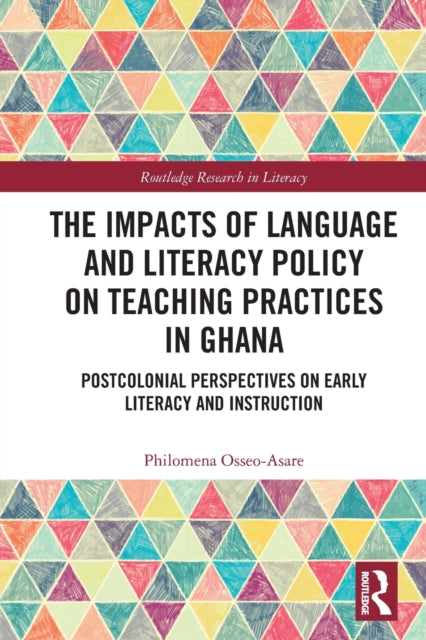
The Impacts of Language and Literacy Policy on Teaching Practices in Ghana: Postcolonial Perspectives on Early Literacy and Instruction
The Impacts of Language and Literacy Policy on Teaching Practices in Ghana: Postcolonial Perspectives on Early Literacy and Instruction
💎 Earn 207 Points (£2.07) on this item.
We can order this item for you. Delivery usually takes about 4 to 6 weeks.
This item is not held in our immediate stock. We will order it for you after checkout.
Estimated delivery: About 4 to 6 weeks
YOU SAVE £2.47
- Condition: Brand new
- UK Delivery times: Usually arrives within 2 - 3 working days
- UK Shipping: Fee starts at £3.89. Subject to product weight & dimension
Bulk ordering. Want 15 or more copies? Get a personalised quote and bigger discounts. Learn more about bulk orders.
Couldn't load pickup availability
- More about The Impacts of Language and Literacy Policy on Teaching Practices in Ghana: Postcolonial Perspectives on Early Literacy and Instruction
The text examines changes in Ghanaian language and literacy policy following independence in 1957 and their impacts on early literacy teaching. It adopts a postcolonial theoretical perspective and draws on data from interviews with teachers and researcher observation to demonstrate how policies have influenced teaching and learning. Dr. Osseo-Asares findings inform the development of a conceptual framework that highlights the socio-cultural factors that impact the literacy and biliteracy of young children in Ghana, offering solutions to help teachers combat the challenges of frequent policy changes. The monograph is an essential resource for researchers, teacher education, and English-language learning in postcolonial Ghana.
Format: Paperback / softback
Length: 170 pages
Publication date: 26 September 2022
Publisher: Taylor & Francis Ltd
This comprehensive text critically examines the changes in Ghanaian language and literacy policy following independence in 1957, with a particular focus on their implications for early literacy teaching. By adopting a postcolonial theoretical framework, the text delves into the rationale behind policy shifts that have prioritized English, local languages, or biliteracy. Through a combination of data from interviews with teachers and researcher observation, it demonstrates how these policies have influenced teaching and learning practices. Dr. Osseo-Asare's findings provide valuable insights into the socio-cultural factors that impact the literacy and biliteracy of young children in Ghana, offering practical solutions to help teachers navigate the challenges posed by frequent policy changes. This timely monograph is an essential resource for researchers, teacher educators, and scholars interested in education policies, English-language learning, and the study of literacy and education in postcolonial contexts.
Introduction:
The Ghanaian language and literacy policy has undergone significant changes since independence in 1957. These changes have had a profound impact on early literacy teaching, shaping the way in which language and literacy are taught and learned in the country. In this text, we will critically examine these changes and consider their implications for early literacy teaching.
Postcolonial Theory and Language Policy:
Postcolonial theory provides a valuable framework for analyzing the changes in Ghanaian language and literacy policy. Postcolonialism is a theoretical framework that examines the legacies of colonialism and imperialism, particularly in the context of language and literacy. It highlights the ways in which colonial powers have imposed their languages and literacy systems on colonized populations, often at the expense of local languages and literacy practices.
Changes in Ghanaian Language and Literacy Policy:
Following independence, Ghana adopted a policy of English-language dominance, prioritizing the teaching and learning of English in schools. This policy was influenced by the need to develop a national language that could facilitate communication and integration among Ghanaians. However, this policy has had unintended consequences for early literacy teaching.
Prioritization of English:
The policy of English-language dominance has led to the neglect of local languages in the education system. Many schools have stopped teaching local languages, and teachers have been trained to teach only English. This has resulted in a lack of proficiency in local languages among students, which has negative implications for their ability to read and write in their native languages.
Local Language and Literacy:
Local languages are essential for promoting literacy and language development among young children. They are the languages that children use in their daily lives and are closely tied to their cultural and social identities. By neglecting local languages, the education system has failed to provide children with the necessary tools to develop their language and literacy skills.
Biliteracy:
Biliteracy, which involves the ability to read and write in two or more languages, has been recognized as a valuable skill in the modern world. However, the policy of English-language dominance has limited the opportunities for students to develop biliteracy. Many schools have not offered bilingual education, and teachers have not been trained to teach in multiple languages.
Impacts on Early Literacy Teaching:
The policy of English-language dominance has had a significant impact on early literacy teaching. Teachers have been forced to prioritize English over local languages, which has led to a lack of attention to the development of early literacy skills in local languages. Students who do not have proficiency in their native languages are at a significant disadvantage when it comes to reading and writing.
Conclusion:
The changes in Ghanaian language and literacy policy following independence have had a profound impact on early literacy teaching. The policy of English-language dominance has led to the neglect of local languages and the limited opportunities for students to develop biliteracy. It is essential to reevaluate the language and literacy policy in Ghana to ensure that it promotes the development of language and literacy skills in all languages, including local languages. This will require a commitment to invest in teacher training, bilingual education, and the promotion of local languages in the education system.
Weight: 278g
Dimension: 228 x 153 x 15 (mm)
ISBN-13: 9780367724283
UK and International shipping information
UK and International shipping information
We deliver throughout the United Kingdom and to 128 countries and territories worldwide, including the United States, Australia, Canada, Germany, Spain and France.