Michael S. Pritchard
The importance of sentiment in promoting reasonableness in children
The importance of sentiment in promoting reasonableness in children
💎 Earn 117 Points (£1.17) on this item.
We can order this item for you. Delivery usually takes about 4 to 6 weeks.
This item is not held in our immediate stock. We will order it for you after checkout.
Estimated delivery: About 4 to 6 weeks
- Condition: Brand new
- UK Delivery times: Usually arrives within 2 - 3 working days
- UK Shipping: Fee starts at £2.39. Subject to product weight & dimension
Bulk ordering. Want 15 or more copies? Get a personalised quote and bigger discounts. Learn more about bulk orders.
Couldn't load pickup availability
- More about The importance of sentiment in promoting reasonableness in children
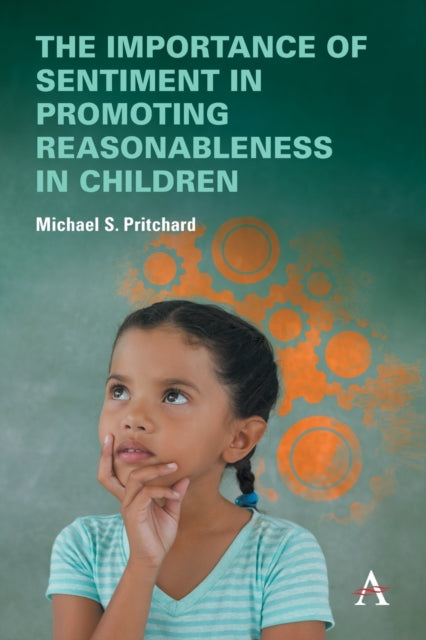
The Importance of Sentiment in Promoting Reasonableness in Children explores the contributions of eighteenth-century Scottish philosophers Thomas Reid, Adam Smith, and David Hume to our understanding of the development of children as they acquire central features of reasonableness. Smith and Reid emphasize the importance of sentiment and reason, influenced by Joseph Butler's writings. Hume contributes to this understanding but does not discuss Butler's specific reflections on sentiment and reason. The book advocates for a social environment that encourages children to mix sentiment and reason in ways that support the values of reasonableness.
Format: Paperback / softback
Length: 250 pages
Publication date: 09 August 2022
Publisher: Anthem Press
The Importance of Sentiment in Promoting Reasonableness in Children delves into the profound contributions of eighteenth-century Scottish philosophers Thomas Reid, Adam Smith, and David Hume to our understanding of the essential factors in the development of children as they gradually acquire central aspects of reasonableness. Smith and Reid, in particular, engage in a thoughtful exploration of the significance of sentiment and reason in shaping the growth of children. Their perspectives are greatly influenced by the insightful writings of their English predecessor, Joseph Butler. Hume, too, holds in high regard much of Butler's ideas. However, unlike Smith and Reid, he provides limited explicit commentary on Butler's specific reflections on sentiment and reason. Despite this, one of the primary objectives of this concise book is to demonstrate that each of these philosophers makes valuable contributions to our contemporary understanding of the role that fostering children's philosophical thinking can play in nurturing their appreciation of reasonableness. They advocate for a social environment that encourages children to blend sentiment and reason in ways that align with the values of reasonableness.
Introduction:
In the realm of child development, the cultivation of reasonableness is a crucial milestone that shapes individuals' ability to navigate complex social situations and make informed decisions. The role of sentiment in promoting this attribute is a topic of profound interest, as eighteenth-century Scottish philosophers Thomas Reid, Adam Smith, and David Hume offer valuable insights into this matter.
Sentiment and Reason in the Development of Children:
Smith and Reid, influenced by Joseph Butler's writings, explicitly discuss the importance of sentiment and reason in the development of children. They recognize that sentiment plays a vital role in shaping children's moral and ethical compass, providing them with a foundation of empathy and compassion. By fostering a sense of sentiment, children are better equipped to understand and respect the feelings of others, leading to more harmonious social interactions.
On the other hand, reason is considered the cornerstone of rationality and logical thinking. Smith and Reid advocate for a balanced approach that incorporates both sentiment and reason in shaping children's minds. They believe that by encouraging children to engage in logical reasoning and critical thinking, they can develop a strong foundation of knowledge and understanding. This, in turn, enables children to make informed decisions and resolve conflicts peacefully.
David Hume's Perspective:
While Hume valued much of Butler's thinking, he said little about Butler's specific reflections on sentiment and reason. However, his contributions to the understanding of child development are equally significant. Hume emphasized the importance of cultivating a sense of curiosity and wonder in children. He believed that by encouraging children to explore their surroundings and ask questions, they can develop a lifelong love for learning and inquiry.
Furthermore, Hume recognized the role of imagination in shaping children's ideas and beliefs. He encouraged children to engage in imaginative play and storytelling, which can help them develop a rich inner world and a sense of creativity. These qualities, in turn, can contribute to the development of reasonableness, as children are better equipped to consider different perspectives and evaluate evidence based on their own experiences.
Conclusion:
In conclusion, The Importance of Sentiment in Promoting Reasonableness in Children explores the profound contributions of eighteenth-century Scottish philosophers Thomas Reid, Adam Smith, and David Hume to our understanding of the development of children as they acquire central aspects of reasonableness. Smith and Reid emphasize the importance of sentiment and reason in shaping children's moral and ethical compass, while Hume highlights the significance of cultivating curiosity, wonder, and imagination in children. By fostering a social environment that encourages children to blend sentiment and reason in ways that support the values of reasonableness, we can help them develop into thoughtful and compassionate individuals capable of contributing positively to society.
Weight: 454g
Dimension: 229 x 153 x 26 (mm)
ISBN-13: 9781839986277
UK and International shipping information
UK and International shipping information
UK Delivery and returns information:
- Delivery within 2 - 3 days when ordering in the UK.
- Shipping fee for UK customers from £2.39. Fully tracked shipping service available.
- Returns policy: Return within 30 days of receipt for full refund.
International deliveries:
Shulph Ink now ships to Australia, Belgium, Canada, France, Germany, Ireland, Italy, India, Luxembourg Saudi Arabia, Singapore, Spain, Netherlands, New Zealand, United Arab Emirates, United States of America.
- Delivery times: within 5 - 10 days for international orders.
- Shipping fee: charges vary for overseas orders. Only tracked services are available for most international orders. Some countries have untracked shipping options.
- Customs charges: If ordering to addresses outside the United Kingdom, you may or may not incur additional customs and duties fees during local delivery.