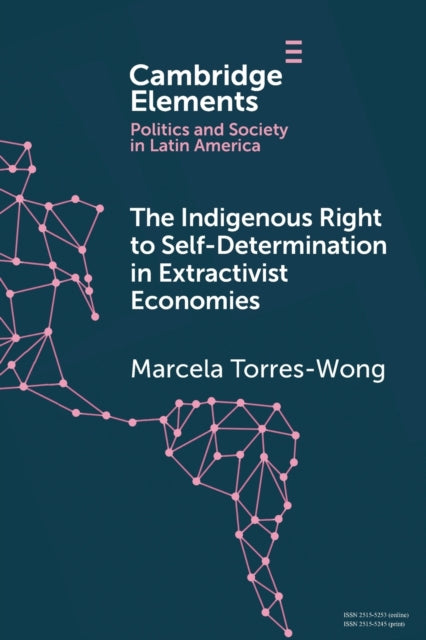
MarcelaTorres-Wong
The Indigenous Right to Self-Determination in Extractivist Economies
The Indigenous Right to Self-Determination in Extractivist Economies
💎 Earn 84 Points (£0.84) on this item.
We can order this item for you. Delivery usually takes about 4 to 6 weeks.
This item is not held in our immediate stock. We will order it for you after checkout.
Estimated delivery: About 4 to 6 weeks
YOU SAVE £1.01
- Condition: Brand new
- UK Delivery times: Usually arrives within 2 - 3 working days
- UK Shipping: Fee starts at £2.39. Subject to product weight & dimension
Bulk ordering. Want 15 or more copies? Get a personalised quote and bigger discounts. Learn more about bulk orders.
Couldn't load pickup availability
- More about The Indigenous Right to Self-Determination in Extractivist Economies
International norms recognize the Indigenous right to self-determination, but few communities enjoy it and remain vulnerable and disempowered. This Element examines six Indigenous communities in Mexico, Bolivia, and Peru with contrasting experiences of extractive projects and assesses their possibilities for self-determination in the light of environmental activism and discourses on Buen Vivir.
Format: Paperback / softback
Length: 75 pages
Publication date: 15 June 2023
Publisher: Cambridge University Press
International standards widely acknowledge the Indigenous right to self-determination, which empowers Indigenous peoples to define and pursue their collective aspirations. While legal frameworks may appear progressive, in reality, few Indigenous communities fully exercise this right and remain vulnerable and disempowered. Activists attribute Latin America's extractivist economies to the marginalization of Indigenous communities, while governments argue that extractive revenues are essential for improving Indigenous well-being. However, rural Indigenous peoples exhibit diverse perspectives on extractive industries, often divided. This Element explores six Indigenous communities in Mexico, Bolivia, and Peru, with contrasting experiences of extractive projects. It reveals that the Indigenous ability to leverage favorable legislation and access economic resources shapes diverse self-determination outcomes. Furthermore, it assesses Indigenous possibilities for self-determination in the context of environmental activism and discourses on Buen Vivir.
Introduction:
The right to self-determination is a fundamental human right recognized by international standards. It empowers Indigenous peoples to define and pursue their collective aspirations, shaping their destinies and determining their futures. Despite this recognition, many Indigenous communities continue to face marginalization and disempowerment, lacking access to the resources and opportunities necessary to thrive.
Legal Frameworks and Self-Determination:
Legal frameworks, designed to protect and promote Indigenous rights, are crucial in advancing self-determination. However, the reality is that few Indigenous communities fully enjoy this right, and many remain vulnerable and disempowered. Activists argue that Latin America's extractivist economies, characterized by resource extraction and economic inequality, are a major factor contributing to the marginalization of Indigenous peoples. Governments, on the other hand, assert that extractive revenues are necessary to improve Indigenous life and provide essential services.
Diverse Perspectives on Extractive Industries:
Rural Indigenous peoples exhibit diverse perspectives on extractive industries. While some communities welcome the economic opportunities and development that these projects can bring, others oppose them due to their negative impact on the environment and cultural heritage. The divide between these perspectives often leads to conflicts and divisions within Indigenous communities.
Six Indigenous Communities in Mexico, Bolivia, and Peru:
To assess how Indigenous self-determination has progressed and the role that extractivism plays in this, this Element examines six Indigenous communities in Mexico, Bolivia, and Peru with contrasting experiences of extractive projects. These communities represent a range of contexts, including rural, urban, and coastal areas, and include both traditional and contemporary Indigenous groups.
Self-Determination Outcomes:
The findings of this Element reveal that the Indigenous ability to use favorable legislation in conjunction with available economic resources shapes different self-determination outcomes. In some communities, extractive projects have led to economic development, improved infrastructure, and increased access to healthcare and education. However, in other communities, extractive industries have caused environmental degradation, loss of traditional lands, and social unrest.
Environmental Activism and Buen Vivir:
In the face of extractive industries, environmental activism has emerged as a powerful tool for Indigenous communities to advocate for their rights and protect their natural resources. The concept of Buen Vivir, which emphasizes harmony with nature and social well-being, provides a framework for Indigenous self-determination that goes beyond economic development.
Conclusion:
While legal frameworks and extractive revenues may play a role in improving Indigenous well-being, it is essential to recognize the diverse perspectives and experiences of rural Indigenous peoples. Extractive industries can have both positive and negative impacts on communities, and it is crucial to find sustainable solutions that prioritize the rights and well-being of Indigenous peoples. By promoting dialogue, collaboration, and respect for cultural diversity, we can work towards a future where Indigenous self-determination is fully realized and their voices are heard.
ISBN-13: 9781009410908
UK and International shipping information
UK and International shipping information
UK Delivery and returns information:
- Delivery within 2 - 3 days when ordering in the UK.
- Shipping fee for UK customers from £2.39. Fully tracked shipping service available.
- Returns policy: Return within 30 days of receipt for full refund.
International deliveries:
Shulph Ink now ships to Australia, Belgium, Canada, France, Germany, Ireland, Italy, India, Luxembourg Saudi Arabia, Singapore, Spain, Netherlands, New Zealand, United Arab Emirates, United States of America.
- Delivery times: within 5 - 10 days for international orders.
- Shipping fee: charges vary for overseas orders. Only tracked services are available for most international orders. Some countries have untracked shipping options.
- Customs charges: If ordering to addresses outside the United Kingdom, you may or may not incur additional customs and duties fees during local delivery.