Shulph Ink
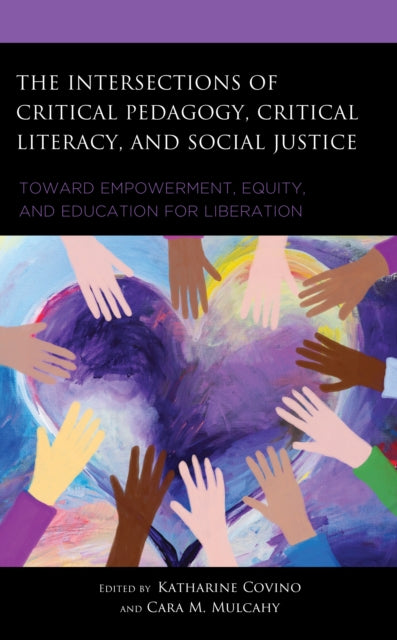
The Intersections of Critical Pedagogy, Critical Literacy, and Social Justice: Toward Empowerment, Equity, and Education for Liberation
The Intersections of Critical Pedagogy, Critical Literacy, and Social Justice: Toward Empowerment, Equity, and Education for Liberation
💎 Earn 398 Points (£3.98) on this item.
We can order this item for you. Delivery usually takes about 4 to 6 weeks.
This item is not held in our immediate stock. We will order it for you after checkout.
Estimated delivery: About 4 to 6 weeks
- Condition: Brand new
- UK Delivery times: Usually arrives within 2 - 3 working days
- UK Shipping: Fee starts at £3.89. Subject to product weight & dimension
Bulk ordering. Want 15 or more copies? Get a personalised quote and bigger discounts. Learn more about bulk orders.
Couldn't load pickup availability
- More about The Intersections of Critical Pedagogy, Critical Literacy, and Social Justice: Toward Empowerment, Equity, and Education for Liberation
This edited volume explores how educators develop a critical practice of their own, navigate areas of resistance, sustain their practice in the face of resistance, address concerns of parents, colleagues, administrators, and stakeholders, and link social justice issues to critical literacy/critical pedagogy. It defines 'educator' as a PreK-12 classroom teacher or teacher educator and seeks to answer questions about their roles and responsibilities.
Format: Hardback
Length: 156 pages
Publication date: 22 January 2024
Publisher: Lexington Books
Critical literacy research has shed light on the intricate challenges involved in integrating critical literacy theory with classroom practice, recognizing the interconnectedness between critical literacy and culturally sustaining pedagogies, as well as the resistance educators encounter when creating spaces for courageous conversations, critical engagement with text, and progressive text creation. While the complexities of translating theory into practice are more comprehended than in the past, the navigation of the inherent tensions involved in fostering and sustaining a critical practice remains less clear.
This volume defines "educator" as a PreK-12 classroom teacher or a teacher educator primarily engaged in university-based teacher education. Educators' roles and responsibilities are multifaceted. By examining the curricula, courses, programs, and professional learning spaces in which educators operate, this edited volume aims to address the following questions:
How do educators develop a critical practice of their own?
How do educators navigate areas of resistance?
How do educators sustain their practice in the face of resistance?
How do educators address concerns of parents, colleagues, administrators, and stakeholders?
How do educators link social justice issues to critical literacy/critical pedagogy?
Educators play a vital role in promoting critical literacy and critical pedagogy in their classrooms. They are responsible for creating learning environments that encourage students to develop critical thinking skills, engage with complex texts, and become active participants in their education. However, integrating critical literacy theory with classroom practice can be challenging, as educators must balance the demands of academic standards with the goals of promoting social justice and equity.
One of the key challenges in integrating critical literacy is the need to create spaces for courageous conversations and critical engagement with text. Educators must be willing to challenge students' assumptions, encourage them to think critically, and provide opportunities for them to express their opinions and ideas. This requires a willingness to engage in dialogue and to listen to students' perspectives, even when they differ from our own.
Another challenge is the resistance educators may face from parents, colleagues, administrators, and stakeholders who may not fully understand the benefits of critical literacy or who may be concerned about its impact on students' academic performance. Educators must be able to articulate the rationale behind their approach and to provide evidence of its effectiveness. They must also be willing to collaborate with other educators and community members to promote the importance of critical literacy and critical pedagogy.
To address these challenges, educators can use a variety of strategies. One approach is to incorporate critical literacy into the curriculum by selecting texts that promote social justice, equity, and diversity. Educators can also use critical literacy strategies such as close reading, questioning, and analysis to help students engage with text and develop their critical thinking skills.
Another strategy is to collaborate with other educators and community members to promote the importance of critical literacy and critical pedagogy. This can involve hosting professional development workshops, participating in community-based projects, and engaging in advocacy work. Educators can also use social media and other digital platforms to share their ideas and resources with a wider audience.
In conclusion, integrating critical literacy theory with classroom practice is a complex and challenging task, but it is essential for promoting social justice and equity in education. Educators must be willing to create spaces for courageous conversations and critical engagement with text, navigate areas of resistance, and sustain their practice in the face of resistance. By using a variety of strategies and collaborating with other educators and community members, educators can promote the importance of critical literacy and critical pedagogy in their classrooms and help students become more engaged, informed, and empowered citizens.
Weight: 363g
Dimension: 236 x 158 x 15 (mm)
ISBN-13: 9781666946345
UK and International shipping information
UK and International shipping information
We deliver throughout the United Kingdom and to 128 countries and territories worldwide, including the United States, Australia, Canada, Germany, Spain and France.