Berenike Jung
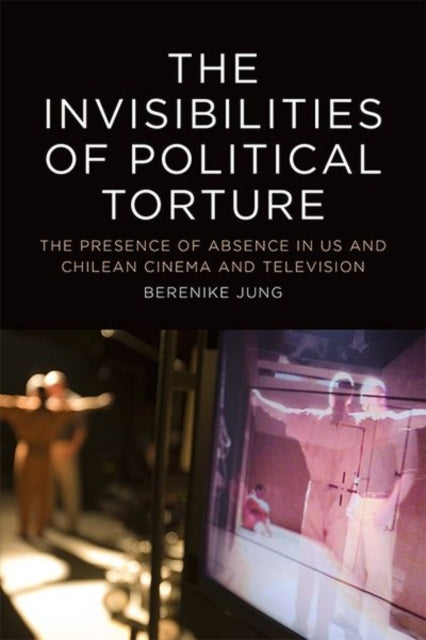
The Invisibilities of Political Torture: The Presence of Absence in US and Chilean Cinema and Television
The Invisibilities of Political Torture: The Presence of Absence in US and Chilean Cinema and Television
💎 Earn 383 Points (£3.83) on this item.
YOU SAVE £23.30
- Condition: Brand new
- UK Delivery times: Usually arrives within 2 - 3 working days
- UK Shipping: Fee starts at £2.39. Subject to product weight & dimension
Bulk ordering. Want 15 or more copies? Get a personalised quote and bigger discounts. Learn more about bulk orders.
Couldn't load pickup availability
- More about The Invisibilities of Political Torture: The Presence of Absence in US and Chilean Cinema and Television
Moving images, such as movies and TV shows, can help us better understand factual political torture by providing a visual and emotional perspective on these practices. They can also help us compare and contrast different cases of torture, and explore the ways in which they are documented and represented. However, this research also raises ethical and political questions about the use of images and film to portray torture, and about the potential for these media to perpetuate harmful stereotypes or misinformation.
\n Format: Hardback
\n Length: 224 pages
\n Publication date: 08 July 2020
\n Publisher: Edinburgh University Press
\n
The use of moving images has the potential to enhance our understanding of factual political torture in numerous ways. By examining the role of images and film in the (mis)understanding of torture, this research seeks to offer a synergized knowledge through a comparative angle, exploring the differences and continuities of torture cases that were documented to varying extents. This study will encompass key popular movies, independent films, and serial television, combining serious film analysis with ethical-political questions and historically and theoretically informed research. Furthermore, this research will expand on the latest developments of comparative media scholarship, integrating the nostalgic, material, and affective turn.
Academic work on the subject of torture tends to mirror public debates on its presumed utility. While some argue that the use of torture can be effective in extracting information from suspected terrorists, others believe that it is morally repugnant and violates human rights. This research aims to contribute to the ongoing discussion by exploring the ways in which moving images can shape our understanding of torture and its implications for society.
One of the key ways in which moving images can help us understand factual political torture is by providing a visual representation of the physical and psychological suffering that victims endure. Films and television shows that depict torture scenes can evoke powerful emotions and empathy, allowing viewers to connect with the victims on a personal level. This emotional connection can help to challenge the narrative that torture is a necessary tool for national security and promote a more nuanced understanding of the complexities of the issue.
Another way in which moving images can contribute to our understanding of torture is by challenging the dominant narratives that are often perpetuated in the media. For example, many popular movies and television shows depict torture as a tool of the villain or as a means of extracting information from the protagonist. However, this portrayal is often inaccurate and perpetuates harmful stereotypes about torture and its victims. By presenting alternative narratives that challenge these stereotypes, moving images can help to promote a more nuanced and accurate understanding of torture.
Furthermore, moving images can also help to shed light on the historical and political context in which torture occurs. By examining the ways in which torture has been used throughout history, moving images can help to contextualize the issue and understand the motivations behind its use. This can be particularly useful in understanding the role of torture in authoritarian regimes or in the context of war.
However, it is important to note that the use of moving images to understand factual political torture also raises ethical and political questions. For example, some argue that the depiction of torture in the media can be harmful to the victims and their families, as it can perpetuate trauma and trauma-related symptoms. Additionally, the use of torture in the media can be used to justify or normalize the use of torture in real-world situations, which can have devastating consequences for human rights and the rule of law.
To address these ethical and political concerns, it is important for filmmakers and media producers to approach the subject of torture with sensitivity and responsibility. Filmmakers should strive to present accurate and nuanced portrayals of torture, while also avoiding sensationalism or gratuitous violence. Media producers should also be mindful of the potential impact of their work on the public and consider the ethical implications of their reporting on torture.
In conclusion, the use of moving images has the potential to enhance our understanding of factual political torture in numerous ways. By examining the role of images and film in the (mis)understanding of torture, this research seeks to offer a synergized knowledge through a comparative angle, exploring the differences and continuities of torture cases that were documented to varying extents. By presenting alternative narratives that challenge stereotypes and shed light on the historical and political context in which torture occurs, moving images can help to promote a more nuanced and accurate understanding of the issue. However, it is important to approach the subject of torture with sensitivity and responsibility, mindful of the ethical and political implications of their work.
\n Weight: 518g\n
Dimension: 161 x 240 x 21 (mm)\n
ISBN-13: 9781474436991\n \n
UK and International shipping information
UK and International shipping information
UK Delivery and returns information:
- Delivery within 2 - 3 days when ordering in the UK.
- Shipping fee for UK customers from £2.39. Fully tracked shipping service available.
- Returns policy: Return within 30 days of receipt for full refund.
International deliveries:
Shulph Ink now ships to Australia, Belgium, Canada, France, Germany, Ireland, Italy, India, Luxembourg Saudi Arabia, Singapore, Spain, Netherlands, New Zealand, United Arab Emirates, United States of America.
- Delivery times: within 5 - 10 days for international orders.
- Shipping fee: charges vary for overseas orders. Only tracked services are available for most international orders. Some countries have untracked shipping options.
- Customs charges: If ordering to addresses outside the United Kingdom, you may or may not incur additional customs and duties fees during local delivery.