Judith Betts,Mark Phythian
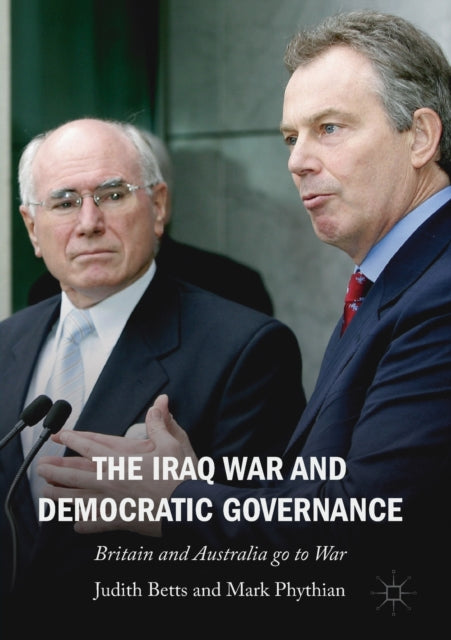
The Iraq War and Democratic Governance: Britain and Australia go to War
The Iraq War and Democratic Governance: Britain and Australia go to War
💎 Earn 371 Points (£3.71) on this item.
We can order this item for you. Delivery usually takes about 4 to 6 weeks.
This item is not held in our immediate stock. We will order it for you after checkout.
Estimated delivery: About 4 to 6 weeks
YOU SAVE £15.66
- Condition: Brand new
- UK Delivery times: Usually arrives within 2 - 3 working days
- UK Shipping: Fee starts at £2.39. Subject to product weight & dimension
Bulk ordering. Want 15 or more copies? Get a personalised quote and bigger discounts. Learn more about bulk orders.
Couldn't load pickup availability
- More about The Iraq War and Democratic Governance: Britain and Australia go to War
This book examines the decisions by Tony Blair and John Howard to take their nations into the 2003 Iraq War, raising questions about democratic governance and the US alliance. It provides a comprehensive and original view on post-war inquiries in the UK and Australia.
Format: Paperback / softback
Length: 236 pages
Publication date: 27 July 2021
Publisher: Springer Nature Switzerland AG
This book delves into the critical decisions made by Tony Blair and John Howard to involve their nations in the 2003 Iraq War, raising profound questions about democratic governance. It also explores the pivotal role of the US alliance in shaping UK and Australian decision-making processes and the intricate steps involved in launching a nation into war. Drawing upon extensive primary government documents, insightful interviews, and a comprehensive synthesis of various strands of literature, including historical accounts, party politics, prime ministerial leadership, and intelligence studies, the authors present a comprehensive and groundbreaking perspective on the various post-war inquiries conducted in the UK and Australia.
The book begins by examining the political context leading up to the Iraq War, including the rise of anti-American sentiment in the Middle East, the concerns over weapons of mass destruction (WMD), and the influence of neoconservative ideology on US foreign policy. It then delves into the decision-making processes within both the UK and Australia, exploring the roles played by key political figures, such as Blair, Howard, and British Prime Minister Gordon Brown.
The authors argue that the decisions to go to war in Iraq were influenced by a range of factors, including a desire to project US power, a belief in the existence of WMD, and a misreading of intelligence reports. They also highlight the role of the media and public opinion in shaping these decisions, with the media playing a crucial role in amplifying the concerns over WMD and creating a sense of urgency among the public.
The book also explores the aftermath of the war, including the devastating human cost, the rise of extremist groups, and the political instability that has plagued Iraq since the invasion. It examines the various post-war inquiries conducted in the UK and Australia, including the Chilcot Inquiry, the Hutton Inquiry, and the Iraq Inquiry, and assesses their effectiveness in holding those responsible for the war accountable.
The authors conclude by offering insights into the lessons learned from the Iraq War and the challenges facing democratic governance in the modern world. They argue that the war has highlighted the importance of transparency, accountability, and the rule of law in decision-making processes and that democratic governments must be willing to engage with their citizens and other nations in a constructive and diplomatic manner.
This book is a valuable contribution to the study of international relations and political history, providing a comprehensive and original perspective on the critical decisions made by Tony Blair and John Howard to involve their nations in the 2003 Iraq War. It will be of interest to scholars, policymakers, and anyone interested in understanding the complexities of democratic governance and the role of the US alliance in shaping global politics.
The decisions made by Tony Blair and John Howard to involve their nations in the 2003 Iraq War raise profound questions about democratic governance. This book delves into the critical factors that led to these decisions, including the rise of anti-American sentiment in the Middle East, concerns over weapons of mass destruction (WMD), and the influence of neoconservative ideology on US foreign policy. It explores the decision-making processes within both the UK and Australia, examining the roles played by key political figures such as Blair, Howard, and British Prime Minister Gordon Brown.
The authors argue that the decisions to go to war in Iraq were influenced by a range of factors, including a desire to project US power, a belief in the existence of WMD, and a misreading of intelligence reports. They also highlight the role of the media and public opinion in shaping these decisions, with the media playing a crucial role in amplifying the concerns over WMD and creating a sense of urgency among the public.
The aftermath of the war is examined in detail, including the devastating human cost, the rise of extremist groups, and the political instability that has plagued Iraq since the invasion. The various post-war inquiries conducted in the UK and Australia, such as the Chilcot Inquiry, the Hutton Inquiry, and the Iraq Inquiry, are assessed to determine their effectiveness in holding those responsible for the war accountable.
The authors conclude by offering insights into the lessons learned from the Iraq War and the challenges facing democratic governance in the modern world. They argue that the war has highlighted the importance of transparency, accountability, and the rule of law in decision-making processes and that democratic governments must be willing to engage with their citizens and other nations in a constructive and diplomatic manner.
This book is a valuable contribution to the study of international relations and political history, providing a comprehensive and original perspective on the critical decisions made by Tony Blair and John Howard to involve their nations in the 2003 Iraq War. It will be of interest to scholars, policymakers, and anyone interested in understanding the complexities of democratic governance and the role of the US alliance in shaping global politics.
Weight: 338g
Dimension: 210 x 148 (mm)
ISBN-13: 9783030503215
Edition number: 1st ed. 2020
This item can be found in:
UK and International shipping information
UK and International shipping information
UK Delivery and returns information:
- Delivery within 2 - 3 days when ordering in the UK.
- Shipping fee for UK customers from £2.39. Fully tracked shipping service available.
- Returns policy: Return within 30 days of receipt for full refund.
International deliveries:
Shulph Ink now ships to Australia, Belgium, Canada, France, Germany, Ireland, Italy, India, Luxembourg Saudi Arabia, Singapore, Spain, Netherlands, New Zealand, United Arab Emirates, United States of America.
- Delivery times: within 5 - 10 days for international orders.
- Shipping fee: charges vary for overseas orders. Only tracked services are available for most international orders. Some countries have untracked shipping options.
- Customs charges: If ordering to addresses outside the United Kingdom, you may or may not incur additional customs and duties fees during local delivery.