Heather A. Conley,Donatienne Ruy
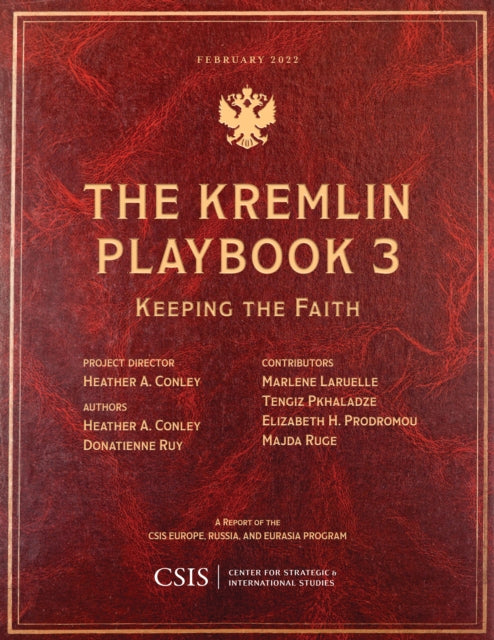
The Kremlin Playbook 3: Keeping the Faith
The Kremlin Playbook 3: Keeping the Faith
💎 Earn 168 Points (£1.68) on this item.
We can order this item for you. Delivery usually takes about 4 to 6 weeks.
This item is not held in our immediate stock. We will order it for you after checkout.
Estimated delivery: About 4 to 6 weeks
YOU SAVE £4.37
- Condition: Brand new
- UK Delivery times: Usually arrives within 2 - 3 working days
- UK Shipping: Fee starts at £2.39. Subject to product weight & dimension
Bulk ordering. Want 15 or more copies? Get a personalised quote and bigger discounts. Learn more about bulk orders.
Couldn't load pickup availability
- More about The Kremlin Playbook 3: Keeping the Faith
The Kremlin Playbook series explores how the US and its European allies can protect religious beliefs and values from malign influence in the face of societal change. It highlights two main channels used by the Kremlin to accentuate societal wedges in Europe and Eurasia: the Orthodox world and the traditional values ecosystem.
Format: Paperback / softback
Length: 116 pages
Publication date: 29 April 2022
Publisher: Rowman & Littlefield
The Kremlin Playbook series presents the latest and final report on protecting the religious beliefs and values of citizens from malign influence in the United States and its European allies. In a time of rapid societal change, transatlantic societies are facing societal anxiety and fear related to economic, demographic, and generational shifts, leading to political divisions and the rise of political figures seeking to capitalize on these fears. The Kremlin has exploited these fears through two main channels: the Orthodox world and the traditional values ecosystem, accentuating societal wedges in Europe and Eurasia.
Introduction
The Kremlin Playbook series presents the latest and final report on protecting the religious beliefs and values of citizens from malign influence in the United States and its European allies. In a time of rapid societal change, transatlantic societies are facing societal anxiety and fear related to economic, demographic, and generational shifts, leading to political divisions and the rise of political figures seeking to capitalize on these fears. The Kremlin has exploited these fears through two main channels: the Orthodox world and the traditional values ecosystem, accentuating societal wedges in Europe and Eurasia.
The Orthodox World
The Orthodox world is a significant source of religious and cultural influence in Europe and Eurasia. It includes various Orthodox Christian denominations, such as the Russian Orthodox Church, the Greek Orthodox Church, and the Serbian Orthodox Church, as well as other Orthodox Christian communities in the region. The Orthodox world has a long history of promoting traditional values and has been a stronghold of conservatism in many countries. However, the Orthodox world has also been a target of malign influence from the Kremlin.
One of the main ways that the Kremlin has exploited the Orthodox world is through the promotion of religious nationalism. Religious nationalism is a political ideology that seeks to promote the interests of a particular religious community over those of the broader society. It often involves the use of religious symbols, rhetoric, and imagery to create a sense of identity and belonging among members of the community. The Kremlin has used religious nationalism to promote its own political agenda in Europe and Eurasia, including the annexation of Crimea and the support of separatist movements in Ukraine.
Another way that the Kremlin has exploited the Orthodox world is through the promotion of anti-Western sentiment. Anti-Western sentiment is a political ideology that seeks to undermine the legitimacy of Western institutions and values. It often involves the use of propaganda and disinformation to spread false information about the West and its policies. The Kremlin has used anti-Western sentiment to undermine the credibility of Western governments and to promote its own political agenda in Europe and Eurasia.
The Kremlin has also used the Orthodox world to promote its own political agenda in Europe and Eurasia. For example, the Kremlin has used the Russian Orthodox Church to promote its own political agenda in Russia, including the support of President Vladimir Putin. The Russian Orthodox Church has been a powerful tool for the Kremlin in promoting its own political agenda, including the annexation of Crimea and the support of separatist movements in Ukraine.
The traditional values ecosystem is another important channel through which the Kremlin has exploited societal fears and divisions. The traditional values ecosystem includes various cultural and social institutions that promote traditional values and conservative beliefs. These institutions include the family, the church, the military, and the education system. The Kremlin has used the traditional values ecosystem to promote its own political agenda in Europe and Eurasia, including the support of conservative political parties and the promotion of traditional gender roles.
One of the main ways that the Kremlin has exploited the traditional values ecosystem is through the promotion of religious nationalism. Religious nationalism is a political ideology that seeks to promote the interests of a particular religious community over those of the broader society. It often involves the use of religious symbols, rhetoric, and imagery to create a sense of identity and belonging among members of the community. The Kremlin has used religious nationalism to promote its own political agenda in Europe and Eurasia, including the annexation of Crimea and the support of separatist movements in Ukraine.
Another way that the Kremlin has exploited the traditional values ecosystem is through the promotion of anti-Western sentiment. Anti-Western sentiment is a political ideology that seeks to undermine the legitimacy of Western institutions and values. It often involves the use of propaganda and disinformation to spread false information about the West and its policies. The Kremlin has used anti-Western sentiment to undermine the credibility of Western governments and to promote its own political agenda in Europe and Eurasia.
The Kremlin has also used the traditional values ecosystem to promote its own political agenda in Europe and Eurasia. For example, the Kremlin has used the family to promote its own political agenda in Russia, including the support of President Vladimir Putin. The family has been a powerful tool for the Kremlin in promoting its own political agenda, including the annexation of Crimea and the support of separatist movements in Ukraine.
Conclusion
In conclusion, the Kremlin has exploited societal fears and divisions in Europe and Eurasia through two main channels: the Orthodox world and the traditional values ecosystem. The Orthodox world has been a target of malign influence from the Kremlin, with religious nationalism and anti-Western sentiment being used to promote its own political agenda. The traditional values ecosystem has also been used to promote the Kremlin's political agenda, with religious nationalism and anti-Western sentiment being used to undermine the legitimacy of Western institutions and values. By understanding these channels, the United States and its European allies can better protect the religious beliefs and values of their citizens from malign influence.
The Kremlin Playbook series presents the latest and final report on protecting the religious beliefs and values of citizens from malign influence in the United States and its European allies. In a time of rapid societal change, transatlantic societies are facing societal anxiety and fear related to economic, demographic, and generational shifts, leading to political divisions and the rise of political figures seeking to capitalize on these fears. The Kremlin has exploited these fears through two main channels: the Orthodox world and the traditional values ecosystem, accentuating societal wedges in Europe and Eurasia.The Orthodox world is a significant source of religious and cultural influence in Europe and Eurasia, including various Orthodox Christian denominations and other Orthodox Christian communities. The Orthodox world has a long history of promoting traditional values and has been a stronghold of conservatism in many countries. However, the Orthodox world has also been a target of malign influence from the Kremlin.
One of the main ways that the Kremlin has exploited the Orthodox world is through the promotion of religious nationalism. Religious nationalism is a political ideology that seeks to promote the interests of a particular religious community over those of the broader society. It often involves the use of religious symbols, rhetoric, and imagery to create a sense of identity and belonging among members of the community. The Kremlin has used religious nationalism to promote its own political agenda in Europe and Eurasia, including the annexation of Crimea and the support of separatist movements in Ukraine.
Another way that the Kremlin has exploited the Orthodox world is through the promotion of anti-Western sentiment. Anti-Western sentiment is a political ideology that seeks to undermine the legitimacy of Western institutions and values. It often involves the use of propaganda and disinformation to spread false information about the West and its policies. The Kremlin has used anti-Western sentiment to undermine the credibility of Western governments and to promote its own political agenda in Europe and Eurasia.
The Kremlin has also used the Orthodox world to promote its own political agenda in Europe and Eurasia. For example, the Kremlin has used the Russian Orthodox Church to promote its own political agenda in Russia, including the support of President Vladimir Putin. The Russian Orthodox Church has been a powerful tool for the Kremlin in promoting its own political agenda, including the annexation of Crimea and the support of separatist movements in Ukraine.
The traditional values ecosystem is another important channel through which the Kremlin has exploited societal fears and divisions. The traditional values ecosystem includes various cultural and social institutions that promote traditional values and conservative beliefs. These institutions include the family, the church, the military, and the education system. The Kremlin has used the traditional values ecosystem to promote its own political agenda in Europe and Eurasia, including the support of conservative political parties and the promotion of traditional gender roles.
One of the main ways that the Kremlin has exploited the traditional values ecosystem is through the promotion of religious nationalism. Religious nationalism is a political ideology that seeks to promote the interests of a particular religious community over those of the broader society. It often involves the use of religious symbols, rhetoric, and imagery to create a sense of identity and belonging among members of the community. The Kremlin has used religious nationalism to promote its own political agenda in Europe and Eurasia, including the annexation of Crimea and the support of separatist movements in Ukraine.
Another way that the Kremlin has exploited the traditional values ecosystem is through the promotion of anti-Western sentiment. Anti-Western sentiment is a political ideology that seeks to undermine the legitimacy of Western institutions and values. It often involves the use of propaganda and disinformation to spread false information about the West and its policies. The Kremlin has used anti-Western sentiment to undermine the credibility of Western governments and to promote its own political agenda in Europe and Eurasia.
The Kremlin has also used the traditional values ecosystem to promote its own political agenda in Europe and Eurasia. For example, the Kremlin has used the family to promote its own political agenda in Russia, including the support of President Vladimir Putin. The family has been a powerful tool for the Kremlin in promoting its own political agenda, including the annexation of Crimea and the support of separatist movements in Ukraine.
In conclusion, the Kremlin has exploited societal fears and divisions in Europe and Eurasia through two main channels: the Orthodox world and the traditional values ecosystem. The Orthodox world has been a target of malign influence from the Kremlin, with religious nationalism and anti-Western sentiment being used to promote its own political agenda. The traditional values ecosystem has also been used to promote the Kremlin's political agenda, with religious nationalism and anti-Western sentiment being used to undermine the legitimacy of Western institutions and values. By understanding these channels, the United States and its European allies can better protect the religious beliefs and values of their citizens from malign influence.
Weight: 363g
Dimension: 279 x 218 x 8 (mm)
ISBN-13: 9781538170458
This item can be found in:
UK and International shipping information
UK and International shipping information
UK Delivery and returns information:
- Delivery within 2 - 3 days when ordering in the UK.
- Shipping fee for UK customers from £2.39. Fully tracked shipping service available.
- Returns policy: Return within 30 days of receipt for full refund.
International deliveries:
Shulph Ink now ships to Australia, Belgium, Canada, France, Germany, Ireland, Italy, India, Luxembourg Saudi Arabia, Singapore, Spain, Netherlands, New Zealand, United Arab Emirates, United States of America.
- Delivery times: within 5 - 10 days for international orders.
- Shipping fee: charges vary for overseas orders. Only tracked services are available for most international orders. Some countries have untracked shipping options.
- Customs charges: If ordering to addresses outside the United Kingdom, you may or may not incur additional customs and duties fees during local delivery.