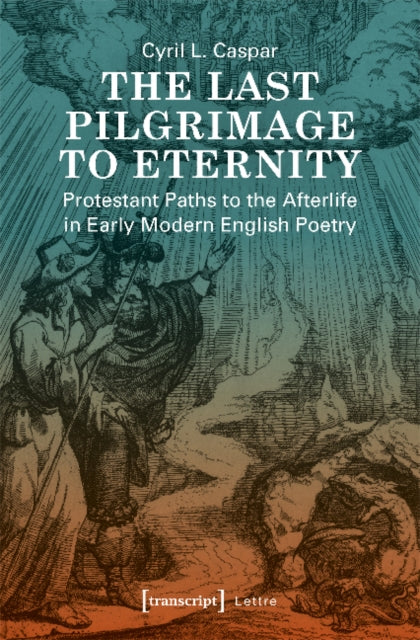
Cyril L. Caspar
The Last Pilgrimage to Eternity - Protestant Paths to the Afterlife in Early Modern English Poetry
The Last Pilgrimage to Eternity - Protestant Paths to the Afterlife in Early Modern English Poetry
💎 Earn 185 Points (£1.85) on this item.
We can order this item for you. Delivery usually takes about 4 to 6 weeks.
This item is not held in our immediate stock. We will order it for you after checkout.
Estimated delivery: About 4 to 6 weeks
YOU SAVE £7.83
- Condition: Brand new
- UK Delivery times: Usually arrives within 2 - 3 working days
- UK Shipping: Fee starts at £2.39. Subject to product weight & dimension
Bulk ordering. Want 15 or more copies? Get a personalised quote and bigger discounts. Learn more about bulk orders.
Couldn't load pickup availability
- More about The Last Pilgrimage to Eternity - Protestant Paths to the Afterlife in Early Modern English Poetry
The reformation led to a new understanding of living and dying, with the last pilgrimage becoming a life-transcending metaphor. Cyril L. Caspar explores five major English poets to uncover this potential.
Format: Paperback / softback
Length: 262 pages
Publication date: 08 December 2021
Publisher: Transcript Verlag
The Reformation brought about a significant shift in the way people perceived life and death. With the disappearance of purgatory, new avenues to the afterlife were unearthed, leading to a reimagining of the end-of-life journey. As life comes to an end, the passage to the afterlife becomes a final pilgrimage, a metaphor that has gained widespread popularity in the early modern era. In his comprehensive historical and theological analysis, Cyril L. Caspar delves into the works of five prominent English poets: John Donne, Sir Walter Raleigh, George Herbert, Edmund Spenser, and John Milton. Through their poetry, Caspar uncovers the profound poetic potential of the last pilgrimage as a metaphor that transcends the limitations of human existence.
John Donne, a master of metaphysical poetry, explores the concept of the last pilgrimage in his renowned work "Holy Sonnets: Death's Duel." Donne employs vivid imagery and metaphorical language to depict the journey of the soul toward the afterlife. He emphasizes the importance of repentance and the cleansing of the mind to prepare for the ultimate destination.
Sir Walter Raleigh, in his poem "The Narrow House," portrays the last pilgrimage as a perilous and challenging journey. The protagonist, facing death, embarks on a quest to find a narrow house that will lead him to salvation. The poem reflects Raleigh's belief in the power of the human spirit to overcome adversity and achieve transcendence.
George Herbert, known for his religious poetry, explores the last pilgrimage through the lens of faith and devotion. In his poem "The Church Porch," Herbert describes the soul's ascent to heaven, guided by the angels and the saints. He emphasizes the importance of living a virtuous life and seeking divine guidance to ensure a successful passage to the afterlife.
Edmund Spenser, in his epic poem "The Faerie Queene," employs the last pilgrimage as a metaphor for the quest for knowledge and wisdom. The protagonist, Redcrosse, embarks on a perilous journey to the land of Faerie, where he encounters various challenges and trials. Through his experiences, Spenser explores the nature of good and evil, the importance of sacrifice, and the ultimate reward of eternal life.
John Milton, in his epic poem "Paradise Lost," presents a comprehensive portrayal of the last pilgrimage. Milton's epic poem tells the story of Adam and Eve's fall from grace and their subsequent journey through the afterlife. The poem explores the themes of sin, redemption, and the ultimate fate of humanity. Milton's use of language and imagery creates a vivid and powerful depiction of the afterlife, making it a timeless masterpiece of English literature.
In conclusion, the last pilgrimage as a metaphor has played a significant role in the literature and spirituality of the early modern era. Through the works of these five poets, Caspar has demonstrated the poetic potential of this metaphor to transcend the limitations of human existence and offer a glimpse into the realm of the afterlife. The last pilgrimage remains a powerful and enduring symbol of the human quest for meaning and transcendence, resonating with readers across generations and cultures.
Weight: 666g
Dimension: 226 x 147 x 15 (mm)
ISBN-13: 9783837642544
This item can be found in:
UK and International shipping information
UK and International shipping information
UK Delivery and returns information:
- Delivery within 2 - 3 days when ordering in the UK.
- Shipping fee for UK customers from £2.39. Fully tracked shipping service available.
- Returns policy: Return within 30 days of receipt for full refund.
International deliveries:
Shulph Ink now ships to Australia, Belgium, Canada, France, Germany, Ireland, Italy, India, Luxembourg Saudi Arabia, Singapore, Spain, Netherlands, New Zealand, United Arab Emirates, United States of America.
- Delivery times: within 5 - 10 days for international orders.
- Shipping fee: charges vary for overseas orders. Only tracked services are available for most international orders. Some countries have untracked shipping options.
- Customs charges: If ordering to addresses outside the United Kingdom, you may or may not incur additional customs and duties fees during local delivery.