JasonPeacey
The Madman and the Churchrobber: Law and Conflict in Early Modern England
The Madman and the Churchrobber: Law and Conflict in Early Modern England
💎 Earn 263 Points (£2.63) on this item.
- Condition: Brand new
- UK Delivery times: Usually arrives within 2 - 3 working days
- UK Shipping: Fee starts at £2.39. Subject to product weight & dimension
Bulk ordering. Want 15 or more copies? Get a personalised quote and bigger discounts. Learn more about bulk orders.
Couldn't load pickup availability
- More about The Madman and the Churchrobber: Law and Conflict in Early Modern England
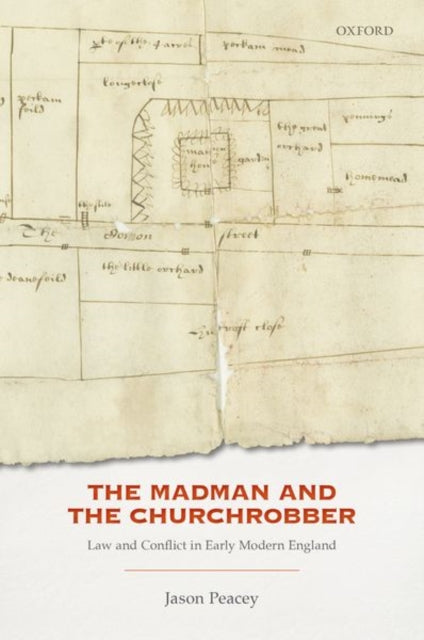
This microhistory reconstructs and analyzes a protracted legal dispute over a small parcel of land called Warrens Court in Nibley, Gloucestershire, between successive generations of two families from the mid-sixteenth century to the early eighteenth century. Jason Peacey argues that a microhistorical approach sheds valuable light on the legal and political culture of early modern England by understanding how disputes became protracted and bitter, and why they fascinated contemporaries. He explores litigants' strategies and practices, competing claims about adversaries' behavior, and incompatible expectations of the legal system. The dispute is employed to address historiographical debates surrounding civil litigation in early modern England and to provide new ways of appreciating the nature, severity, and visibility of political and religious conflict in the decades before and after the English Revolution.
Format: Hardback
Length: 336 pages
Publication date: 06 January 2022
Publisher: Oxford University Press
This microhistory reconstructs and analyzes a protracted legal dispute over a small parcel of land called Warrens Court in Nibley, Gloucestershire, which was contested between successive generations of two families from the mid-sixteenth century to the early eighteenth century. Employing a rich cache of archival material, Jason Peacey traces legal contestation over time and through a range of different courts, as well as in Parliament and the public domain, and contends that a microhistorical approach makes it possible to shed valuable light upon the legal and political culture of early modern England, not least by comprehending how certain disputes became protracted and increasingly bitter, and why they fascinated contemporaries. This involves recognizing the dynamic of litigation, in terms of how disputes changed over time, and how those involved in myriad lawsuits found legal reasons for prolonging contestation. It also involves exploring litigants' strategies and practices, as well as competing claims about the way in which adversaries behaved, and incompatible expectations of the legal system. Finally, it involves teasing out the structural issues in play, in terms of the social, cultural, and ideological identities of successive generations. Ultimately, this dispute is employed to address important historiographical debates surrounding the nature of civil litigation in early modern England, and to provide new ways of appreciating the nature, severity, and visibility of political and religious conflict in the decades before and after the English Revolution.
This microhistory reconstructs and analyzes a protracted legal dispute over a small parcel of land called Warrens Court in Nibley, Gloucestershire, which was contested between successive generations of two families from the mid-sixteenth century to the early eighteenth century. Employing a rich cache of archival material, Jason Peacey traces legal contestation over time and through a range of different courts, as well as in Parliament and the public domain, and contends that a microhistorical approach makes it possible to shed valuable light upon the legal and political culture of early modern England, not least by comprehending how certain disputes became protracted and increasingly bitter, and why they fascinated contemporaries. This involves recognizing the dynamic of litigation, in terms of how disputes changed over time, and how those involved in myriad lawsuits found legal reasons for prolonging contestation. It also involves exploring litigants' strategies and practices, as well as competing claims about the way in which adversaries behaved, and incompatible expectations of the legal system. Finally, it involves teasing out the structural issues in play, in terms of the social, cultural, and ideological identities of successive generations. Ultimately, this dispute is employed to address important historiographical debates surrounding the nature of civil litigation in early modern England, and to provide new ways of appreciating the nature, severity, and visibility of political and religious conflict in the decades before and after the English Revolution.
Weight: 648g
Dimension: 164 x 242 x 28 (mm)
ISBN-13: 9780192897138
This item can be found in:
UK and International shipping information
UK and International shipping information
UK Delivery and returns information:
- Delivery within 2 - 3 days when ordering in the UK.
- Shipping fee for UK customers from £2.39. Fully tracked shipping service available.
- Returns policy: Return within 30 days of receipt for full refund.
International deliveries:
Shulph Ink now ships to Australia, Belgium, Canada, France, Germany, Ireland, Italy, India, Luxembourg Saudi Arabia, Singapore, Spain, Netherlands, New Zealand, United Arab Emirates, United States of America.
- Delivery times: within 5 - 10 days for international orders.
- Shipping fee: charges vary for overseas orders. Only tracked services are available for most international orders. Some countries have untracked shipping options.
- Customs charges: If ordering to addresses outside the United Kingdom, you may or may not incur additional customs and duties fees during local delivery.