Megan E. O'Neil
The Maya: Lost Civilizations
The Maya: Lost Civilizations
💎 Earn 70 Points (£0.70) on this item.
YOU SAVE £5.84
- Condition: Brand new
- UK Delivery times: Usually arrives within 2 - 3 working days
- UK Shipping: Fee starts at £2.39. Subject to product weight & dimension
Bulk ordering. Want 15 or more copies? Get a personalised quote and bigger discounts. Learn more about bulk orders.
Couldn't load pickup availability
- More about The Maya: Lost Civilizations
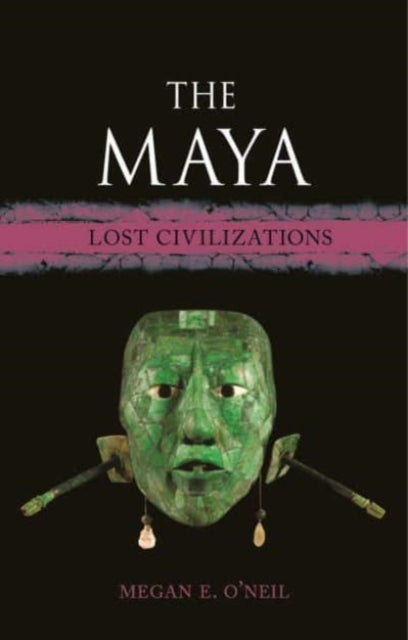
The Maya reveals how ancient civilizations have been perceived, portrayed, and exploited over five hundred years in the Americas, Europe, and beyond, including their art, history, engagement with Spanish invaders, scientific literature, visual arts, architecture, world's fairs, and Indigenous activism. Megan E. ONeil explores the decipherment of Maya inscriptions, museum exhibitions, artists' responses, and contemporary Maya peoples' engagements with their ancestral past to explore the history and legacy of this fascinating culture.
Format: Hardback
Length: 240 pages
Publication date: 02 May 2022
Publisher: Reaktion Books
The Maya civilization, spanning over five hundred years in the Americas, Europe, and beyond, has been a subject of fascination, portrayal, and exploitation. In her book, "The Maya Revealed," Megan E. O'Neil provides a comprehensive overview of ancient Maya art and history, from the Preclassic period to the Spanish invasion, as well as the history of engagement with the ancient Maya. O'Neil draws on scientific literature, visual arts, architecture, world's fairs, and Indigenous activism to explore the decipherment of Maya inscriptions, Maya museum exhibitions, and artists' responses, as well as contemporary Maya peoples' engagements with their ancestral past.
The book begins by tracing the origins of the Maya civilization, which emerged in the Preclassic period (c. 2500-1697 CE) in the lowlands of what is now Guatemala. The Maya were a highly advanced civilization that developed sophisticated calendars, architecture, mathematics, and astronomy. They built impressive cities, such as Chichen Itza, Tikal, and Copan, which were characterized by their intricate stonework and elaborate hieroglyphic inscriptions.
One of the key themes of the book is the impact of the Spanish invasion on the Maya civilization. In the sixteenth century, Spanish conquistadors arrived in the Americas and began to conquer the Maya territories. The Maya were forced to adapt to the new colonial system, which included forced labor, religious conversion, and the loss of their land and resources. This led to a decline in the Maya population and the destruction of many of their cultural sites.
Despite the challenges faced by the Maya, they continued to thrive in the face of adversity. They developed new forms of art and architecture, and they continued to practice their traditional religious beliefs and practices. In the nineteenth century, the Maya began to receive more attention from the outside world, and they began to participate in world's fairs and other cultural events.
In the twentieth century, the Maya began to face new challenges, including the loss of their land to development and the impact of climate change. However, they have also made significant strides in preserving their cultural heritage. They have established museums and cultural centers, and they have worked to promote their language and culture to the wider world.
One of the most significant aspects of the Maya civilization is its art. The Maya were known for their intricate stonework, which included sculptures, masks, and pottery. They also developed a unique form of hieroglyphic writing, which was used to record their history, beliefs, and rituals. Many of the Maya's artworks are now housed in museums around the world, and they continue to inspire and fascinate people.
In addition to their art, the Maya also had a complex system of religion and spirituality. They believed in a pantheon of gods and goddesses, and they performed rituals and ceremonies to honor them. These rituals and ceremonies were often complex and involved elaborate costumes, music, and dance.
The Maya also had a sophisticated system of agriculture and land management. They developed a system of terraces and irrigation that allowed them to grow a variety of crops in a small area. They also developed a system of trade that allowed them to exchange goods with other cultures.
Despite the many challenges faced by the Maya, they have left a lasting legacy on the world. Their art, architecture, and religion continue to inspire and fascinate people, and their language and culture are still alive today. In recent years, there has been a growing interest in the Maya civilization, and there have been many efforts to preserve and promote their cultural heritage.
One of the most significant efforts to preserve the Maya cultural heritage is the establishment of the Maya Biosphere Reserve. This reserve is located in the Guatemalan highlands and covers over 1.5 million acres of land. It is home to a variety of plant and animal species, and it is also home to many of the Maya's cultural sites. The reserve is managed by the Maya Biosphere Reserve Foundation, and it is working to protect the reserve from development and other threats.
In addition to the Maya Biosphere Reserve, there are many other museums and cultural centers that are dedicated to the Maya civilization. These museums include the Maya Museum in Guatemala City, the National Museum of Anthropology in Mexico City, and the Museum of Maya Culture in Belize. These museums offer a wide range of exhibits and programs that allow people to learn about the Maya civilization.
In conclusion, the Maya civilization is a fascinating and complex culture that has been shaped by over five hundred years of history. From its origins in the Preclassic period to its impact on the Spanish invasion, the Maya have continued to thrive in the face of adversity. Their art, architecture, religion, and spirituality continue to inspire and fascinate people, and their language and culture are still alive today. Despite the many challenges faced by the Maya, there has been a growing interest in the Maya civilization, and there have been many efforts to preserve and promote their cultural heritage. The Maya Biosphere Reserve is one of the most significant efforts to preserve the Maya cultural heritage, and it is working to protect the reserve from development and other threats.
Weight: 708g
Dimension: 148 x 223 x 24 (mm)
ISBN-13: 9781789145502
This item can be found in:
UK and International shipping information
UK and International shipping information
UK Delivery and returns information:
- Delivery within 2 - 3 days when ordering in the UK.
- Shipping fee for UK customers from £2.39. Fully tracked shipping service available.
- Returns policy: Return within 30 days of receipt for full refund.
International deliveries:
Shulph Ink now ships to Australia, Belgium, Canada, France, Germany, Ireland, Italy, India, Luxembourg Saudi Arabia, Singapore, Spain, Netherlands, New Zealand, United Arab Emirates, United States of America.
- Delivery times: within 5 - 10 days for international orders.
- Shipping fee: charges vary for overseas orders. Only tracked services are available for most international orders. Some countries have untracked shipping options.
- Customs charges: If ordering to addresses outside the United Kingdom, you may or may not incur additional customs and duties fees during local delivery.