Shulph Ink
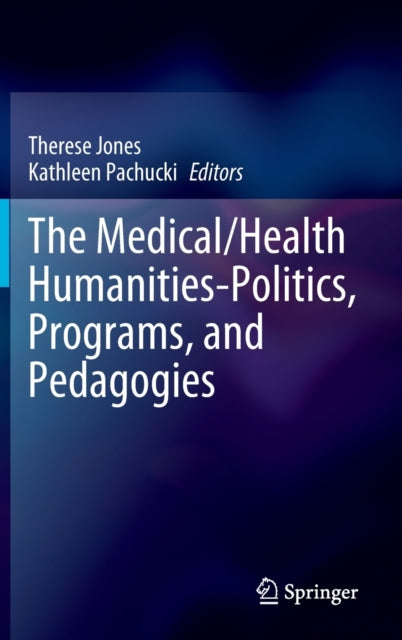
The Medical/Health Humanities-Politics, Programs, and Pedagogies
The Medical/Health Humanities-Politics, Programs, and Pedagogies
💎 Earn 412 Points (£4.12) on this item.
We can order this item for you. Delivery usually takes about 4 to 6 weeks.
This item is not held in our immediate stock. We will order it for you after checkout.
Estimated delivery: About 4 to 6 weeks
YOU SAVE £17.40
- Condition: Brand new
- UK Delivery times: Usually arrives within 2 - 3 working days
- UK Shipping: Fee starts at £2.39. Subject to product weight & dimension
Bulk ordering. Want 15 or more copies? Get a personalised quote and bigger discounts. Learn more about bulk orders.
Couldn't load pickup availability
- More about The Medical/Health Humanities-Politics, Programs, and Pedagogies
This book provides a toolkit for launching inter- and multi-disciplinary health humanities programs, covering pedagogical practices, philosophical and political analyses, and imaginative work. Previously published in the Journal of Medical Humanities, chapters are available open access.
Format: Hardback
Length: 297 pages
Publication date: 28 November 2022
Publisher: Springer International Publishing AG
This book provides a comprehensive overview of the Health Humanities Consortium, offering valuable insights for academic leaders who are committed to establishing inter- and multi-disciplinary health humanities programs within their colleges and universities. It delves into a brief history of the consortium, highlighting its mission and achievements.
The book is organized into several chapters, each exploring different aspects of the health humanities. The first chapter, titled "Reflective Writing about Near-Peer Blogs: A Novel Method for Introducing the Medical Humanities in Premedical Education," explores the use of reflective writing to facilitate the integration of the medical humanities into premedical education. The chapter discusses the benefits of using near-peer blogs as a platform for students to engage with medical humanities content and reflect on its relevance to their academic and professional lives.
The second chapter, titled "Medical Students Creation of Original Poetry, Comics, and Masks to Explore Professional Identity Formation," showcases the creative and imaginative approaches taken by medical students to explore their professional identity formation. The students use poetry, comics, and masks to express their experiences, perspectives, and concerns about the medical profession. The chapter highlights the importance of incorporating the arts into medical education to promote empathy, self-awareness, and professional identity development.
The third chapter, titled "Reconsidering Empathy: An Interpersonal Approach and Participatory Arts in the Medical Humanities," explores the role of empathy in medical practice and the potential benefits of incorporating participatory arts into medical humanities education. The chapter discusses the interpersonal aspects of medicine and the importance of understanding patient experiences and perspectives. It also highlights the use of participatory arts, such as theater, dance, and visual arts, to facilitate empathy and promote patient-centered care.
The fourth chapter, titled "The Health Benefits of Autobiographical Writing: An Interdisciplinary Perspective," examines the therapeutic benefits of autobiographical writing in the context of the health humanities. The chapter discusses the process of writing autobiographies and the potential benefits of self-reflection, introspection, and emotional processing. It also highlights the interdisciplinary nature of the health humanities and the potential for collaboration between healthcare professionals and artists.
In addition to these chapters, the book includes a toolkit for academic leaders who are interested in launching inter- and multi-disciplinary health humanities programs. The toolkit provides guidance on developing curriculum, recruiting faculty, securing funding, and promoting the health humanities within the academic community.
Overall, this book offers a rich and comprehensive exploration of the health humanities, providing valuable insights for academic leaders, educators, and healthcare professionals. It showcases the potential of the health humanities to promote empathy, self-awareness, and professional identity development, and to enhance patient-centered care. The book is a valuable resource for anyone interested in advancing the field of health humanities and promoting interdisciplinary collaboration in healthcare.
Introduction:
The Health Humanities Consortium (HHC) is a non-profit organization dedicated to advancing the study and practice of the health humanities in higher education. Founded in 2006, the HHC has grown to become a leading voice in the field, promoting interdisciplinary collaboration and promoting the integration of the humanities and the sciences to better understand the human experience of health and illness.
This book provides a comprehensive overview of the HHC, its history, mission, and achievements. It also offers a toolkit for academic leaders who are committed to launching inter- and multi-disciplinary health humanities programs in their own colleges and universities.
History:
The HHC was founded in 2006 by a group of scholars from various fields, including medicine, literature, philosophy, and the arts. The organization's mission is to promote the study and practice of the health humanities in higher education, to foster interdisciplinary collaboration, and to advance the understanding of the human experience of health and illness.
Since its founding, the HHC has grown to become a leading voice in the field, promoting interdisciplinary collaboration and promoting the integration of the humanities and the sciences to better understand the human experience of health and illness. The organization has hosted numerous conferences, workshops, and other events, bringing together scholars from around the world to discuss the latest research and developments in the health humanities.
The HHC has also played a key role in promoting the integration of the health humanities into medical education. The organization has developed a curriculum for medical students that integrates the humanities and the sciences to better understand the patient experience and the role of the physician in society. The curriculum has been adopted by numerous medical schools around the world, and has been shown to improve patient care and physician well-being.
In addition to its work in medical education, the HHC has also played a key role in promoting the health humanities in other fields, such as public health and social work. The organization has developed a curriculum for public health professionals that integrates the humanities and the sciences to better understand the social and cultural factors that contribute to health and illness. The curriculum has been adopted by numerous public health programs around the world, and has been shown to improve public health outcomes.
Toolkit for Academic Leaders:
The HHC has developed a toolkit for academic leaders who are committed to launching inter- and multi-disciplinary health humanities programs in their own colleges and universities. The toolkit includes:
- A comprehensive guide to the health humanities, including its history, principles, and practices.
- A list of resources for academic leaders, including books, articles, and websites.
- A template for developing a curriculum for inter- and multi-disciplinary health humanities programs.
- A guide to funding opportunities for health humanities programs.
- A list of professional development opportunities for faculty and staff.
The toolkit is designed to provide academic leaders with the resources they need to launch and sustain successful inter- and multi-disciplinary health humanities programs. It is based on the HHC's extensive experience in the field and is designed to be customizable to meet the specific needs of individual institutions.
Conclusion:
The Health Humanities Consortium is a valuable resource for academic leaders who are committed to advancing the study and practice of the health humanities in higher education. The organization's history, mission, and achievements demonstrate the organization's commitment to promoting interdisciplinary collaboration and advancing the understanding of the human experience of health and illness. The toolkit for academic leaders is a valuable resource for those who are committed to launching inter- and multi-disciplinary health humanities programs in their own colleges and universities. By integrating the humanities and the sciences, academic leaders can create a more holistic and patient-centered approach to healthcare that improves outcomes and enhances the well-being of all individuals.
Weight: 629g
Dimension: 235 x 155 (mm)
ISBN-13: 9783031192265
Edition number: 1st ed. 2022
UK and International shipping information
UK and International shipping information
UK Delivery and returns information:
- Delivery within 2 - 3 days when ordering in the UK.
- Shipping fee for UK customers from £2.39. Fully tracked shipping service available.
- Returns policy: Return within 30 days of receipt for full refund.
International deliveries:
Shulph Ink now ships to Australia, Belgium, Canada, France, Germany, Ireland, Italy, India, Luxembourg Saudi Arabia, Singapore, Spain, Netherlands, New Zealand, United Arab Emirates, United States of America.
- Delivery times: within 5 - 10 days for international orders.
- Shipping fee: charges vary for overseas orders. Only tracked services are available for most international orders. Some countries have untracked shipping options.
- Customs charges: If ordering to addresses outside the United Kingdom, you may or may not incur additional customs and duties fees during local delivery.