YanivFox
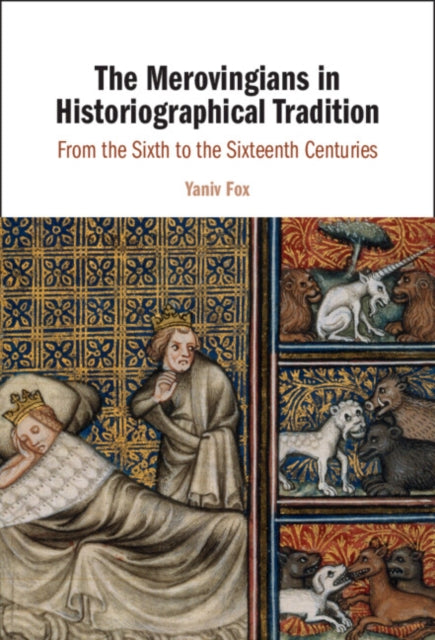
The Merovingians in Historiographical Tradition: From the Sixth to the Sixteenth Centuries
The Merovingians in Historiographical Tradition: From the Sixth to the Sixteenth Centuries
💎 Earn 420 Points (£4.20) on this item.
We can order this item for you. Delivery usually takes about 4 to 6 weeks.
This item is not held in our immediate stock. We will order it for you after checkout.
Estimated delivery: About 4 to 6 weeks
YOU SAVE £4.98
- Condition: Brand new
- UK Delivery times: Usually arrives within 2 - 3 working days
- UK Shipping: Fee starts at £3.89. Subject to product weight & dimension
Bulk ordering. Want 15 or more copies? Get a personalised quote and bigger discounts. Learn more about bulk orders.
Couldn't load pickup availability
- More about The Merovingians in Historiographical Tradition: From the Sixth to the Sixteenth Centuries
The Merovingian centuries were a foundational period in the historical consciousness of western Europe, with the memory of the first dynasty of Frankish kings used to justify social and political agendas. This expert commentary examines how the story of the Merovingians was shaped through a process of continuous historiographical adaptation, examining authors from across a millennium and analyzing their influences and objectives.
Format: Hardback
Length: 325 pages
Publication date: 16 November 2023
Publisher: Cambridge University Press
The Merovingian centuries marked a pivotal era in the historical consciousness of Western Europe, serving as a foundation upon which subsequent generations built their understanding of the past. The memory of the first dynasty of Frankish kings, their origin myths, achievements, and failures, became a rich tapestry woven by chroniclers, propagandists, and historians to justify diverse social and political agendas. This intricate process of curating and editing source material gave rise to a recognizable Merovingian narrative, characterized by three distinct phases: a meteoric ascent, a period of stasis, and a decline.
Already in the seventh-century Chronicle of Fredegar, this tripartite model was invoked by a Merovingian queen to prophesy the fate of her descendants. This expert commentary aims to unravel the intricate process by which the story of the Merovingians was shaped through a continuous process of historiographical adaptation. It explores the works of authors spanning a millennium of historical writing, examining their influences, objectives, and the ways in which their narratives were received and developed.
The Merovingian centuries witnessed a remarkable transformation in the historical narrative of Western Europe. The memory of the first dynasty of Frankish kings, their origin myths, achievements, and failures, became a powerful tool for shaping public opinion and justifying political agendas. Chroniclers, propagandists, and historians sought to exploit this rich tapestry of information to their advantage, crafting narratives that resonated with their audiences and furthering their own interests.
The process of curating and editing source material played a crucial role in shaping the Merovingian narrative. Authors across a millennium of historical writing sought to interpret and present this material in a way that would best serve their purposes. They drew upon a wide range of sources, including ancient texts, oral traditions, and contemporary accounts, to construct their narratives. However, the process of selection and interpretation was not always straightforward, and authors often had to navigate complex ethical and political considerations.
One of the most notable features of the Merovingian narrative was its tripartite structure. This model, first proposed by the seventh-century chronicler Fredegar, divided the reign of the Merovingian kings into three distinct phases: a meteoric ascent, a period of stasis, and a decline. This framework provided a convenient way for authors to organize and present their material, allowing them to highlight the achievements and failures of the Merovingian kings while also linking them to broader historical trends and events.
The meteoric ascent phase of the Merovingian narrative was characterized by the rise of the first dynasty of Frankish kings. The kings, such as Clovis I and his son Childeric I, were seen as heroes and saviors, who had defeated their enemies and united the various tribes of France under a single banner. This narrative was particularly appealing to the ruling elite, who saw the Merovingians as a means of consolidating their power and legitimizing their rule.
However, the meteoric ascent phase of the Merovingian narrative was not without its challenges. The kings were often portrayed as tyrants and oppressors, who used their power to subjugate their subjects and exploit their resources. This portrayal was not entirely inaccurate, as the Merovingian kings did engage in a number of oppressive practices, including taxation, forced labor, and political repression. However, it was also selective, and authors often chose to focus on the negative aspects of the Merovingian kings' rule in order to further their own political agendas.
The period of stasis, which followed the meteoric ascent phase, was characterized by a period of political instability and social unrest. The Merovingian kings were unable to maintain their grip on power, and their kingdom was divided into a number of petty kingdoms and fiefs. This period was marked by a series of civil wars and political intrigues, as rival factions sought to gain control of the throne and consolidate their power.
The decline phase of the Merovingian narrative was characterized by the collapse of the first dynasty of Frankish kings. The kingdom was divided into a number of smaller kingdoms, and the Merovingian line came to an end. This period was marked by a series of economic and social crises, as the kingdom struggled to cope with the effects of population growth, resource depletion, and political instability.
The process of curating and editing the source material gave rise to a recognizable Merovingian narrative with three distinct phases: meteoric ascent, stasis, and decline. This narrative was not static, but rather evolved and changed over time as new information and perspectives emerged. Authors across a millennium of historical writing sought to refine and update this narrative in order to better reflect the changing nature of the Merovingian kingdom and the broader historical context in which it operated.
One of the most notable features of the Merovingian narrative was its ability to adapt to changing political and social contexts. The story of the Merovingians was not just a tale of kings and queens, but also a reflection of the broader social and political trends of the time. Authors were able to use the Merovingian narrative to explore a range of issues, including the role of the monarchy, the nature of power, the dynamics of political alliances, and the effects of economic and social change.
The Merovingian narrative also had a significant impact on the development of historical writing and historiography. The process of curating and editing source material required authors to engage in critical analysis and interpretation, which helped to develop their skills and knowledge of the past. Authors were also able to draw upon a wide range of sources and perspectives, which helped to create a more nuanced and complex understanding of the past.
In conclusion, the Merovingian centuries were a foundational period in the historical consciousness of Western Europe, and the memory of the first dynasty of Frankish kings, their origin myths, achievements, and failures, became a rich tapestry woven by chroniclers, propagandists, and historians to justify diverse social and political agendas. The process of curating and editing the source material gave rise to a recognizable Merovingian narrative with three distinct phases: meteoric ascent, stasis, and decline. This narrative was not static, but rather evolved and changed over time as new information and perspectives emerged. The Merovingian narrative had a significant impact on the development of historical writing and historiography, and its ability to adapt to changing political and social contexts helped to shape the way in which we understand the past.
ISBN-13: 9781009285018
UK and International shipping information
UK and International shipping information
We deliver throughout the United Kingdom and to 128 countries and territories worldwide, including the United States, Australia, Canada, Germany, Spain and France.